





What’s the difference between a nominal rating and an absolute rating?
When selecting the right replacement filter element for your hydraulic system, understanding nominal vs absolute filter ratings is critical.
Without an effective filter element, solid contamination can rapidly damage internal components. The filter element is the heart of the filtration system, so choosing the right rating and efficiency level matters.
Nominal Ratings Explained
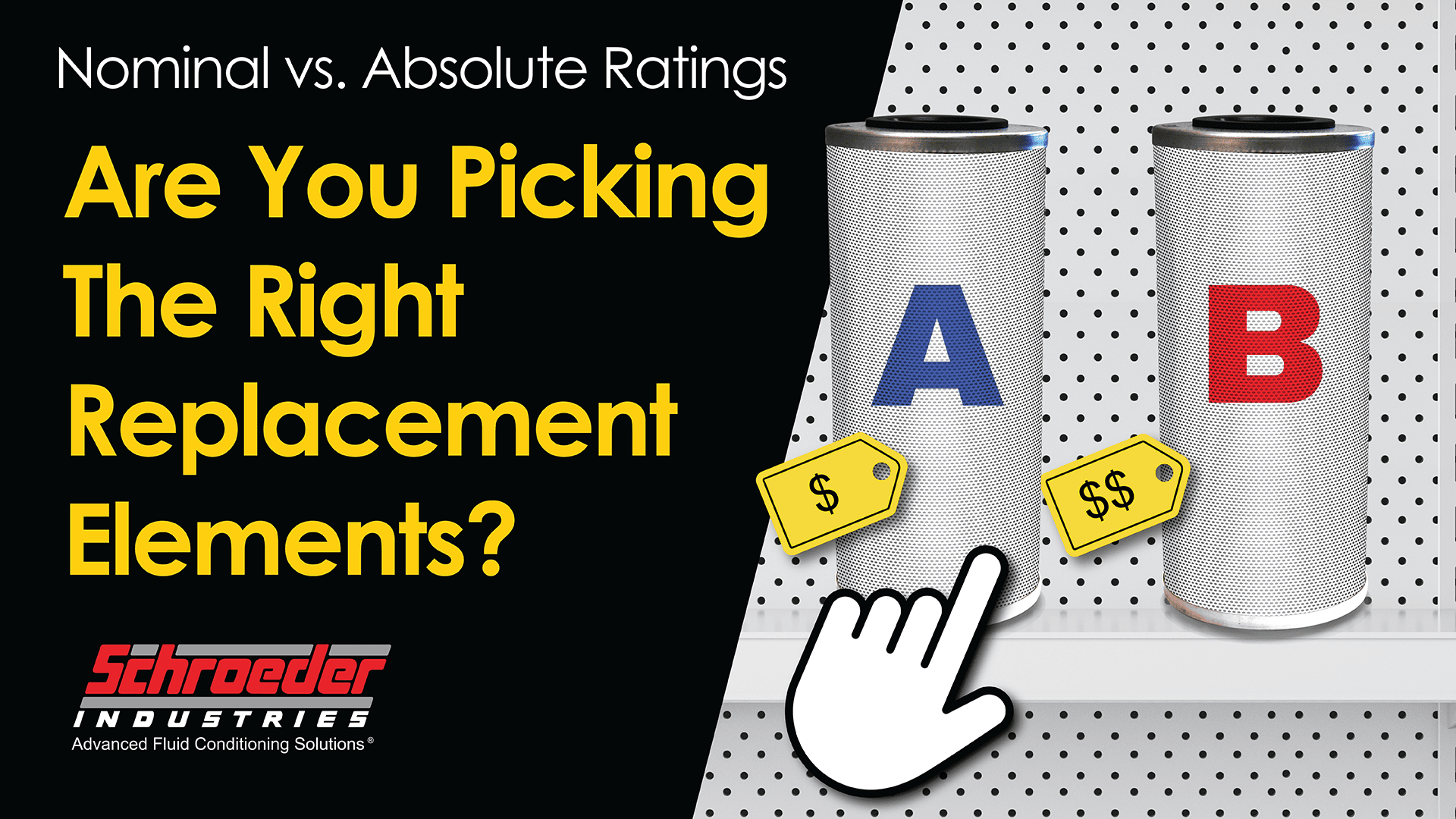
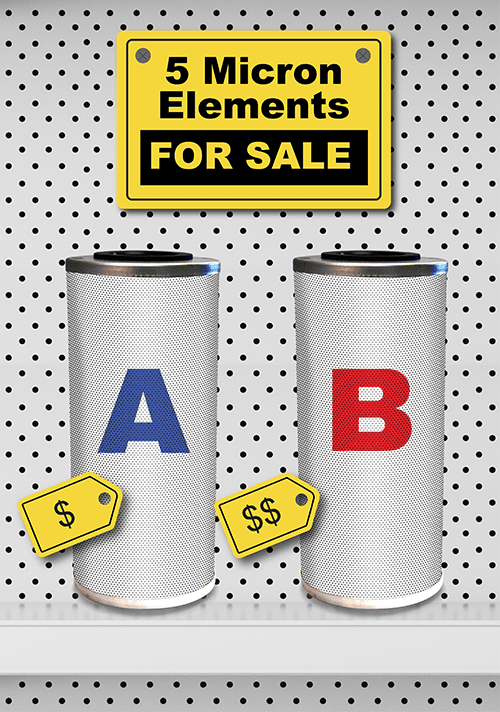
When a buyer is looking for a replacement filter element, the first thing they usually look for is the micron rating of an element. A selection of elements for a given micron rating don’t look obviously different from each other.
So, to cut expenses, buyers may lean towards the lowest cost option.
Here’s why that’s a mistake.
When an element is classified as a 5 micron element, etc, this is known as a nominal rating. To earn a nominal rating, a filter element needs to meet a minimum filtration efficiency requirement for particles of that size.
However, the minimum efficiency can vary greatly depending on the materials used in the filter element! For elements constructed with cellulose media, the minimum efficiency requirement is only 50%.
Microglass media elements need to meet a much higher threshold. An efficiency of 98.7% is required to meet the nominal rating for a given particle size.
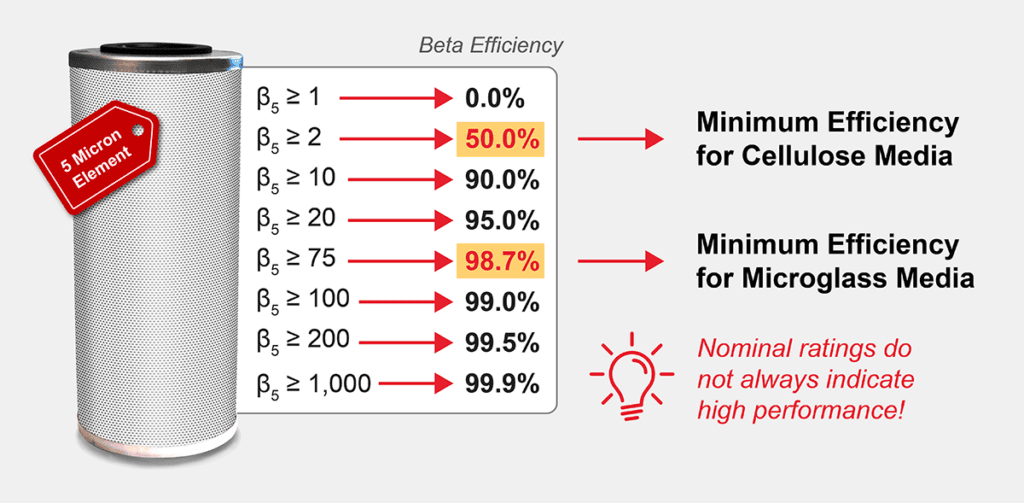
Would you trust an element whose efficiency might be as low as 50% to protect your equipment?
Probably not!
But if the nominal rating is not a reliable indicator of performance, what should a buyer look for?
Absolute Ratings Explained
An element’s absolute rating for a given particle size gives a much more accurate picture of element performance. The absolute rating of an element is based on its verified beta efficiency, one of the most important qualities for filter element performance.
A filter element’s beta efficiency is determined through laboratory testing in a controlled filtration environment.
Let’s compare two elements in an example filtration scenario:
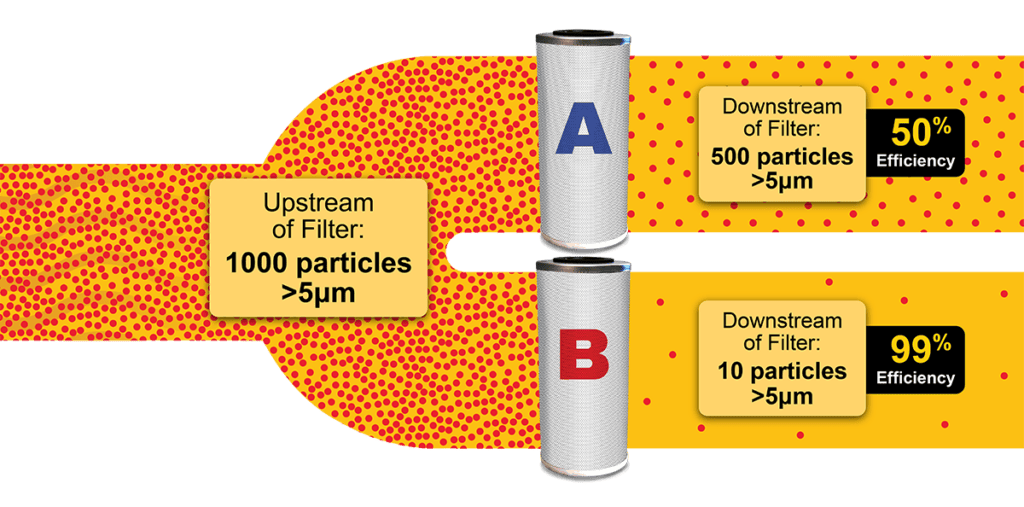
With 1,000 particles 5 microns or larger upstream of the element, we can see how efficiently our two elements capture particulates.
In Summary:

Nominal Rating:
Indicates that a filter element meets minimum filtration performance requirements. Should not be treated as a definitive measure of element performance.

Absolute Rating:
A precise measurement of filter element performance, based on beta efficiency. More accurately describes element performance versus a nominal rating.
How do I find the absolute rating of a filter element?
For more information about absolute rating and other performance metrics, try searching for more information on the manufacturer’s website.
Absolute ratings are often expressed in manufacturing literature as beta ratios, which are a kind of shorthand for beta efficiency. Check out the video below to learn how to convert a beta ratio into a percentage!
Contacting a filtration manufacturer representative is another great way to delve deeper into filter element performance and find the absolute rating, among other critical performance metrics. Absolute ratings are important, but there are other factors such as dirt holding capacity, system pressure drop, and beta stability to consider.
The filtration experts at Schroeder Industries have delivered filtration success for customers across a wide spectrum of industries. Whatever the scope or focus of your application, our qualified filtration specialists can work with your team to help determine the most effective replacement filter element solution for your application.
Through private labeling and Quality Protection, we also help OEM’s deliver on their brand’s performance promises for end users.

An automotive plant contacted Schroeder Industries when, after switching to a new hydraulic oil, their oil lifespan dropped by as much as 80%.
Burn marks and varnish on the customer’s used elements confirmed that electrostatic discharge was building up in the customer’s system. By switching to Anti-Stat Media, the customer was able to get the most out of their oil and more!

Here’s how Schroeder Industries’ Element Technology helped this customer:

Oil Service Life Increased +4 Years

+2.6K Gallons of Oil Saved Per Press, Per Year

+31.7K Gallons of Oil Saved Annually
Due to pressure drop and cost-related concerns, end users operating frac trailers were reluctant to adopt higher-performance, smaller micron-rated elements despite their existing 40 micron elements inadequate performance.
To satisfy customer concerns and increase their system protection, Schroeder Industries engineered a new element specifically designed for the types of filter commonly seen in these frac trailer applications.
Head to head testing proved that the new 25 micron Schroeder BestFit element option greatly outshines the customer’s current elements while remaining cost-competitive!
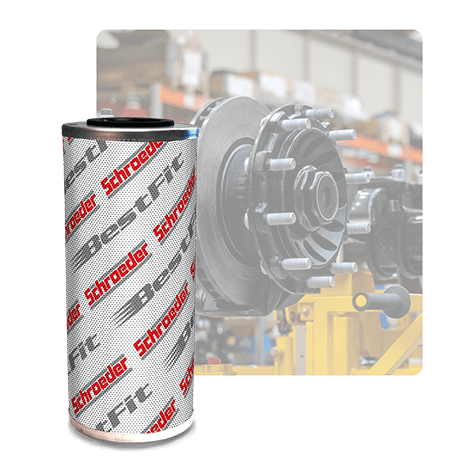
Here’s how Schroeder Industries’ Element Technology helped this customer:

40% Increased Particulate Removal Efficiency ≥ 25 Micron

36% Increase in Dirt Holding Capacity Per Element

Element Change Outs, Related Downtime/Expense Reduced
An OEM producing marine dredging equipment was being blamed for premature field failures, and grappling with increased warranty claims.
The culprit behind the failures was actually the substitution of low-quality filter elements by the end users. These elements failed to effectively control contamination, resulting in rapid component degradation and unexpected failures.
To reinforce the OEM’s warranty protection and encourage appropriate element usage, Schroeder Industries partnered with the OEM to establish a private labeled element program.
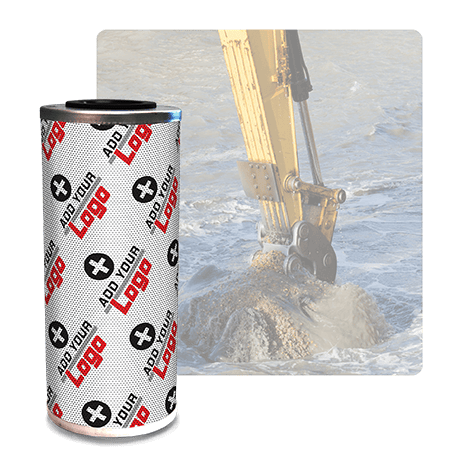
Here’s how Schroeder Industries’ Element Technology helped this customer:

Comprehensive Element Private Labeling Program

Increased Protection from Warranty Claims

Increased Element-Driven Aftermarket Revenue
You could be Schroeder’s next success story!
Tell us about your application and the challenges you face, and our experts can help find the filtration solution that fits your needs.
Talk to the Experts!
Tell us about your application and cleanliness goals, and we can help find the right solution for you.