Skip to Content
Exit
 

Tag Archive: Hydraulic Filter Elements

  1. Filter Ratings Made Simple: What Nominal vs Absolute Mean

    Comments Off on Filter Ratings Made Simple: What Nominal vs Absolute Mean

    What’s the difference between a nominal rating and an absolute rating?


    Nominal Ratings Explained


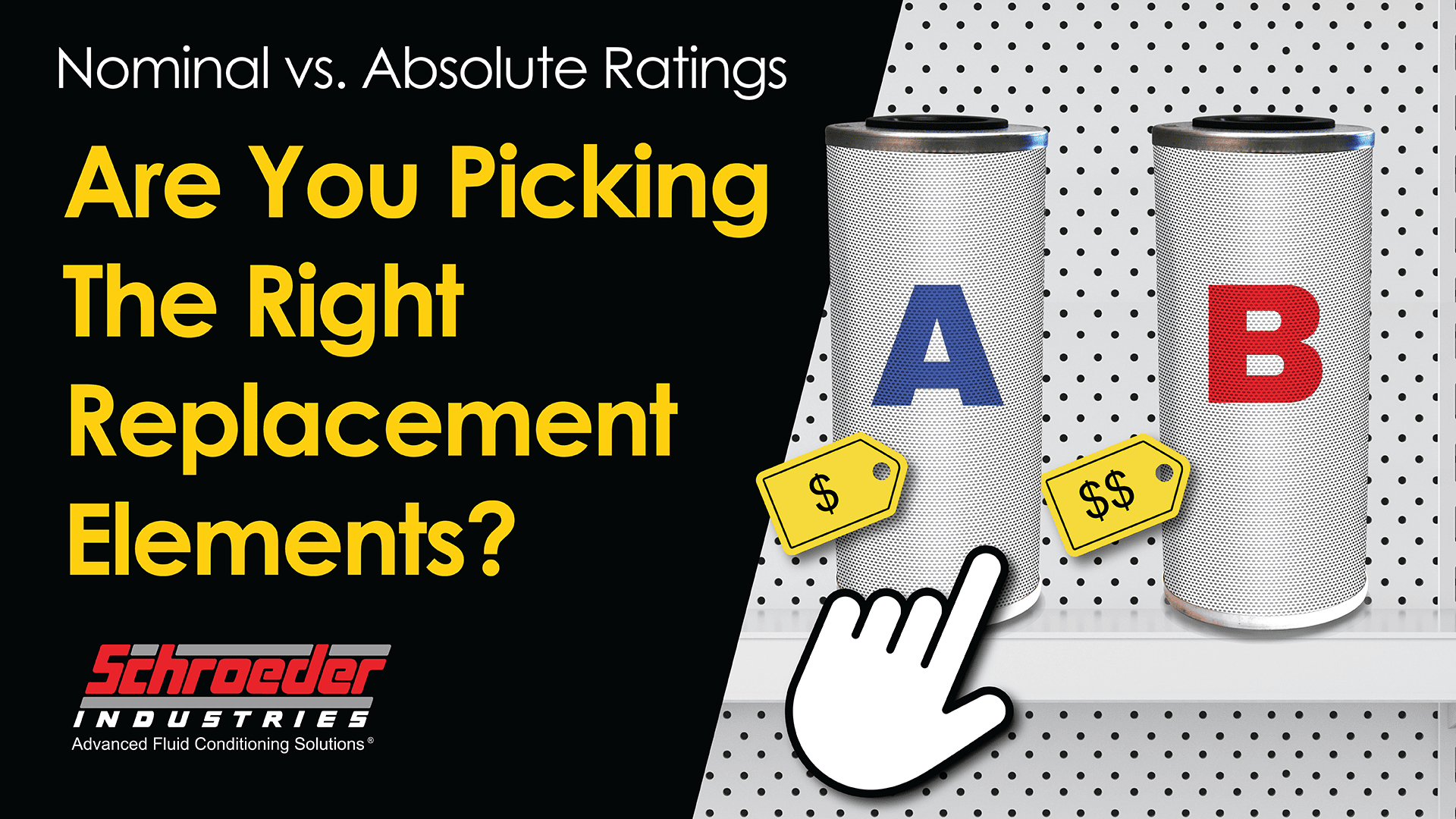
    When a buyer is looking for a replacement filter element, the first thing they usually look for is the micron rating of an element. A selection of elements for a given micron rating don’t look obviously different from each other.

    So, to cut expenses, buyers may lean towards the lowest cost option.


    When an element is classified as a 5 micron element, etc, this is known as a nominal rating. To earn a nominal rating, a filter element needs to meet a minimum filtration efficiency requirement for particles of that size.
    However, the minimum efficiency can vary greatly depending on the materials used in the filter element! For elements constructed with cellulose media, the minimum efficiency requirement is only 50%.

    Microglass media elements need to meet a much higher threshold. An efficiency of 98.7% is required to meet the nominal rating for a given particle size.
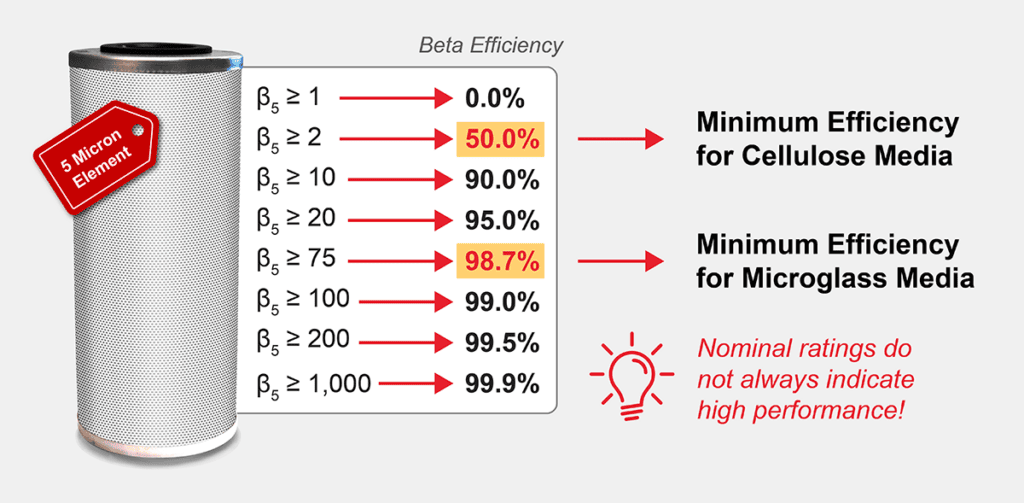


    Probably not!

    But if the nominal rating is not a reliable indicator of performance, what should a buyer look for?


    Absolute Ratings Explained


    An element’s absolute rating for a given particle size gives a much more accurate picture of element performance. The absolute rating of an element is based on its verified beta efficiency, one of the most important qualities for filter element performance.

    A filter element’s beta efficiency is determined through laboratory testing in a controlled filtration environment.


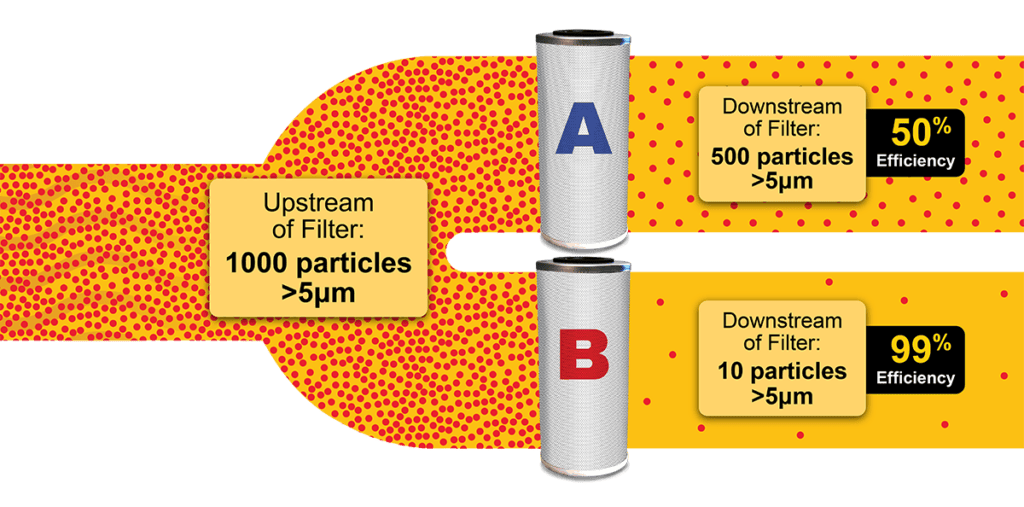
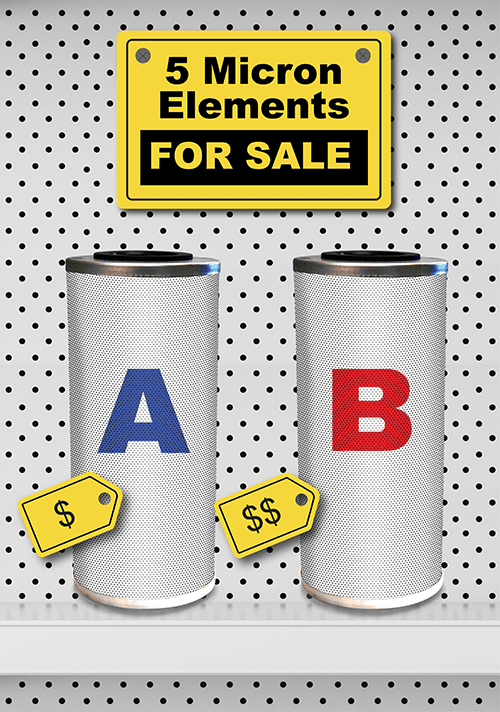
    With 1,000 particles 5 microns or larger upstream of the element, we can see how efficiently our two elements capture particulates.


    • Filter Element A only captures 500/1,000 particles >5µm, which makes its beta efficiency 50% for 5µm. This indicates relatively low efficiency.
    • Filter Element B, on the other hand, captures 990/1,000 particles >5µm, giving it a beta efficiency of 99% at 5µm. This is considered high efficiency.

    Nominal Rating:

    Indicates that a filter element meets minimum filtration performance requirements. Should not be treated as a definitive measure of element performance.

    Absolute Rating:

    A precise measurement of filter element performance, based on beta efficiency. More accurately describes element performance versus a nominal rating.


    For more information about absolute rating and other performance metrics, try searching for more information on the manufacturer’s website.

    Absolute ratings are often expressed in manufacturing literature as beta ratios, which are a kind of shorthand for beta efficiency. Check out the video below to learn how to convert a beta ratio into a percentage!


    Contacting a filtration manufacturer representative is another great way to delve deeper into filter element performance and find the absolute rating, among other critical performance metrics. Absolute ratings are important, but there are other factors such as dirt holding capacity, system pressure drop, and beta stability to consider.

    The filtration experts at Schroeder Industries have delivered filtration success for customers across a wide spectrum of industries. Whatever the scope or focus of your application, our qualified filtration specialists can work with your team to help determine the most effective replacement filter element solution for your application.

    Through private labeling and Quality Protection, we also help OEM’s deliver on their brand’s performance promises for end users.

    An automotive plant contacted Schroeder Industries when, after switching to a new hydraulic oil, their oil lifespan dropped by as much as 80%.

    Burn marks and varnish on the customer’s used elements confirmed that electrostatic discharge was building up in the customer’s system. By switching to Anti-Stat Media, the customer was able to get the most out of their oil and more!

    Here’s how Schroeder Industries’ Element Technology helped this customer:


    Oil Service Life Increased +4 Years


    +2.6K Gallons of Oil Saved Per Press, Per Year


    +31.7K Gallons of Oil Saved Annually


    Due to pressure drop and cost-related concerns, end users operating frac trailers were reluctant to adopt higher-performance, smaller micron-rated elements despite their existing 40 micron elements inadequate performance.

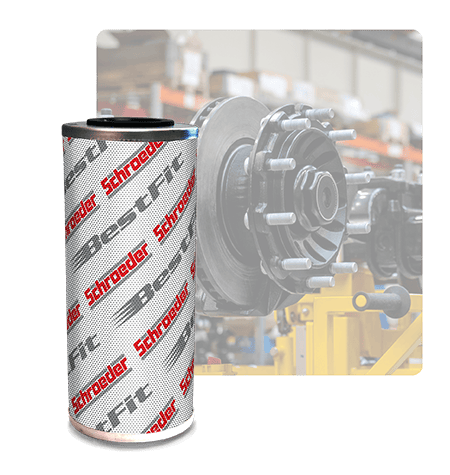
    To satisfy customer concerns and increase their system protection, Schroeder Industries engineered a new element specifically designed for the types of filter commonly seen in these frac trailer applications.

    Head to head testing proved that the new 25 micron Schroeder BestFit element option greatly outshines the customer’s current elements while remaining cost-competitive!
    Here’s how Schroeder Industries’ Element Technology helped this customer:


    40% Increased Particulate Removal Efficiency ≥ 25 Micron


    36% Increase in Dirt Holding Capacity Per Element


    Element Change Outs, Related Downtime/Expense Reduced


    An OEM producing marine dredging equipment was being blamed for premature field failures, and grappling with increased warranty claims.

    The culprit behind the failures was actually the substitution of low-quality filter elements by the end users. These elements failed to effectively control contamination, resulting in rapid component degradation and unexpected failures.

    To reinforce the OEM’s warranty protection and encourage appropriate element usage, Schroeder Industries partnered with the OEM to establish a private labeled element program.
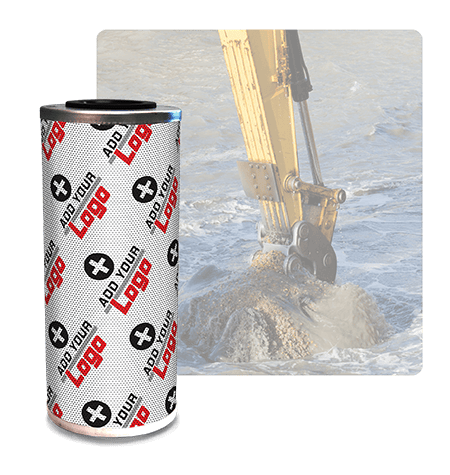
    Here’s how Schroeder Industries’ Element Technology helped this customer:

    Comprehensive Element Private Labeling Program


    Increased Protection from Warranty Claims


    Increased Element-Driven Aftermarket Revenue


    You could be Schroeder’s next success story!


    Tell us about your application and the challenges you face, and our experts can help find the filtration solution that fits your needs.


    Talk to the Experts!


    Tell us about your application and cleanliness goals, and we can help find the right solution for you.


    Request for Quote

    • Which products are you interested in?
    • Max. file size: 256 MB.
  2. The 4 Definitive Qualities of a Good Filter Element

    Comments Off on The 4 Definitive Qualities of a Good Filter Element


    What Makes a Good Filter Element?


    Selecting the right hydraulic filter element is one of the most important decisions for maintaining fluid cleanliness, protecting equipment, and maximizing system performance.

    Filter elements are at the heart of every hydraulic system. While elements are often treated as a disposable afterthought, their contamination-busting role makes elements absolutely critical for system longevity and performance.


    So, if you’re thinking of trying to cut costs with cheap, generic filter elements—think again.


    Quality truly matters when it comes to filtration. Whatever you might be saving in element costs, you’ll likely end up losing more in maintenance and repair costs, productivity impacts, and more frequent element replacements.


    If using quality filter elements is so important, what should you look for in an element?


    There are essentially 4 key metrics by which you can judge the effectiveness of a filter element:


    • High Beta Efficiency
    • Minimal Pressure Drop
    • High Dirt Holding Capacity
    • Good Beta Stability
    hydraulic filter element beta efficiency chart

    Let’s get in to what each of these metrics mean for element performance, and for the integrity of your equipment and fluid assets.


    High Beta Efficiency


    Filter elements come in a range of different micron ratings—that is, the size of particle the filter is rated to capture.

    But, just because a filter has a certain micron rating, that doesn’t necessarily mean that it efficiently captures particles of that size!


    Let’s look at an example of two elements tackling solid particles 5 microns and higher:


    • Filter Element A only captures 500/1,000 particles >5µm, which makes its beta efficiency 50% for 5µm. This indicates relatively low efficiency.
    • Filter Element B, on the other hand, captures 999/1,000 particles >5µm, giving it a beta efficiency of 99% at 5µm. This is considered high efficiency.

    Certain elements may be nominally rated for a certain micron rating, but actually have a relatively low beta efficiency. For example, a cellulose media element rated for 5 microns could have a beta efficiency as low as 50%!

    When you choose an element, be sure to choose elements with a high beta efficiency to ensure the elements are actually capturing the contamination you are targeting.


    Minimal Pressure Drop


    In a hydraulic system, maintaining consistency in system pressure is key to efficient system performance.


    However, filter elements by their nature are somewhat disruptive to pressure in the system. In order to filter out contaminants, elements inherently have to interrupt the flow of fluid to some degree!

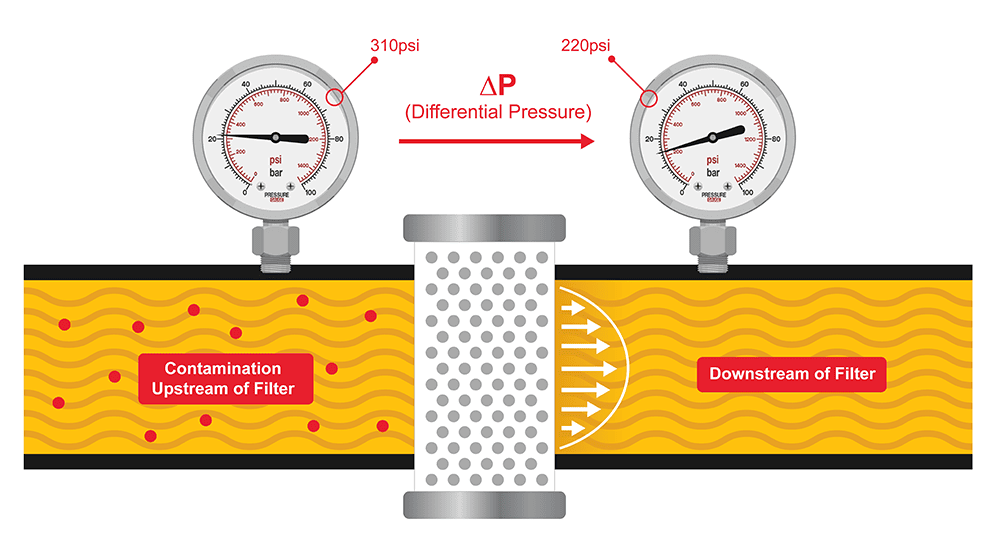
    Representation of typical system pressure drop downstream of a filter element.

    Particle capture/filtration and maintaining system pressure must be carefully balanced.


    While removing as much contamination as possible in hydraulic fluid is ideal, the tighter the filtration tolerance of an element (i.e. the smaller its filtration rating), the greater the impact on pressure downstream of the filter.

    A high-quality filter element is engineered to balance effective particle capture and system pressure, protecting the machine with minimal impact on its efficiency.

    Sometimes, operators may sacrifice filtration performance to ensure that they minimize the pressure drop in their system. In reality, a high-quality element can provide effective filtration without excessively affecting system pressure.


    End users operating frac trailers were deliberately avoiding higher-performance, lower micron-rated elements due to concerns about pressure drop.

    But, with the right element, exceptional particle capture with minimal hydraulic system pressure drop is possible!

    Schroeder Industries replaced the customer’s existing 40 micron elements with a new 25 micron solution. The 25 micron elements offered similar pressure drop characteristics as the original 40 micron elements, but provided significant improvements in filtration performance.

    Here’s how Schroeder’s superior elements helped this customer:

    40% Increase in Particulate Removal Efficiency ≥25µm
    36% Increase in Element Dirt Holding Capacity
    Element Change-Outs & Maintenance Downtime Reduced

    View Case Study

    High Dirt Holding Capacity (DHC)


    Given the role of the filter element in trapping contamination, the amount of solid particulates the element can hold—commonly called ‘dirt holding capacity,’ or ‘DHC’—is another major factor in element quality.


    But, the more particles an element captures, the greater the effect on system pressure.


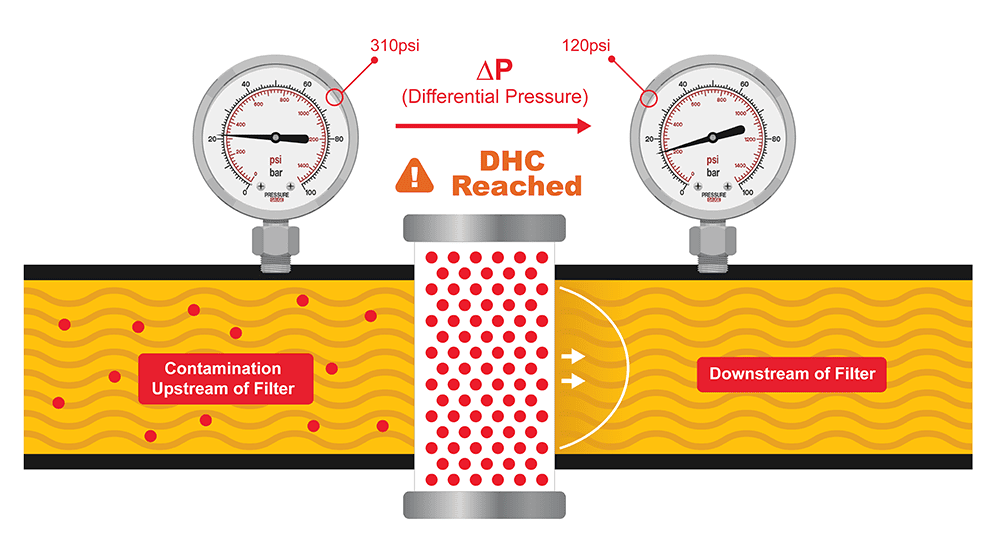
    When the element has accumulated enough particles that it causes too much pressure drop downstream of the element, it has reached its DHC and must be changed out for a fresh filter element.


    Note how the downstream pressure drop changes from when the element is new to when DHC is reached:


    The more contamination a filter element can capture without causing too much pressure drop, the longer the filter can go without maintenance. That’s the key to good DHC!


    This not only reduces the costs associated with purchasing new replacement elements, but reduces maintenance-related downtime.


    Beta Stability


    This aspect of the filter element is closely related to its DHC and efficiency.


    Basically, beta stability is the determination of how efficiently the element captures particulates as it approaches its DHC.


    For example, if an element rated for 5 microns begins struggling to capture 5 micron particles as it approaches its DHC, that element has poor beta stability.


    If an element is rated for 5 microns, it should be capturing 5 micron particles whether the element is at 1% DHC or 99% DHC!


    Final Thoughts: Choosing the Best Element


    When it comes to selecting the best filter element, the key is a balance between all four of the key traits described above.


    An element may have high beta efficiency, meaning it excels at capturing particles of a certain size…but if it loses that ability as it approaches DHC, then it has poor beta stability. If it has a low DHC, then you will need to interrupt operations and purchase replacement elements more often. And so on!


    The right filter element finds a balance between all of the above principles, giving you excellent filtration without compromising system efficiency and with minimal maintenance needs.


    Premium filter element equivalents for over 42,000 OEM-brand part numbers and counting!


    • Affordable, high-performance filter elements to fit a wide range of applications
    • Engineered with Schroeder Industries’ signature quality
    • Variety of media grades (cellulose, synthetic, water removal, anti-stat, stainless steel, metal mesh)
    • Cartridge and spin-on style elements available
    • Ask about private labeling!

    Try the Cross Reference Search Tool

    Request a Quote


    Request for Quote

    • Which products are you interested in?
    • Max. file size: 256 MB.