





Is Water Contamination Drowning your Hydraulic Oil Supply?
Comments Off on Is Water Contamination Drowning your Hydraulic Oil Supply?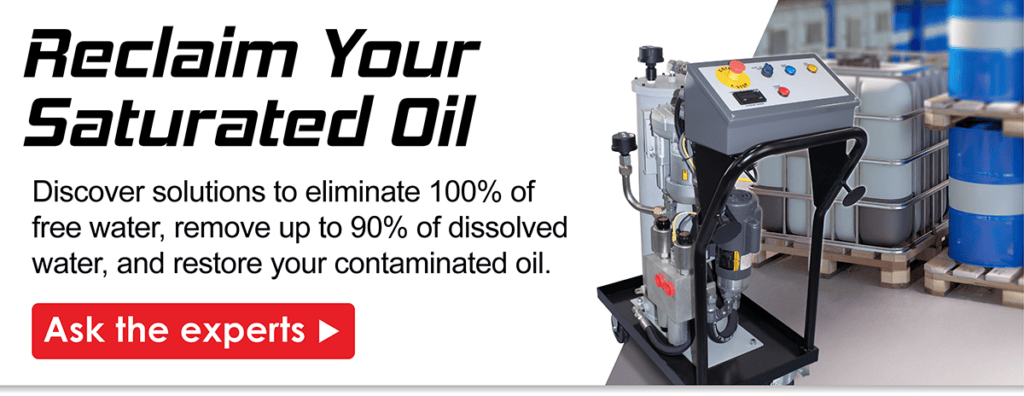
Water contamination can sink your productivity and drown your budget.
Solid contamination is the most common type of contaminant, but water contamination can be just as damaging.
The risk is constant in applications that utilize large quantities of water or are exposed to weather and ambient humidity.
Uncontrolled water contamination damages equipment and productivity for any hydraulic system operating in such environments:
Water contamination comes in three forms, with different levels of severity for your equipment:
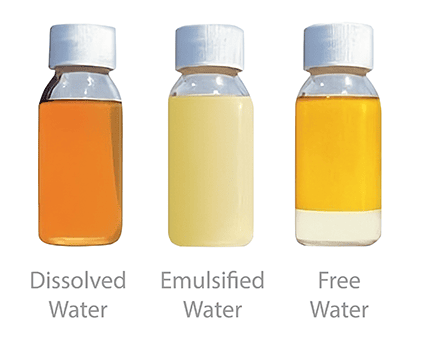
Changes in temperature can cause water to change form in your system, moving between these three states.
Regardless of how the water in your oil is behaving at one moment, it can go from relatively harmless to increasingly damaging when temperatures start to shift! This means that controlling all water contamination at all times is vital.
Is my operation vulnerable to water contamination?
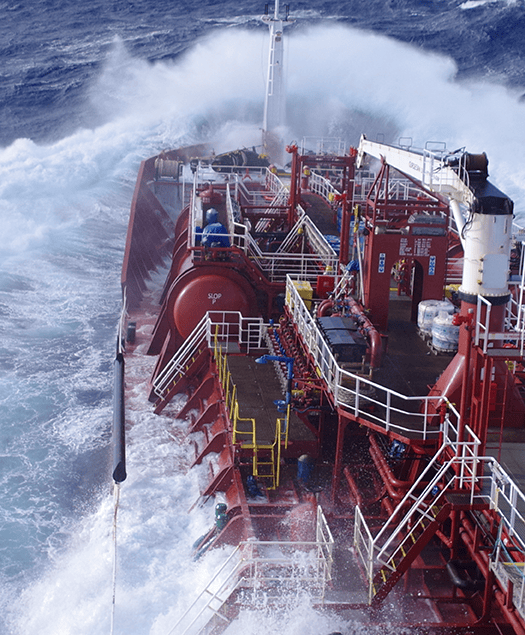
Virtually any industry can experience some level of water contamination. However, some industries stand out as particularly vulnerable:
Water contamination can infiltrate reservoirs and equipment in multiple ways.
Damaged seals, a rainy and humid climate, high-pressure water streams used in the cleaning process, and poor bulk oil storage are some common vectors for water contamination. Because water contamination can come from so many places, creating a plan to combat it can be challenging.
How can I prevent water contamination in my hydraulic oil?

Step 1: Test your oil to determine saturation levels.
If you suspect water contamination, it’s important to test your oil. When you know the saturation levels you’re dealing with, it’s easier to develop a strategy for water removal.
Saturation sensors are a great way to detect water contamination in real time. Lab testing is even better, since more sophisticated testing methods can expose other contamination-related problems in your fluid.
Step 2: Examine your equipment and operating environment for vulnerabilities.
Knowledge is power! Finding out where the water contamination is originating from can help prevent it.
Water may be entering via worn seals, loose reservoir caps, poor bulk storage practices, and other variables you can control.
However, many operations may face ambient humidity, big temperature swings, and the unavoidable need for water in their manufacturing process. When a potential source of water contamination can’t be controlled, the best defense is to continuously extract the contamination from your hydraulic oil.
Step 3: Implement water removal filtration tools.
Once you’ve determined how much water you’re dealing with, and where it might be coming from, the next step is filtration. Depending on the amount and frequency of water contamination, there are various tools at your disposal.
Specialized water-removal filter media can absorb smaller quantities of water. Multi-stage filtration housings can allow you to implement different media types to target both water and solid particulate contamination at once.
Large reservoirs and high contamination levels require more specialized equipment. Dehydrating filtration systems are designed to extract free water, as well as a large portion of dissolved water from the fluid.

Step 4: Continuously monitor your fluid condition.
Even with filtration in place, it’s important to implement a strategy for monitoring saturation levels in your oil at all times. Saturation sensors are useful for determining if your dehydrating filtration solution is performing adequately. These sensors can also warn of sudden influxes of water contamination, allowing remedial measures before contamination-driven damage can run rampant.
Many modern saturation sensors include digital connectivity for remote monitoring and reporting, which keeps you informed of your fluid condition in real time, wherever you are.
Schroeder Solutions & Success Stories
Schroeder Industries offers a variety of tools and solutions for water removal.
Our Triton Dehydration Stations offer proven performance for oil reclamation in larger reservoirs and high contamination scenarios.
These units are engineered to eliminate 100% of free water and up to 90% of dissolved water by leveraging a patented mass-transfer dehydration technology.
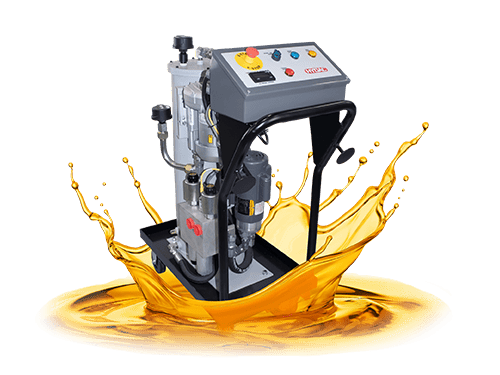
TDS-A
1.5 gpm (5.68 L/min)
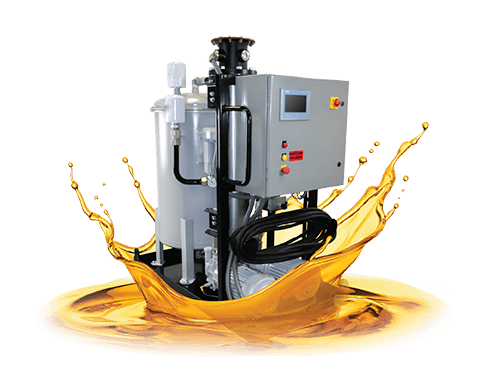
TDS-E
15 gpm (56.78 L/min)
Need dehydrating filtration fast? Check out our Rental Program!
Here’s how Triton Dehydration Stations helped these customers save substantial quantities of oil:
TDS-A Saves Tens of Thousands in Oil-Related Expenses for Injection Molding Equipment
A plastic packaging operations was experiencing high levels of water contamination in their injection molding equipment’s hydraulic reservoir.
The customer was spending tens of thousands of dollars per month on oil recycling costs and new oil purchases.
Schroeder Industries deployed a TDS-A unit to dehydrate their oil, as well as extract any particulate contamination, to ensure operational reliability slash the customer’s oil-related expenses.
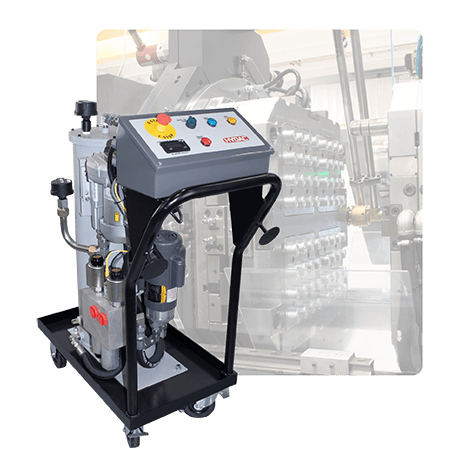
Here’s how the TDS-A helped:

16/14/12 ISO Code Reached; Cleaner Than Customer’s ‘New’ Oil

$25-30k USD Saved Per Month on Oil-Related Expenses

220gal of Hydraulic Oil Reclaimed in Just Two Days
TDS-E Saves Pulp & Paper Manufacturer $10K Per Month in Oil-Related Expenses
A manufacturer in the pulp & paper market required additional water removal capacity in their power generation turbine reservoir.
While the operator tried to implement a non-Schroeder dehydration unit, it was unable to keep up with the high volume of water infiltrating the reservoir.
To allow the customer to test the performance of the TDS-E, Schroeder Industries enrolled them in the rental equipment program to prove the unit’s effectiveness.
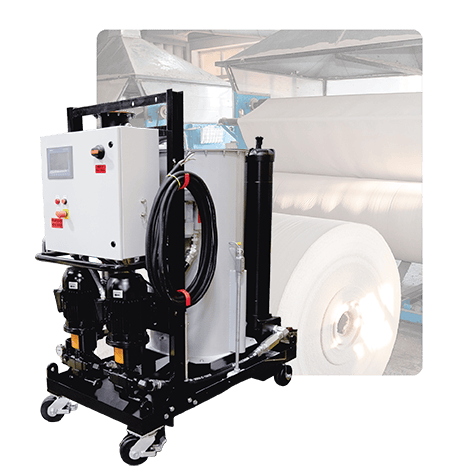
Here’s how the TDS-E helped:

Rental Program Provides Affordable Access
TDS-E Provides Exceptional Oil Reclamation with Minimal Maintenance
