




Data centers impact our lives more than we realize.
Currently, the buzz regarding data centers focuses on the artificial intelligence boom, but these operations are already quite integrated in our day-to-day.
Data centers range from simple server rooms managed by individual enterprises to massive, standalone operations. At their core, the function of every data center is similar: Storing data and applications, and enabling people to access data and web-based services.
Data center outages can result in significant financial losses, service disruptions, and reputational damage, making uptime and infrastructure reliability critical considerations for facility operators.
Apps, websites, and other internet-based resources we rely on may become inaccessible. Because much of the economic and social fabric of society now relies on internet connectivity, these outages range from inconvenient to downright costly!
Even a relatively small data center can be vulnerable to overheating, power outages, and other issues that trigger downtime.
As data centers grow larger and more numerous, and the stakes for failure get higher, preventing outages becomes even more crucial.
How Contamination Causes Critical Failures
Contamination is a hidden threat that compromises equipment across virtually every industry, from hydraulic construction equipment, to diesel-powered ships, to hydropower systems, and much more. When it infiltrates operating fluids (lubricating oils, liquid fuels, process fluids, etc), trouble is on the horizon for affected equipment.
Contamination can be solid particles, such as tiny metal fragments caused by wear, or dust particles ingested into reservoirs, process water streams, and storage tanks. These particles of solid contamination are often smaller than the eye can see, but even microscopic particles cause wear and tear that eventually lowers the efficiency of the equipment or causes it to fail.
Contamination also commonly presents as water, such as rainwater or humidity that condenses inside of storage tanks. This can reduce lubricity and encourage microbial growth in diesel fuel, and ultimately contributes to equipment failures in a myriad of ways.
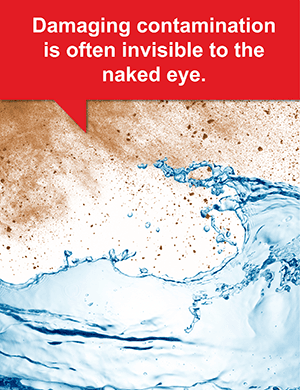
Contamination affects virtually every industrial operation—data centers are no exception.
In data centers, there are two key areas that require vigilant defense from contaminants:
1. Contamination and Liquid Cooling Systems
Thermal management is one of the biggest challenges facing data centers.
The processing power packed into data centers generates an enormous amount of heat. Liquid cooling systems are the preferred choice for thermal management, especially in larger data centers.
However, like any fluid-powered system, cooling loops are vulnerable to contamination.
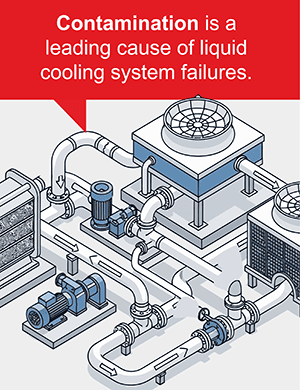
What happens if cooling systems fail due to contamination?
To ensure proper performance, it’s important for servers and computing systems to stay as cool as possible.
Overheating can damage servers and computing components, resulting in data losses, major service interruptions, and astronomical repair costs.
2. Contamination and Backup Power Generators
Mission-critical backup power is essential for continuous, 24/7 data center uptime.
In the event of an emergency that affects a data center’s primary power source, backup generators are a critical safety net to ensure that the servers stay running. Diesel-powered generators are the most common choice for reliable backup power.
However, diesel generators can be especially vulnerable to contamination. Because these generators sit idle for long periods, it’s easy for contamination-related problems to be overlooked until the generators fail when they’re needed most!
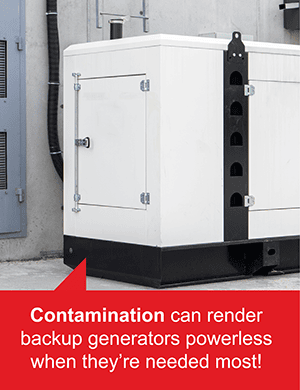
What happens if backup power generators fail?
Even a temporary loss of power can cause chaos and delays for any operation relying on a data center to store data, access critical applications, and more.
If the primary power source fails and backup generators aren’t able to close the gap, power outages will disrupt services, result in SLA violations, and drive significant financial and reputational losses.
Your Partner for System Reliability
Don’t wait for contamination to impact your data centers: Implement solutions early!
Schroeder Industries is the expert in all things filtration, including for process fluid and diesel fuel.
Our product experts have designed solutions that effectively tackle contamination, protect equipment, and maintain productive uptime in virtually every industry that relies on fluid power.
Whether you’re planning your data center or retrofitting an existing operation with filtration, our experts are here to help.
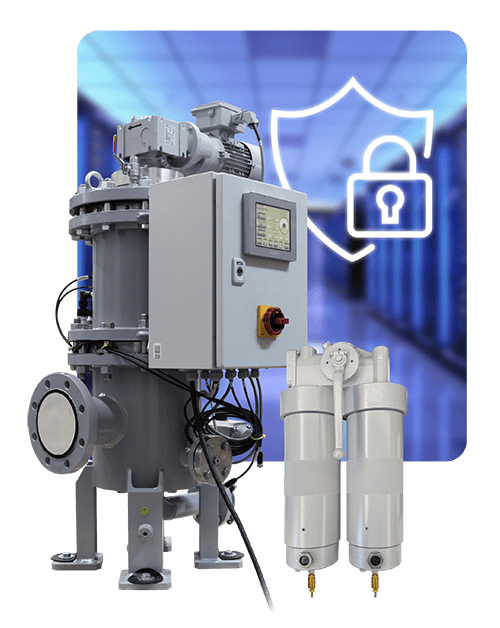
Schroeder Industries offers comprehensive solutions for: