





Spin-on filters have become a popular choice for hydraulic filtration because they combine the filter media, housing, base plate, and gasket into one easy-to-replace unit. Their simple, all-in-one design reduces maintenance time and makes filter change-outs quick and convenient.
However, that convenience comes with trade-offs in waste, long-term operating costs, and filtration performance. Before choosing a filtration solution, it’s worth understanding both the advantages and limitations of spin-on filters.
Let’s review the pros and cons of spin-ons!
Spin-On Filters: The Benefits
It’s not for nothing that spin-on filters are popular in hydraulic applications:
Spin-On Filters: The Drawbacks
But, while convenience is a helpful quality of spin-ons, their disposable nature has some significant downsides:
Counting the Cost of Spin-Ons
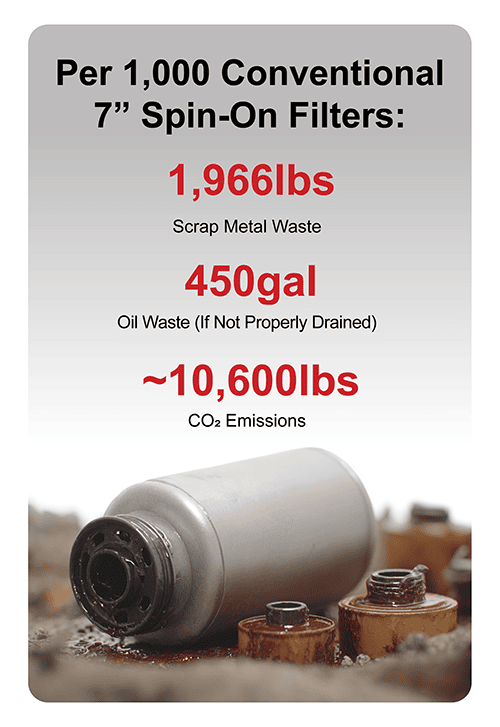
The greatest downside of spin-on filters is the sheer amount of material and oil waste involved. Let’s look at an example of how much waste is produced by a very common spin-on type:
Waste Reduction example, per 1,000 spin ons:
7″ M10 (cellulose 10 micron) Spin On
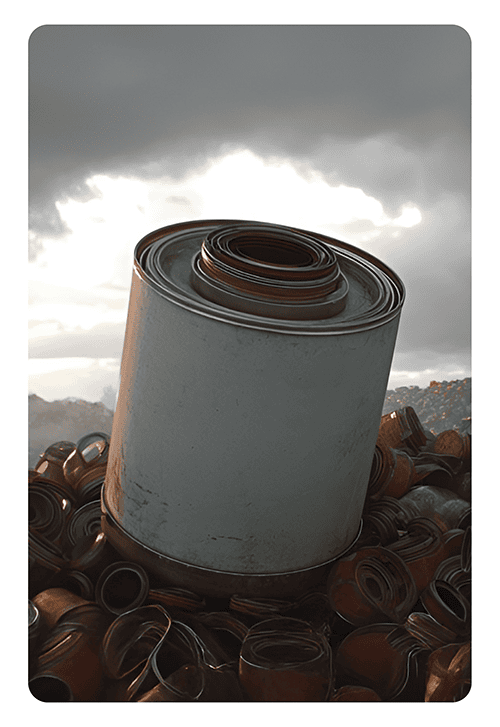
Millions of spin-on filters are discarded every year, contributing to a staggering amount of unnecessary waste!
Is It Time For A Change?
While spin-on filters are a convenient and effective choice for filtration, the wasteful nature of conventional spin-on technology can’t be ignored.
Between environmental repercussions and potential missed revenue, spin-on filtration technology is long overdue for an upgrade.
Material and oil costs rise with each passing year. With the amount of metal and oil wasted with each spin-on, it’s likely that users could be paying more than they need to for their spin-on filtration.
Could a less wasteful, more cost-effective spin-on alternative not only reduce emissions, but save money for hydraulic-driven operations?
Can the convenience and user-friendliness of spin-ons be combined with the economical, lower-waste benefits of cartridge filters?
Schroeder Industries thinks so.
A More Sustainable Alternative to Spin-On Filters
A low-waste, cost-effective, high-performance spin-on alternative is coming soon. Stay tuned for Schroeder Industries’ most game-changing innovation yet!

Get Notified of the Launch!
Register for our mailing list to receive an email notification when this revolutionary spin-on filter alternative formally launches:
SCB-Mailing-List