





Considering the cost of replacing diesel injectors, it pays to ensure your fuel is clean.
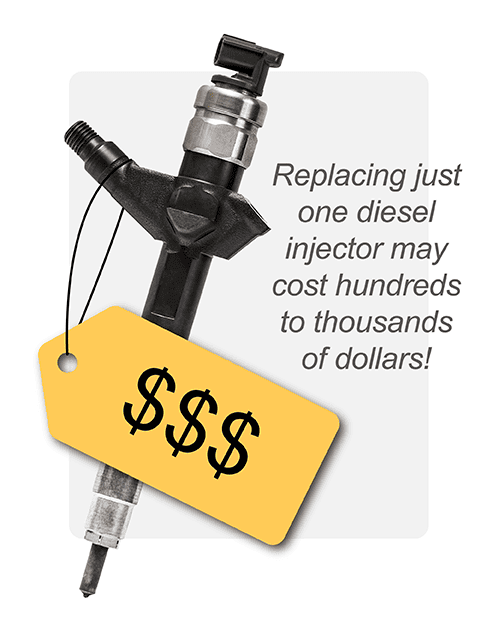
Just one diesel injector can cost hundreds to thousands of dollars to replace. Multiply that by the number of injectors in a 6 or 8-cylinder engine, and the repair costs can take a considerable bite out of a company’s profits!
A well-designed fuel pipeline includes filtration at the transfer, dispensing/filling, and onboard stages. But a successful contamination control plan must begin at the bulk storage stage.
That’s where recommendations from the Worldwide Fuel Charter come into play.
What is the Worldwide Fuel Charter?
The Worldwide Fuel Charter (WWFC) was developed by an international committee representing automotive and fuel manufacturers aiming to create a global standard for fuel quality. The first edition of the charter was published in 1998, and at the time of this post, the charter is in its sixth edition (published in 2019).
Among various analyses and recommendations made in the charter, its recommendations regarding bulk stored fuel are especially important.
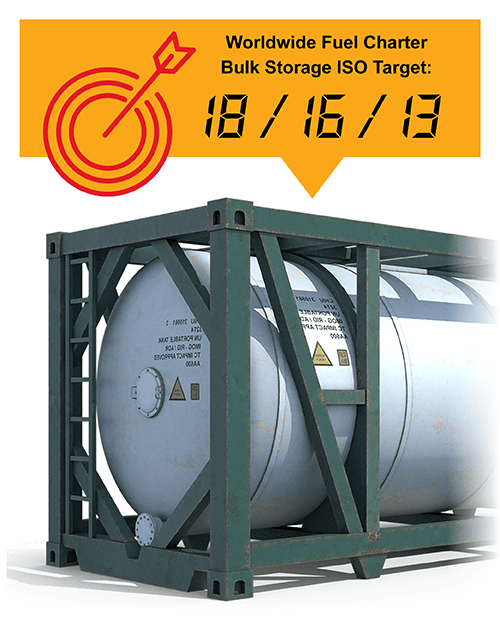
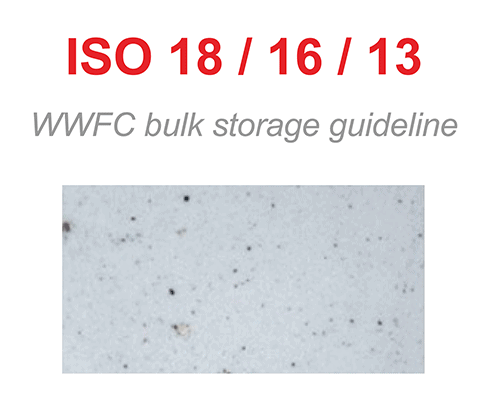
According to the current edition of the WWFC, an ISO Target of 18/16/13 advised for bulk stored fuel.
ISO Targets refer to a desired maximum level of contamination in operating fluid, whether the fluid is oil or diesel fuel.
Why Does the WWFC Storage ISO Target Matter?
To explain this, we must first review the most critical part of a diesel-driven machine: The injector system.
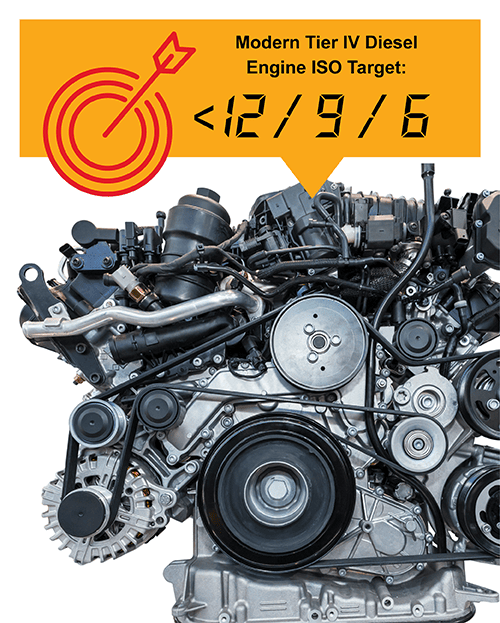
Diesel injectors are highly sensitive to solid contamination due to their precise engineering and the extreme pressure they experience while operating.
To ensure these expensive, sensitive components are able to reach their standard operating lifespan, they are assigned a very stringent ISO Target of <12/9/6. This target represents 16x greater sensitivity than a typical modern hydraulic system!
While a system of dispensing and onboard filters help diesel fuel reach that stringent target, if the stored fuel is especially contaminated, those filters can become overburdened.
This is why the WWFC suggests a minimum cleanliness target of ISO 18/16/13. By starting with cleaner fuel, the dispensing and onboard filters are not overwhelmed with contamination, allowing them to operate more efficiently and effectively.
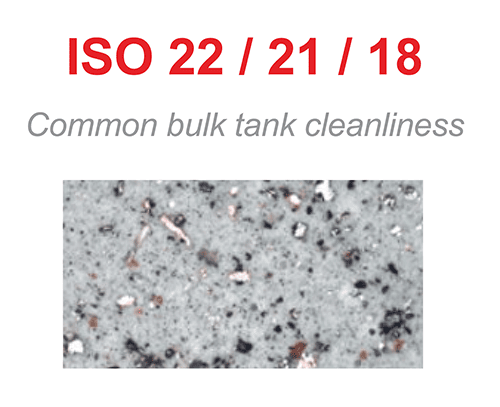
Below are microscopic comparisons of a common condition of bulk diesel tanks versus the WWFC target of ISO 18/16/13.
If you need to reach <12/9/6 to protect your injectors, which bulk fuel condition would you rather start with?
The Costs of Contaminated Fuel
Without taking additional steps to ensure the quality of your bulk diesel, your expenses can skyrocket:
The bottom line: Starting with cleaner bulk fuel can cut costs!
Contamination Vectors to Watch Out For
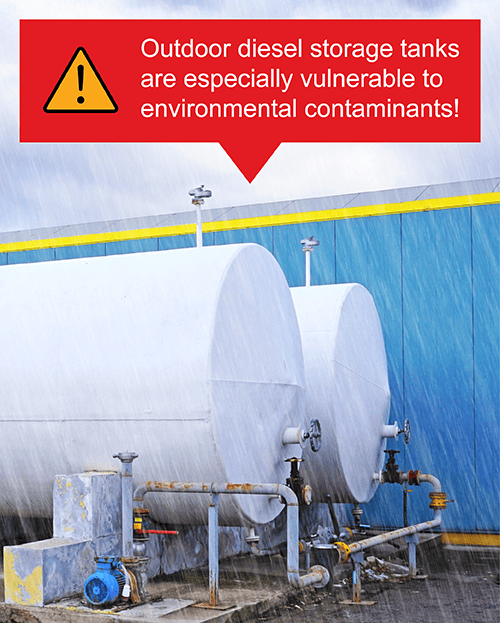
Understanding how bulk stored fuel becomes contaminated can help you implement the right solutions! Here are some of the primary ways that contamination occurs in storage tanks:
Bulk Diesel Solutions from Schroeder Industries
Schroeder Industries engineers, manufactures, and delivers a full suite of fuel filtration and polishing solutions!
Here are just two of our favorites:
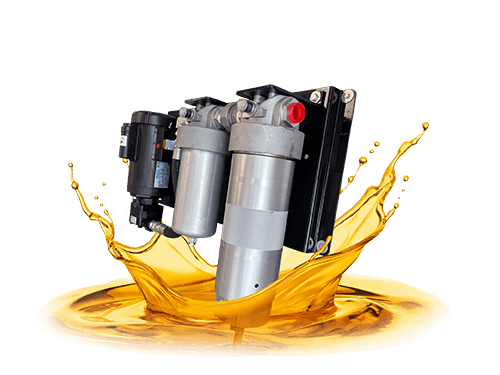
BDFP – Bulk Diesel Filtration Panel
14 or 25 gpm (53 or 95 L/min)
Combines particulate GHPF filter and coalescing GHCF filter with integrated pump. Powerful performance & straightforward installation in new or existing filtration systems!

BDFC – Bulk Diesel Cart
14, 16, or 25 gpm (53, 60, or 95 L/min)
Nimble bulk fuel filtration cart helps protect vital engine components from fuel contamination-related damage and failures. Combines fuel-water separation technology and particulate filtration
Want cleaner diesel? Ask the experts!
Our fuel filtration experts can help with pricing, product recommendations, an assessment of your existing fuel filtration system, and much more.
Whether you’re a contamination monitoring veteran or are just venturing into the world of contamination control for diesel, we can help!