



How Hydraulic System Varnish Causes Sticky Situations
Comments Off on How Hydraulic System Varnish Causes Sticky Situations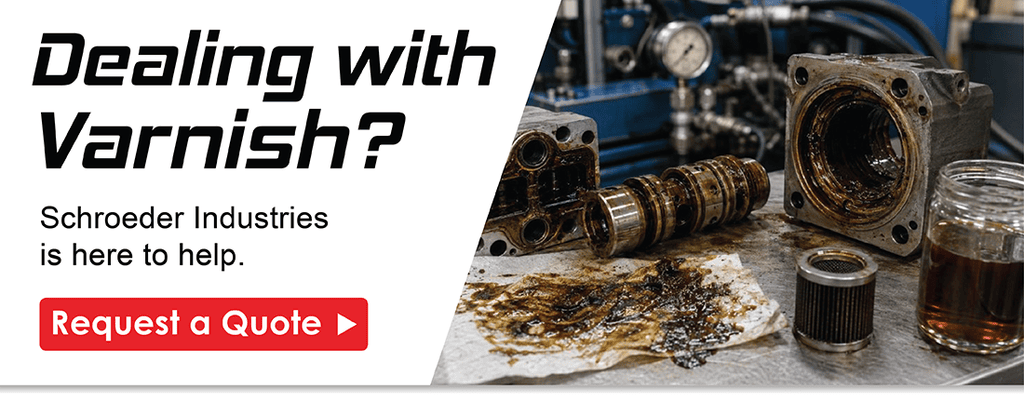
What is this sticky substance in my hydraulic system?
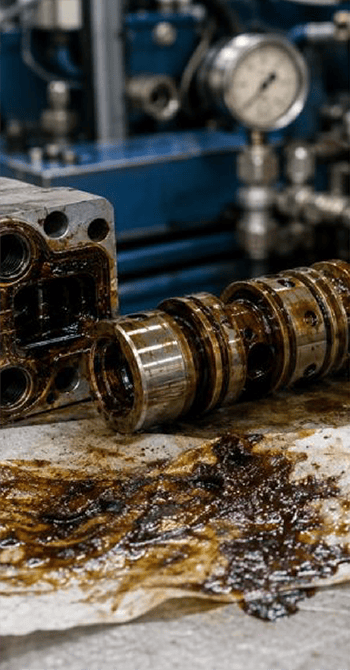
If you have noticed dark, sticky, sludgy deposits on your tank walls and other hydraulic components, the most likely culprit is varnish. There are some key features that distinguish varnish from other types of solid contamination.
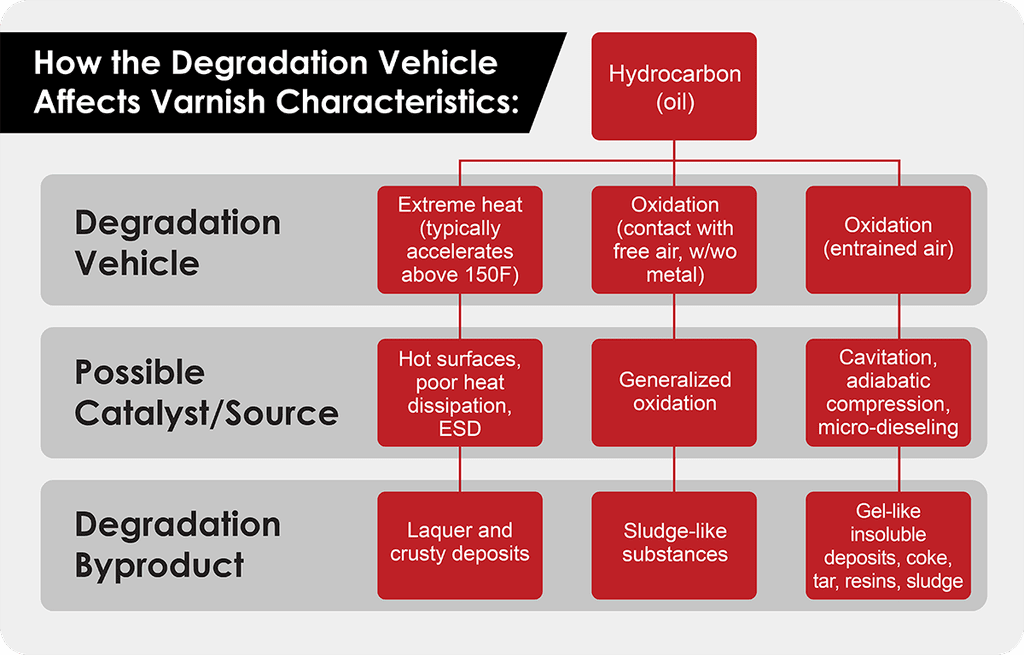
The term ‘varnish’ does not refer to one specific chemical.
Instead, varnish is an umbrella term that describes many different oil degradation products.
The form that varnish takes depends mainly on the process driving oil degradation. Examples include:
Depending on its form, varnish may require different solutions to remove and prevent. Part of an effective varnish mitigation strategy includes understanding what is driving varnish in your system!
How does varnish affect my hydraulic system?
Varnish in the hydraulic system can overwhelm components, causing cascading issues. Implementing solutions early is critical: Once high levels of varnish are established, they can be challenging to remove.
When oil aging byproducts reach critical levels, you can expect problems including:
Why is hydraulic system varnish becoming more common?
Oil aging byproducts have always been a problem in the world of hydraulics, but critical levels of varnish are more common than ever.
Part of this is due to changes in the chemistry of oils used throughout the industry.
In the past, most oils used in hydraulic applications were known as Group I Oils. Group 1 Oils have been phased out in many applications due to environmental and safety concerns stemming from aromatics and high heavy metal content.
However, Group I Oils also had higher conductivity and high polarity, both factors which reduce the potential for varnish formation.
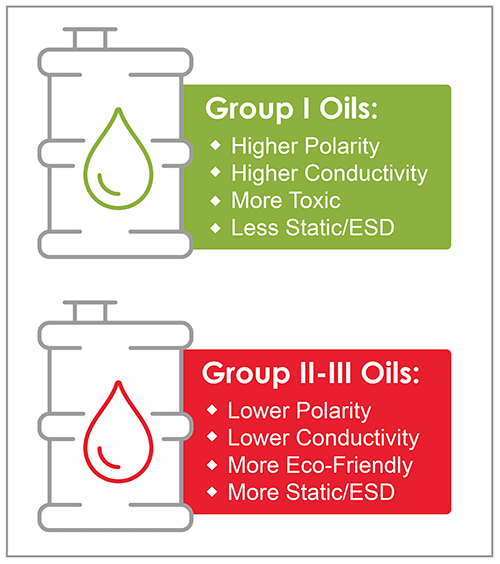
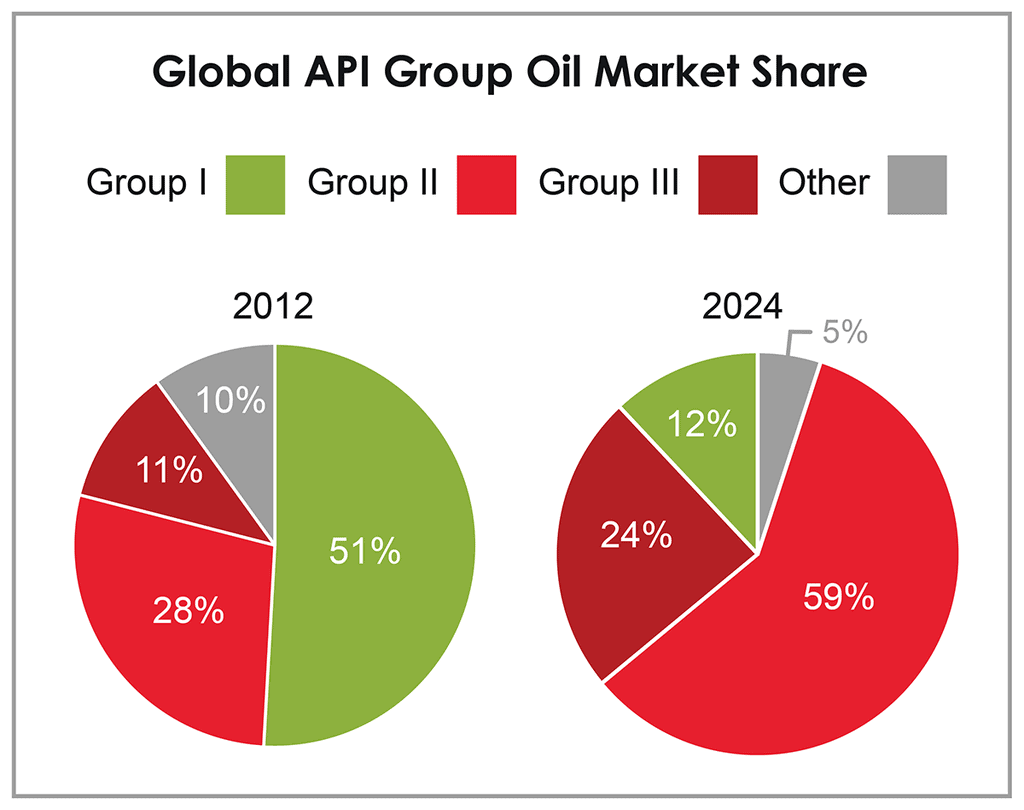
Group II Oils and Group III Oils now dominate the market share for hydraulic oils.
These oils lack the metals and aromatics that make Group I Oils toxic and potentially hazardous. But, these safer oils come with lower conductivity and lower polarity. Consequently, Group II and III Oils are more likely to produce damaging amounts of oil aging byproducts.
What applications are more likely to have varnish issues?
Changing trends in oil chemistry and the inevitability of oil aging mean that, technically, just about any application could see varnish formation. But in our experience, certain applications are much more vulnerable.
If your application meets any of the following criteria, be extra vigilant for varnish:
How do I remove varnish in my hydraulic system?
Managing hydraulic system varnish poses extra challenges compared to controlling typical solid contamination. But with a thoughtful strategy, affected operations have seen significant success and cost reductions:
Step 1: Determine the severity of the issue through bottle sampling.
Currently, there are no real-time sensors to detect varnish in the way that we can detect solid particles.
Bottle sampling and laboratory testing are required to measure the risk and presence of hydraulic system varnish. However, it’s important to make sure your testing is examining the right values.
When testing for varnish, be sure your testing service includes the following:
Total Acid Number (TAN): Also known as the Acid Number (AN). As oil degrades, organic acid compounds are produced. These acids are an early warning sign of oil aging and varnish formation. TAN analysis is a valuable tool for assessing the potential for varnish.
Membrane Patch Colorimetry (MPC): This test measures varnish potential by identifying the levels of insoluble solids generated by oil aging. Comparing the color of a test patch to a corresponding scale reveals whether risk is low, moderate, or critical.
Schroeder Industries’ Fluid Analysis Program includes options for measuring these varnish indicating values.
Step 2: Identify the primary driver of oil degradation.
As discussed above, the physical characteristics of oil aging compounds depends on what is driving the oil aging. If heat is the primary driver, for example, the resulting varnish is crustier and more lacquer-like than varnish derived from regular oxidation.
If the main oil aging drivers can be determined, steps can potentially be taken to improve issues such as overheating, high levels of air contamination, etc. As a result, varnish removal and continuing management gets a bit easier.
For applications where electrostatic discharge (ESD) is accelerating varnish formation, choosing the right filter element can make a huge difference.
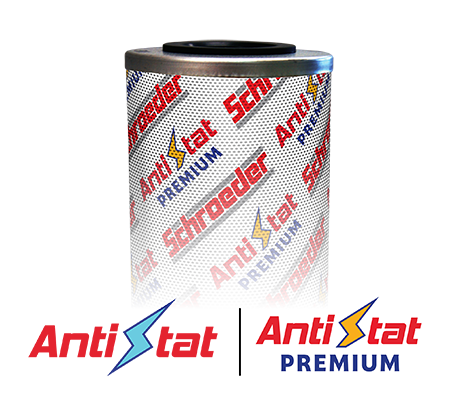
Schroeder Industries comprehensive ESD-busting filtration includes two types of anti-static filter media:
Anti-Stat Media: Our cost-effective option for low to moderate ESD scenarios. Anti-Stat media is effective for conductivity values higher than 100 pS/m.
Anti-Stat Premium Media: This enhanced static-eliminating media can stop even the most extreme ESD in its tracks. Use to tackle applications with fluid conductivity values lower than 100 pS/m.
Step 3: Implement a varnish removal solution.
Once the severity of the varnish and the main contributing oil aging factors are determined, it’s time to make the varnish vanish. There are two primary ways to remove hydraulic system varnish:
Chemical Flushing: Once varnish has become deposited on a surface, filtration alone is not enough to remove it. Chemical solvents that loosen and break down tough varnish deposits must be flushed through the system.
Once the varnish has been lifted from surfaces throughout the system, the solid oil aging byproducts can be picked up through varnish removal filtration or removed during drainage.
Specialized Filtration: Normal solid contamination filters aren’t necessarily effective for varnish. The small particle size and ability for some varnish to dissolve into warm oil can make extraction tricky, so purpose-engineered filtration is required.
Some varnish removal technology combines special adsorption elements with cooling units to precipitate dissolved varnish into solid particles. Others utilize ion exchange processes to attract and accumulate varnish.
Step 4: Monitor your fluid for any increases in varnish potential.
With any kind of contamination, it’s important to never assume that the problem is permanently solved just because a filtration solution has been implemented.
Regular oil testing confirms whether the varnish mitigation strategy is actually working. By compiling varnish parameter data over time, any potentially negative trends can be spotted and addressed quickly before the application’s equipment or productivity suffer.
Part of Schroeder Industries’ Fluid Analysis Program includes access to the Fluid Care Portal. This platform greatly simplifies the process of storing and managing test report data, and brings visibility to trends in fluid condition with its easy-to-use interface.

Got varnish? We can help!
Our fluid conditioning and contamination control experts can help find the right varnish removal solution for you. Tell us about your application and your challenges!