All hydraulic oil has a lifespan. Is yours reaching its full potential?
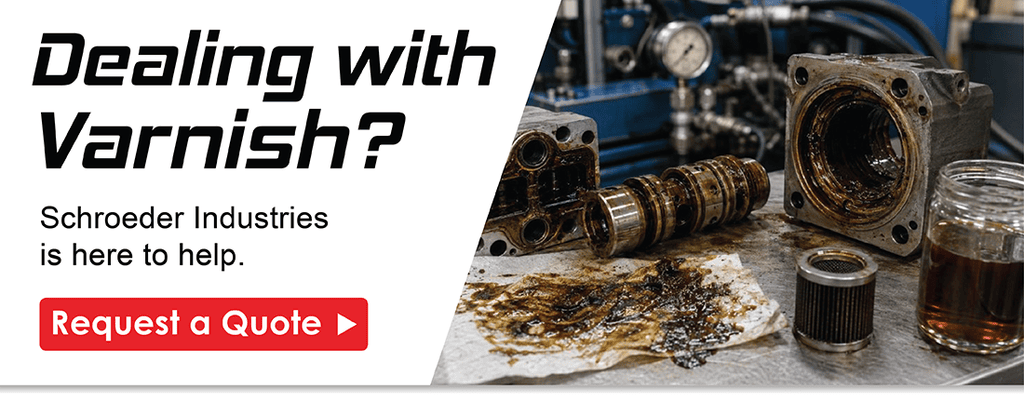
Due to oil aging, operators commonly struggle with byproducts—sticky, gel-like substances often called varnish. Varnish and other insoluble oil aging byproducts can overwhelm system components, reducing efficiency and forcing costly downtime and maintenance.
Schroeder Industries is your partner for effective varnish removal solutions.
There is no fixed, standard lifespan for hydraulic and lubricating oils. In some applications, oils can last for thousands of hours, even years under the right conditions!
Aging depends on the chemical makeup of the oil, the application the oil is used in, contamination control strategies, and other variables. Even though hydraulic oils don’t last forever, there are accelerating factors that operators can watch out for.
What makes hydraulic oil age faster?
There are two key factors that cause hydraulic and lubricating oils to age faster:
High Temperatures
Heat is one of the biggest drivers of varnish formation and oil degradation. Some of the triggers for damaging temperature spikes include:
High Operating Temperatures. In applications where equipment runs at higher temperatures, or for longer cycles, oil degradation speeds up.
Microdieseling. Air bubbles can collapse and combust under high pressure in a hydraulic system, causing localized temperature spikes up to 1,000°C. This microdieseling phenomenon literally burns the surrounding oil, contributing to the aging process and varnish formation.
Electrostatic Discharge. Low conductivity oils can produce static charges powerful enough to throw literal sparks inside the hydraulic system. Like microdieseling, these sparks cause localized thermal spikes and contribute to oil degradation.
Impaired Machine Efficiency. When contamination (including varnish) begins to damage components and impede machine efficiency, the machine has to work harder to perform tasks. This contributes to overheating, which further drives the oil aging process.
Oxidation
Oxidation refers to the chemical reaction between oxygen and hydraulic fluids. Certain variables can worsen oxidation in the system:
Air Contamination. When air bubbles become entrained in the hydraulic fluid through sloshing, design flaws, leaking seals, etc, these bubbles accelerate the oxidation process.
Water Contamination. Even low levels of water contamination in hydraulic oils are a catalyst for increased oxidation, acid formation, and additive depletion.
Additive Depletion. Many hydraulic and lubricating oils contain additives that improve the oil’s performance and enhance its chemical stability, slowing the process of oxidation. Contamination degrades and depletes this additives, which eliminates their protective effect on the oil aging process.
How can oil aging byproducts affect my system?
Varnish and other oil aging byproducts can overwhelm components in the hydraulic system, causing cascading issues. Implementing varnish removal solutions early is critical: Once high levels of varnish are established, they can be challenging to remove.
When high levels of varnish occur, you can expect problems including:
Malfunctioning Components. Varnish deposits on hydraulic valves and other components can cause the components to stick, or even become fully jammed.
Higher Operating Temperatures. The operating temperature of the machine may increase as the machine tries to compensate for its reduced efficiency, which can accelerate oil degradation and cause overheating.
Equipment Failures. Machines may malfunction at critical moments as components lose efficiency or fail entirely, leading to lost productivity or safety hazards.
Fouled Filters. Hydraulic filters and filter elements may become prematurely blocked due to varnish buildup.
Increased Operational Costs. Lost productivity and frequent repairs or part replacements due to varnish buildup can become very costly.
What applications are commonly affected by varnish?
No system is completely safe from the effects of oil aging. But, there are some applications that are especially vulnerable to varnish:
High Temperature Applications. As discussed above, high operating temperatures cause oil aging to happen faster. In scenarios where operating temperatures are especially high, or equipment runs for long continuous cycles, varnish formation is expected. Plastic injection applications and steel mills are just two examples of high-heat, high-risk operations.
Unlike solid contamination and water contamination, varnish cannot be detected with conventional particle counters or sensors!
To confirm the presence or risk of varnish, laboratory analysis is required. Testing services that include Membrane Patch Colorimetry (MPC) and Total Acid Number (TAN) analysis can identify varnish precursors and oil aging byproducts in sampled fluids.
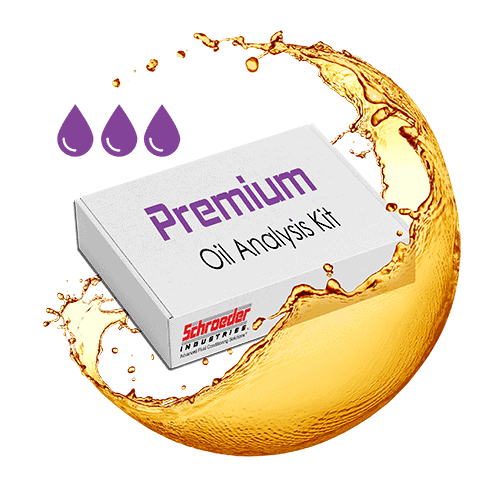
Schroeder Industries offers a comprehensive selection of testing kits with user-friendly digital report management. Our Premium Oil Analysis Kit includes MPC and TAN parameters, making it the best choice for varnish detection.
Standard solid contamination filters are not equipped to remove varnish. Tackling varnish and oil aging byproducts requires specialized solutions. When oil aging is effectively managed, operational costs related to downtime, maintenance, and oil replacement drop.
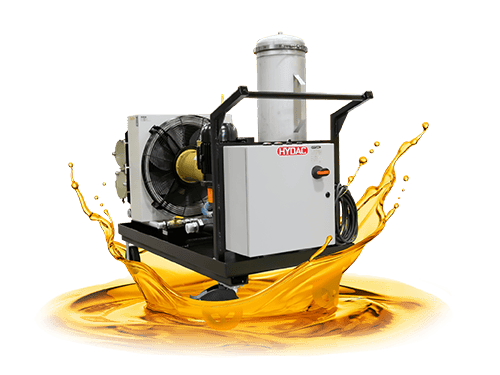
Schroeder Industries has developed varnish removal technology proven to extend oil life, eliminate varnish, and restore equipment reliability and performance.
Our fluid conditioning and contamination control experts can help find the right varnish removal solution for you. Tell us about your application and your challenges!