Skip to Content
Exit
 

Tag Archive: Air Fusion Technology

  1. How to Fight Hidden Air in Hydraulic Tanks

    Comments Off on How to Fight Hidden Air in Hydraulic Tanks
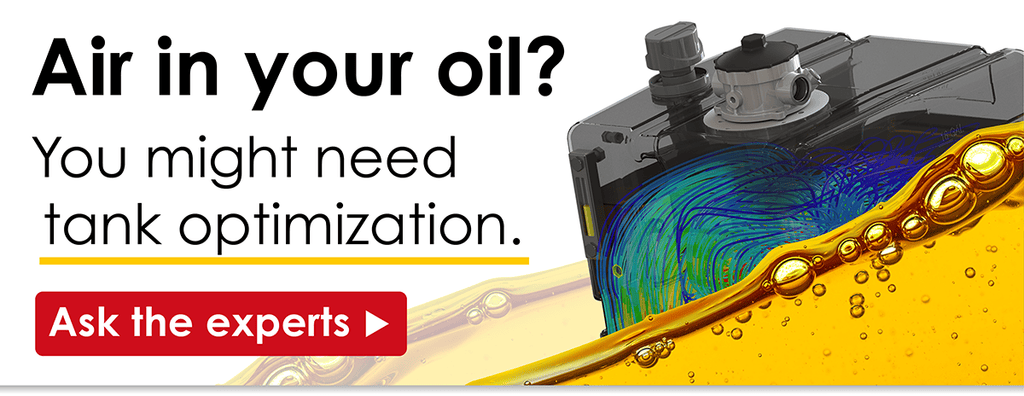
    Hydraulic tank illustration showing air bubbles in hydraulic oil and fluid circulation. Text reads: “Air in your oil? You might need tank optimization. Ask the experts.”

    Your reservoir is more than just a holding space for hydraulic fluid.


    “If the reservoir isn’t leaking, all is well, right?”


    Actually, the hydraulic tank assembly plays a critical role in removing damaging air contamination from your fluid!


    Despite being the central pillar of controlling air contamination, many reservoirs aren’t well-optimized for the job. Even reservoirs that perform adequate deaeration might be secretly weighing down the system and the oil budget.


    How can air contamination affect my hydraulic system?


    Discussions around contamination usually focus on solid particulates and water. But what happens to a hydraulic system when it becomes contaminated by air?

    If not controlled, air contamination targets system components, overall oil condition, and machine efficiency:

    • Accelerated Oil Aging: Oxygen in the air speeds up the aging of oil.
    • Varnish / Gel-Like Buildup: Oil aging byproducts like varnish can foul and damage hydraulic system components.
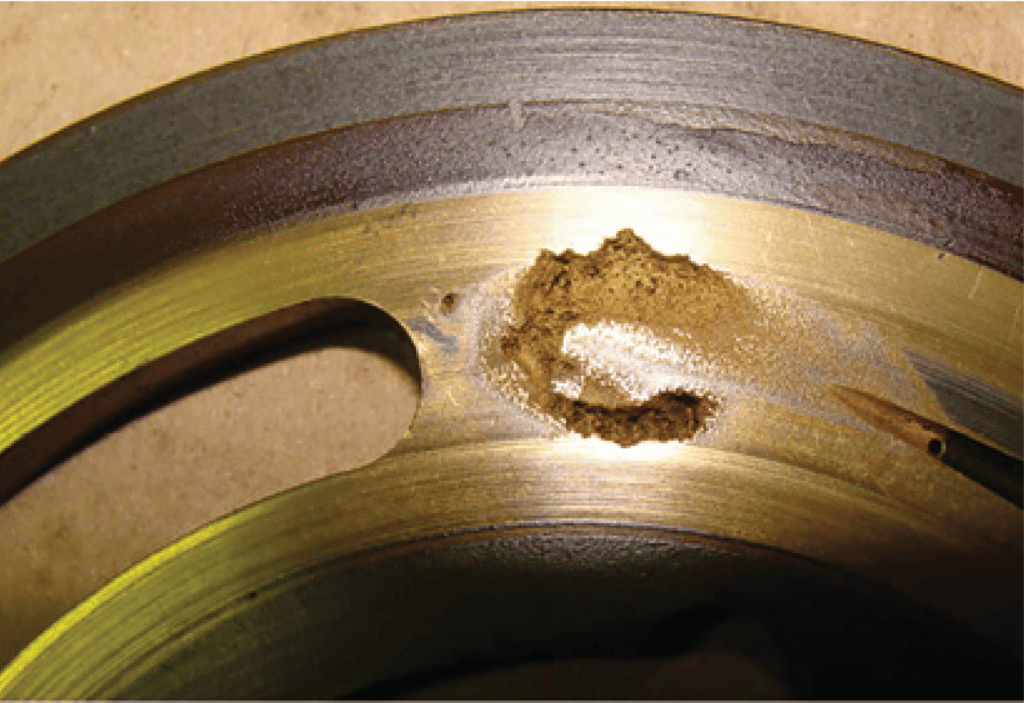
    • Cavitation: Air bubbles can collapse so violently under high pressure that physical damage occurs.
    • Microdieseling: Air bubbles may also combust under high pressure, literally burning the surrounding oil & speeding up aging and byproduct formation.
    • ‘Spongy’ Hydraulics: Compressible air can cause delayed responses in the machine’s actions.
    Close-up of pitting and surface erosion on a metal hydraulic component, illustrating potential cavitation damage associated with air contamination in hydraulic systems.

    Cavitation Damage


    How does a hydraulic reservoir influence deaeration?


    Unfortunately, it’s impossible to completely eliminate air in a hydraulic system, so best way to handle air in your oil is to influence how the air behaves.

    Enabling deaeration involves encouraging any bubbles to coalesce and escape the oil. In a hydraulic system, the hydraulic reservoir is where this deaeration happens.

    Ideally, any air bubbles that form in the hydraulic fluid will exit the fluid and disperse into the open headspace of the reservoir.


    The key to air removal in the reservoir is reducing fluid turbulence in the reservoir.

    Fast, turbulent flow in the reservoir keeps air bubbles circulating and suspended in the fluid for longer. In extreme cases, flow may be high enough that it causes surface disruptions that draw more air into the fluid.

    A tank assembly that can reduce the turbulence of flow allows air bubbles to coalesce, rise, and escape from the oil more easily. This can be accomplished with thoughtful tank geometry and carefully selected in-tank filtration.

    Eliminating turbulence is also critical for keeping air out of suction lines. The longer air bubbles remain in the reservoir before being drawn into the suction lines, the better their chance of coalescing and escaping the oil. Reducing turbulence is a good way to boost air residence time.
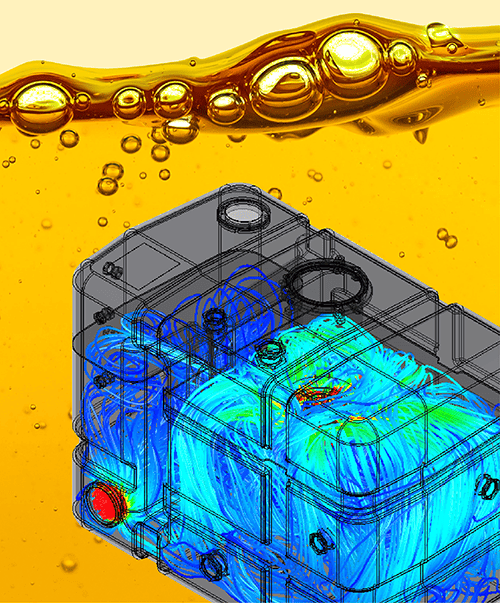
    Air in hydraulic tanks illustrated by bubbles in hydraulic oil above a 3D reservoir model showing simulated fluid-flow patterns for tank optimization.

    One of the ways that conventional reservoir designs have tried to increase air residence time and combat flow turbulence is by simply making the reservoir bigger.


    Increased volume can dampen turbulent flow and increase air residence time…but oversized reservoirs come with some major downsides:


    • Larger reservoirs require more oil, which drives up oil-related costs.
    • Bigger, heavier reservoirs increase overall equipment weight and reduce energy efficiency.
    • With a bigger tank assembly, less space is available for design innovations and other useful features.
    Close-up illustration of golden hydraulic oil droplets splashing into a pool of oil, creating ripples across the surface.

    How can Tank Optimization and Air Fusion Technology filtration improve my reservoir?


    Schroeder Industries’ Tank Optimization uses specialized digital simulations to analyze the existing properties of a tank, identifying inefficiencies in the design. From there, our tank assembly and hydraulic system experts develop a solution that optimizes deaeration and improves overall tank performance.

    When paired with purpose-built deaerating filtration, this optimization and redesign process often enables significant reservoir downsizing.
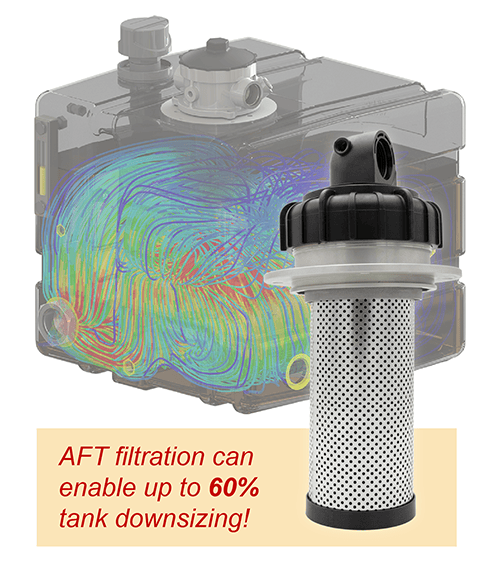


    When Tank Optimization meets Air Fusion Technology, reservoir deaeration is maximized.


    Hydraulic reservoir with simulated fluid-flow patterns and an Air Fusion Technology (AFT) filtration element. Text highlights potential tank downsizing of up to 60%.

    See how these real Schroeder Industries clients achieved significant tank assembly downsizing by combining deaerating filters with Tank Optimization:


    Tank Optimization + AFT Produces 77.8% Reservoir Reduction


    An OEM producing ride-on snow removal equipment, wanting to be more competitive in the market, sought solutions to improve their hydraulic oil cleanliness and optimize their systems.

    By combining Tank Optimization with the advanced deaeration of Air Fusion Technology filtration, Schroeder Industries was able to downsize the reservoir from 9 gallons to 2 gallons, allowing the customer to improve their equipment design and become more competitive!
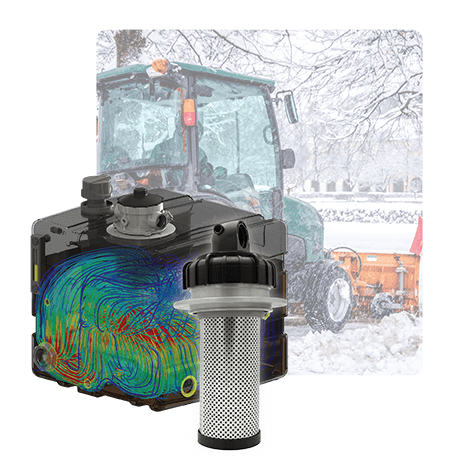
    Agricultural field with a hydraulic reservoir showing simulated fluid-flow patterns and an Air Fusion Technology (AFT) filtration element for hydraulic tank optimization.

    Here’s how Tank Optimization and Air Fusion Technology helped this customer:


    Reservoir Downsized by 7 Gallons and 51lbs (77.8%)


    Design Improvements: Runs 2x Longer Than Competitor


    Nearly $100 USD Initial Cost Savings Per Unit


    Tank Optimization + AFT Nearly Halves Reservoir Volume


    An OEM manufacturing mobile seed tending equipment sought to assess the performance of their reservoirs and improve their tank design.

    This particular customer was producing their own 12-gallon reservoirs in house. Not only could Tank Optimization improve their reservoir design, but any volume reduction would lessen the materials required for manufacturing.

    This Tank Optimization, combined with the fixed head Air Fusion Technology configuration (AFTF), was able to downsize the 12 gallon reservoir by almost half.
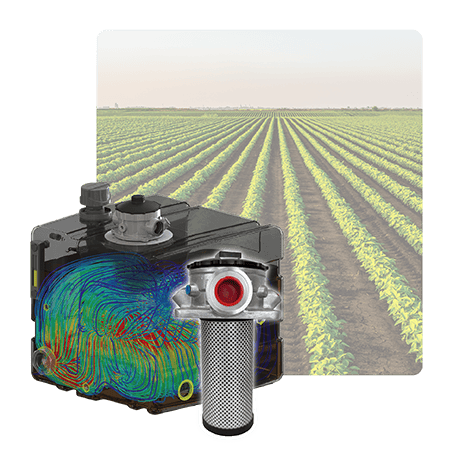
    Tank optimization

    Here’s how Tank Optimization and Air Fusion Technology helped this customer:


    42% Reservoir Downsizing (5 Gallon Reduction)


    3,750 Gallons of Oil Saved Across 750 New Units


    $40K Reduction in Oil Costs through Tank Optimization


    Ask the experts if your reservoir could use Tank Optimization!


    Find out what’s happening inside your tank:

    Request for Quote

    • Which products are you interested in?
    • Max. file size: 256 MB.
  2. Unlock Superior Stability: Schroeder’s AFTF in Action!

    Comments Off on Unlock Superior Stability: Schroeder’s AFTF in Action!


    Introducing the latest in Schroeder Industries’ line of powerful in-tank filters!

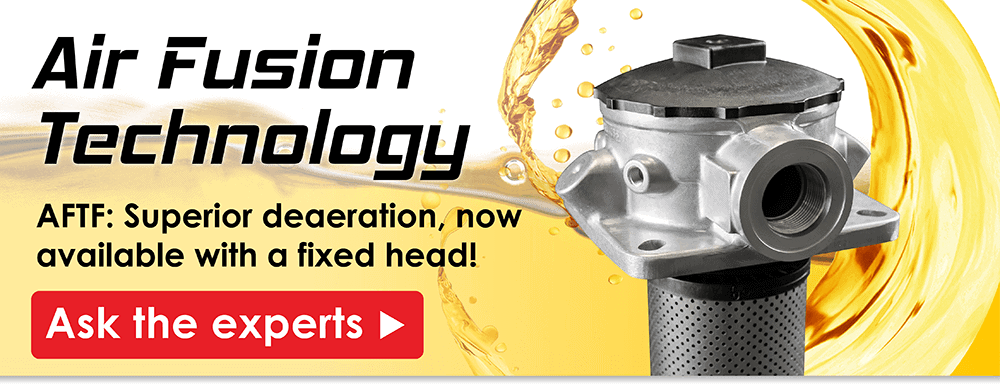
    Using the same cutting edge technology as the Schroeder AFT, the new AFTF provides all the best qualities of Air Fusion Technology with stabilized, fixed-head porting.

    Air contamination can be devastating within a hydraulic system, so having an in-tank filter that specializes in advanced deaeration can prevent substantial downtime, repairs, operational inefficiency, and more!


    AFTF Benefits and Specifications

    Here’s just some of what makes the AFTF one of the most powerful deaerating in-tank hydraulic filters available:


    • Exceptional deaeration capabilities. Air Fusion Technology reduces fluid velocity and encourages bubble coalescence for substantially more effecting deaeration than other in-tank filters currently available.
    • Fixed head allows for a breather attachment. The stabilized porting allows the addition of an external breather, further increasing the deaeration potential.
    • Provides filtration even in bypass. The specialized bypass valve in the head of the filter allows the filter to function even while in bypass for greater filtration efficiency.
    • Potential for reservoir downsizing. The deaeration of the Air Fusion Technology is so efficient that it may be possible to downsize your hydraulic reservoir by up to 60%!


    Filter Housing Specifications

    Flow Rating:40 gpm (151 L/min)
    Max. Operating Pressure:100 psi (7 bar)
    Min. Yield Pressure:350 psi (24 bar)
    Rated Fatigue Pressure:100 psi (7 bar)
    Temp Range:-20°F to 225°F (-29°C to 107°C)
    Bypass Setting:Cracking: 25 psi (1.7 bar)
    Element Change Clearance:4LK = 5.28” [134mm]
    8LK = 8.62” [219mm]
    12LK = 11.96” [304mm]
    16LK = 15.30” [389mm]
    Element Case:12 elements

    Features:

    • Patent Pending In-tank filter design
    • Lightweight and as part of a tank optimization package can reduce reservoir size
    • Lock & Key Quality Protected, OEM-specific interfaces available
    • Superior de-aeration performance
    • Fixed head connection. Lines stay connected during element changeouts

    Markets Served:

    • Automotive
    • Agriculture
    • Defense
    • Forestry
    • Industrial
    • Marine
    • Mining Technology
    • Mobile Vehicles
    • Oil & Gas
    • Railroads
    • Refuse


    Find out if the AFTF is right for your application!

    Contact-Blog-AFTF Introduction

    • Max. file size: 256 MB.