Comments Off on Can Better Water Control Protect Your Hydraulic Oil?
Water contamination can sink your productivity and drown your budget.
Solid contamination is the most common type of contaminant, but water contamination can be just as damaging.
Water contamination in hydraulic oil occurs when dissolved, emulsified, or free water enters the fluid and reduces lubrication, promotes corrosion, and accelerates component wear.
The risk is constant in applications that utilize large quantities of water or are exposed to weather and ambient humidity.
Uncontrolled water contamination damages equipment and productivity for any hydraulic system operating in such environments:
Water contamination lowers oil lubricity, which accelerates component wear.
Rusting, corrosion, and oxidation can occur as water interacts with internal system components.
Physical damage such as macro-pitting (spalling) and micro-pitting can occur in cylinders, gears, and other parts.
Ultimately, total machine failures may occur, forcing operations to halt.
Paying to replace oil or hiring a third party oil reclamation service can seriously undermine your profits—not to mention the cost of equipment repairs and lost productivity
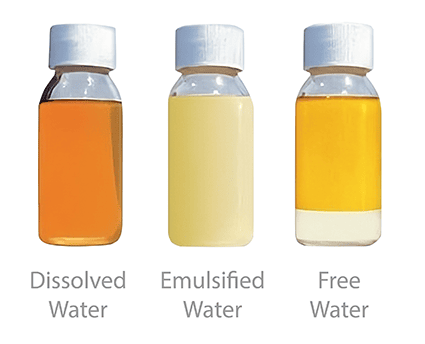
Water contamination comes in three forms, with different levels of severity for your equipment:
Free Water: The worst kind of water contamination. Free water is a separate, visible layer of water that forms when hydraulic oil exceeds 100% saturation.
Emulsified Water: As saturation approaches 100%, small water droplets are visibly suspended in the fluid, giving it a cloudy appearance. While not as inherently damaging as free water, emulsified water is a clear warning sign of contamination approaching a critical level.
Dissolved Water: Considered the least harmful state of water contamination. However, extreme temperature changes can cause dissolved water to separate and become free water.
Changes in temperature can cause water to change form in your system, moving between these three states.
Regardless of how the water in your oil is behaving at one moment, it can go from relatively harmless to increasingly damaging when temperatures start to shift! This means that controlling all water contamination at all times is vital.
Is my operation vulnerable to water contamination?
Virtually any industry can experience some level of water contamination. However, some industries stand out as particularly vulnerable:
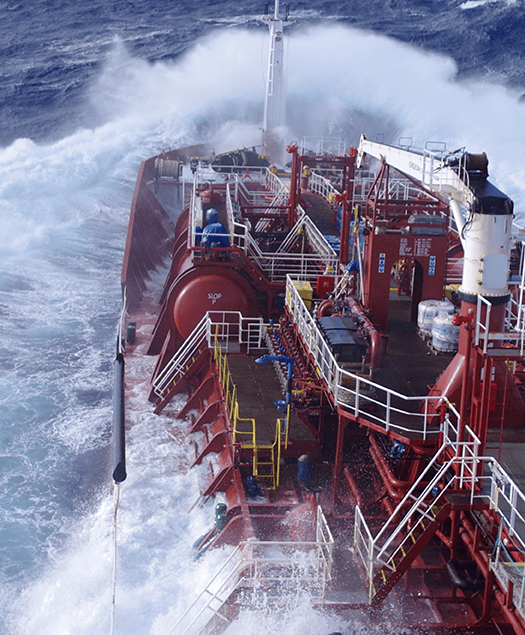
Marine: The risk of water contamination when operating on rivers, lakes, and oceans goes without saying! Additionally, swings in temperature in these outdoor environments can cause free water to form, flooding the system with the most damaging state of water.
Pulp & Paper: High volumes of water are required in pulp processing and paper production. In these applications, water contamination is a common pain point.
Steel: High heat applications mixed with high-pressure cleaning spray-downs creates intense humidity. Temperature changes in steel plants can easily trigger condensation of water into the hydraulic reservoirs.
Water contamination can infiltrate reservoirs and equipment in multiple ways.
Damaged seals, a rainy and humid climate, high-pressure water streams used in the cleaning process, and poor bulk oil storage are some common vectors for water contamination. Because water contamination can come from so many places, creating a plan to combat it can be challenging.
How can I prevent water contamination in my hydraulic oil?
Step 1: Test your oil to determine saturation levels.
If you suspect water contamination, it’s important to test your oil. When you know the saturation levels you’re dealing with, it’s easier to develop a strategy for water removal.
Saturation sensors are a great way to detect water contamination in real time. Lab testing is even better, since more sophisticated testing methods can expose other contamination-related problems in your fluid.
Step 2: Examine your equipment and operating environment for vulnerabilities.
Knowledge is power! Finding out where the water contamination is originating from can help prevent it.
Water may be entering via worn seals, loose reservoir caps, poor bulk storage practices, and other variables you can control.
However, many operations may face ambient humidity, big temperature swings, and the unavoidable need for water in their manufacturing process. When a potential source of water contamination can’t be controlled, the best defense is to continuously extract the contamination from your hydraulic oil.
Step 3: Implement water removal filtration tools.
Once you’ve determined how much water you’re dealing with, and where it might be coming from, the next step is filtration. Depending on the amount and frequency of water contamination, there are various tools at your disposal.
Specialized water-removal filter media can absorb smaller quantities of water. Multi-stage filtration housings can allow you to implement different media types to target both water and solid particulate contamination at once.
Large reservoirs and high contamination levels require more specialized equipment. Dehydrating filtration systems are designed to extract free water, as well as a large portion of dissolved water from the fluid.
Step 4: Continuously monitor your fluid condition.
Even with filtration in place, it’s important to implement a strategy for monitoring saturation levels in your oil at all times. Saturation sensors are useful for determining if your dehydrating filtration solution is performing adequately. These sensors can also warn of sudden influxes of water contamination, allowing remedial measures before contamination-driven damage can run rampant.
Many modern saturation sensors include digital connectivity for remote monitoring and reporting, which keeps you informed of your fluid condition in real time, wherever you are.
Schroeder Industries offers a variety of tools and solutions for water removal.
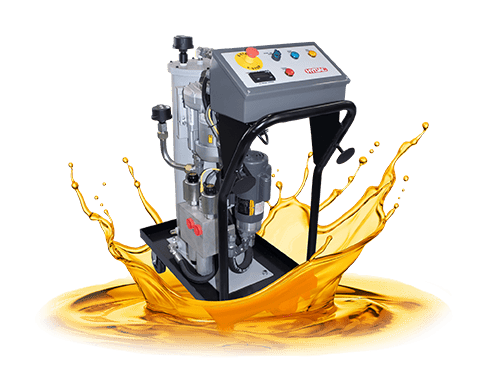
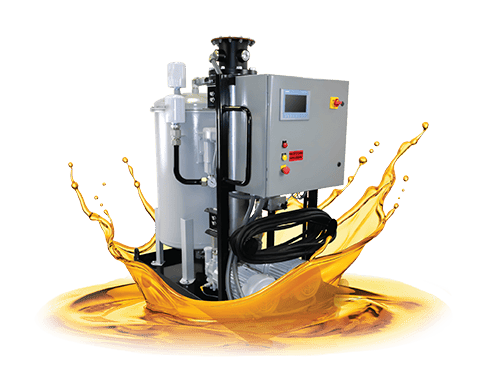
Our Triton Dehydration Stations offer proven performance for oil reclamation in larger reservoirs and high contamination scenarios.
These units are engineered to eliminate 100% of free water and up to 90% of dissolved water by leveraging a patented mass-transfer dehydration technology.
Here’s how Triton Dehydration Stations helped these customers save substantial quantities of oil:
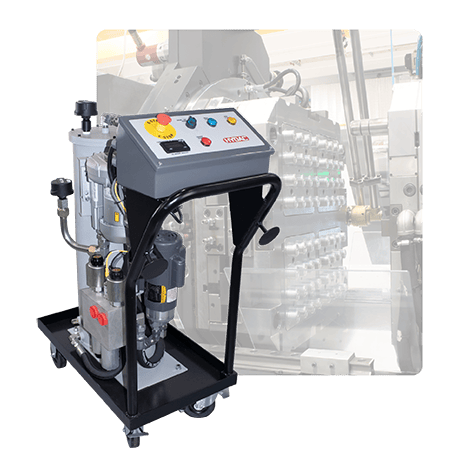
TDS-A Saves Tens of Thousands in Oil-Related Expenses for Injection Molding Equipment
A plastic packaging operations was experiencing high levels of water contamination in their injection molding equipment’s hydraulic reservoir.
The customer was spending tens of thousands of dollars per month on oil recycling costs and new oil purchases.
Schroeder Industries deployed a TDS-A unit to dehydrate their oil, as well as extract any particulate contamination, to ensure operational reliability slash the customer’s oil-related expenses.
Here’s how the TDS-A helped:
16/14/12 ISO Code Reached; Cleaner Than Customer’s ‘New’ Oil
$25-30k USD Saved Per Month on Oil-Related Expenses
220gal of Hydraulic Oil Reclaimed in Just Two Days
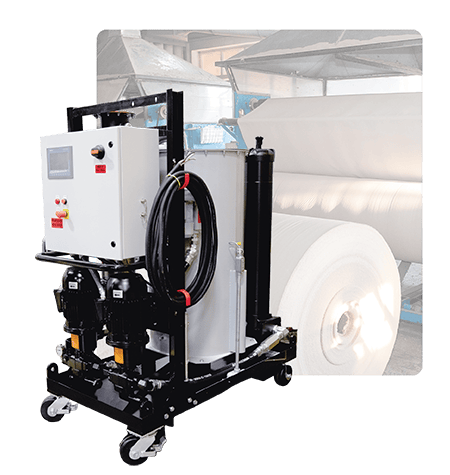
TDS-E Saves Pulp & Paper Manufacturer $10K Per Month in Oil-Related Expenses
A manufacturer in the pulp & paper market required additional water removal capacity in their power generation turbine reservoir.
While the operator tried to implement a non-Schroeder dehydration unit, it was unable to keep up with the high volume of water infiltrating the reservoir.
To allow the customer to test the performance of the TDS-E, Schroeder Industries enrolled them in the rental equipment program to prove the unit’s effectiveness.
Here’s how the TDS-E helped:
Rental Program Provides Affordable Access
TDS-E Provides Exceptional Oil Reclamation with Minimal Maintenance
Comments Off on Unlock Peace of Mind: Prevent Water Contamination Fast
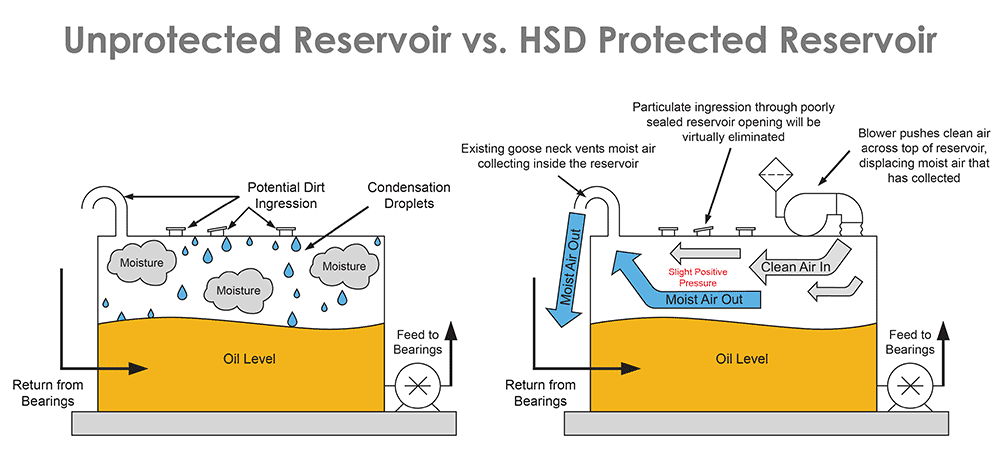
Most hydraulic reservoirs in major industries including pulp & paper, primary metals, and more feature a pocket of open space between the fluid level and the top of the reservoir. This open space, known as head space, fills with moisture as humid air ingresses via faulty seals, vents, and other entry points.
As the moisture builds in the head space, water condenses at the top of the reservoir, eventually coalescing and falling into the oil.
This water contamination can cause a range of serious problems which can impact your equipment’s efficiency and may require repairs, including:
Rust
Cavitation
Sensor failures
Reduced oil lubricity
How Schroeder’s Head Space Dehydrator Helps:
Dewatering units such as the Triton Dehydration Stations are excellent for targeting water contamination when oil has already become saturated, but preventing contamination before it reaches critical levels is ideal.
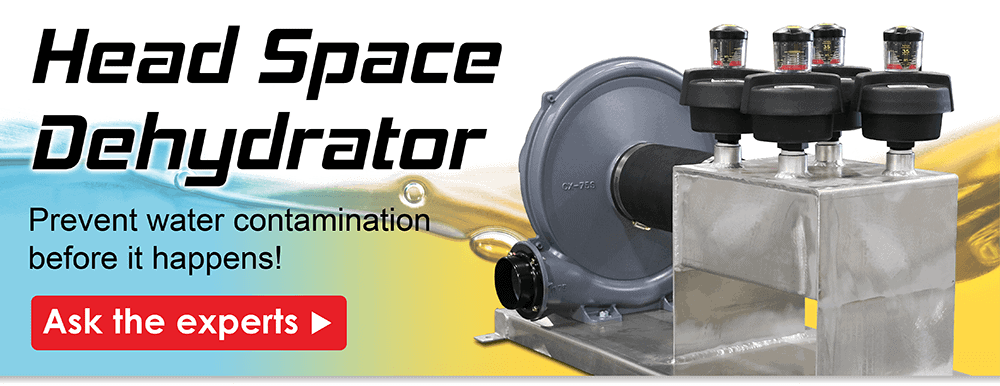
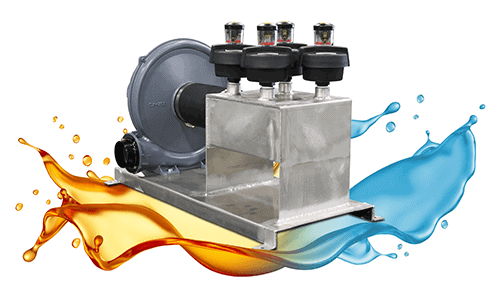
The new Head Space Dehydrator is designed to combat moisture in the head space of a hydraulic reservoir before it contaminates the oil. This unit is permanently installed on a hydraulic reservoir so that humidity inside the reservoir can be managed continuously.
Here’s how it works:
The Head Space Dehydrator assembly pulls ambient air into the chamber through a series of particulate breathers.
The clean, dry air is then blown through the head space above the fluid level, displacing and venting the moist internal air though existing ventilation points.
As the moist air is displaced, the opportunity for water contamination via condensation is reduced.
Specifications:
Flow Rating:
Max flow rate 282 cfm (7985 lpm)
Blower:
1/2HP blower with 220-275/380-480V-60Hz-3 phase motor
Breathers:
Uses 4 breathers which include -0.5 psi (-0.035 bar) differential pressure indicators
Features & Benefits
Cost effective, reliable solution for water ingression
Improved oil cleanliness
Increased lifespan of oil and components
Markets & Applications
Ideal for industrial applications where water contamination may be introduced to the reservoir head space, particularly:
Steel & Primary Metals
Pulp & Paper Production
Bulk Storage
and more!
Ask the experts at Schroeder what the HSD can do for your application!
Comments Off on The Invisible Enemy: The Truth About Hydraulic Fluid Contamination
Hydraulic Fluid Contamination: The Invisible Threat Is Real
Your hydraulic fluid may look perfectly clean. But what if the greatest threat to your equipment is something you can’t see?
Hydraulic fluid contamination is a real and potentially costly problem. Microscopic particles, water, and other contaminants can compromise hydraulic system performance long before visible warning signs appear.
“We have a filter on the reservoir, so contamination isn’t a concern.”
“Our reservoir is sealed. How could water possibly get inside?”
Unfortunately, visual inspection alone cannot determine hydraulic fluid cleanliness. Even new hydraulic oil may contain particles or moisture that exceed the cleanliness requirements of a particular system.
A hydraulic filter also cannot guarantee adequate contamination control if its element is missing, clogged, bypassing, or improperly selected for the application.
How Can You Identify and Control Hydraulic Fluid Contamination?
Effective hydraulic contamination control begins with identifying contaminants, measuring fluid cleanliness, and investigating potential contamination sources.
Depending on the application, this may include improved filtration, fluid conditioning, routine oil analysis, and maintenance practices designed to limit contamination entering or developing within the system.
The goal is straightforward: maintain hydraulic fluid cleanliness within the limits required by the equipment.
An effective contamination control program can help reduce component wear, extend fluid and equipment service life, improve operational reliability, and lower contamination-related maintenance costs.
Types of Hydraulic Fluid Contamination: What You Can’t See Can Hurt Your Equipment
Hydraulic fluid contamination can take several forms, and each presents different risks to hydraulic system performance, equipment reliability, and fluid service life.
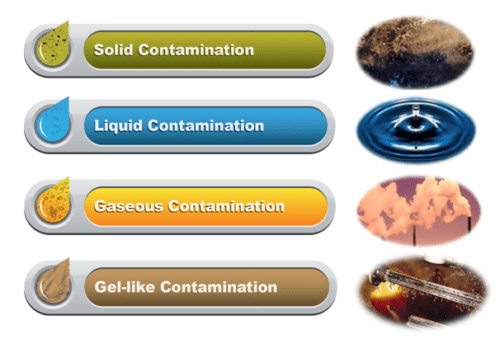
The most common types of hydraulic contamination include:
Solid contamination: Dirt, dust, metal wear particles, rust, and other debris that can contribute to abrasive wear and component damage.
Liquid contamination: Water and other unwanted liquids that can reduce lubrication effectiveness, promote corrosion, and accelerate fluid degradation.
Gaseous contamination: Entrained or dissolved air that can contribute to aeration, reduced hydraulic efficiency, and operating problems under certain conditions.
Gel-like contamination: Sludge, varnish precursors, and other degradation products that can interfere with filtration, fluid flow, and component operation.
Preventing contamination from entering hydraulic systems—and identifying existing contamination before it causes damage—is essential to effective hydraulic fluid maintenance.
How Does Excessive Heat Affect Hydraulic Fluid?
Although heat is not itself a contaminant, excessive operating temperatures can accelerate hydraulic fluid degradation.
High temperatures can promote oxidation, reduce fluid service life, and contribute to the formation of deposits that affect hydraulic system performance.
Reservoir design also plays an important role. When a hydraulic reservoir is undersized or provides insufficient cooling capacity, the fluid may not dissipate heat effectively before returning to the hydraulic circuit.
Maintaining appropriate operating temperatures, monitoring fluid condition, and controlling contamination can help protect hydraulic components from premature wear and fluid degradation.
Why Is Microscopic Hydraulic Contamination So Dangerous?
Some of the most damaging hydraulic fluid contaminants are too small to be seen without magnification.
To understand the scale, consider these comparisons:
Human hair: Approximately 70–80 micrometers (µm) in diameter.
Typical unaided human visibility threshold: Approximately 40 µm under favorable conditions.
Potentially damaging hydraulic particles: Particles in the 5–15 µm range can contribute to wear and interference in precision hydraulic components.
One micrometer (1 µm) equals 0.001 millimeters, or approximately 0.000039 inches.
Because hydraulic pumps, valves, and other precision components often operate with extremely small clearances, microscopic particles can contribute to abrasive wear, sticking, leakage, and premature component failure.
The critical takeaway: Hydraulic oil can appear perfectly clean while containing particles capable of damaging sensitive hydraulic components.
What Is the ISO 4406 Hydraulic Fluid Cleanliness Code?
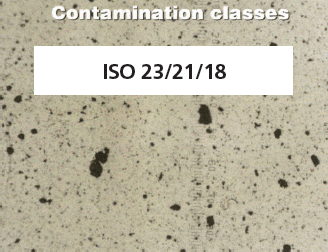
The ISO 4406 cleanliness code is a standardized method for expressing the level of solid particulate contamination in hydraulic fluid.
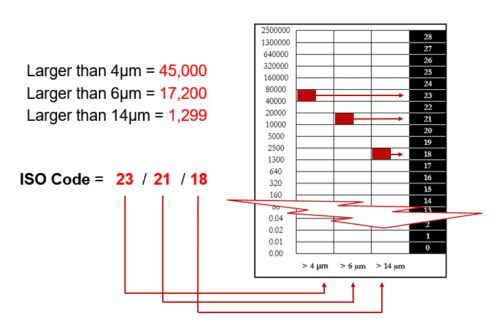
Under ISO 4406, particle counts are classified using three cumulative particle-size thresholds:
≥4 µm(c): Particles measuring 4 micrometers or larger.
≥6 µm(c): Particles measuring 6 micrometers or larger.
≥14 µm(c): Particles measuring 14 micrometers or larger.
The designation µm(c) refers to particle sizes determined using a calibrated particle-counting system.
Each particle-size category receives a numerical range code based on the cumulative number of particles per milliliter of hydraulic fluid.
These three values are combined into a cleanliness code, such as 18/16/13.
The code allows maintenance professionals to compare hydraulic fluid cleanliness measurements, monitor contamination trends, and evaluate whether a fluid meets the cleanliness requirements established for specific hydraulic components or systems.
An ISO cleanliness code does not measure water content, air contamination, or every form of fluid degradation. Additional fluid analysis may be necessary to evaluate overall hydraulic fluid condition.
The following ISO 4406 reference table illustrates how particle counts are assigned to cleanliness code ranges.
Common Sources of Hydraulic Fluid Contamination
Where does hydraulic fluid contamination come from? Contaminants can enter a hydraulic system through reservoirs, new hydraulic oil, maintenance activities, inadequate filtration, and environmental exposure. Additional contamination can develop internally as hydraulic components wear or the fluid degrades.
Understanding these contamination sources is essential for maintaining hydraulic fluid cleanliness, preventing premature component wear, and improving equipment reliability.
How Does Particulate Contamination Enter Hydraulic Systems?
The hydraulic reservoir is a common entry point for particulate contamination, particularly when proper cleaning, sealing, and contamination control practices are not followed.
Several conditions can introduce unwanted particles into hydraulic fluid:
Unclean reservoirs: Dirt, manufacturing debris, and other contaminants may remain inside tanks before they are filled with hydraulic oil.
Maintenance activities: Opening hydraulic systems for repairs, fluid changes, or component replacements can introduce airborne dust and debris.
Inadequate reservoir breathers: Missing, damaged, or improperly selected air breathers can allow environmental contaminants to enter as reservoir fluid levels change.
New hydraulic fluid: Oil delivered in drums, totes, or bulk shipments may contain more particulate contamination than the cleanliness requirements of sensitive hydraulic components allow.
Internal component wear: Pumps, valves, cylinders, and other moving components can generate metal particles and wear debris during operation.
Piping and cylinder exposure: Rust, pipe scale, and contamination carried by exposed cylinder rods can introduce additional particles into the hydraulic circuit.
Because contamination can originate both inside and outside the hydraulic system, effective hydraulic contamination control requires more than installing a single filter.
How Does Contamination Cause Premature Hydraulic Component Wear?
Particulate contamination circulating through hydraulic fluid can damage component surfaces through abrasion, erosion, and surface fatigue.
As particles pass through pumps, valves, cylinders, and other precision components, they can contribute to mechanical wear. That wear generates additional particles, which may circulate through the system and cause further damage.
This process is often described as the chain reaction of wear.
As component surfaces deteriorate and internal clearances increase, hydraulic systems may experience greater internal leakage, reduced volumetric efficiency, and declining operating performance.
Without effective filtration and contamination control, this cycle can accelerate component degradation and increase the risk of unplanned maintenance or equipment failure.
What Causes Water Contamination in Hydraulic Fluid?
Water contamination can enter hydraulic systems through several sources, including:
Ambient humidity: Moisture from surrounding air can enter reservoirs through breathers, openings, or improperly sealed connections.
Cooling system leaks: Damaged heat exchangers or cooling components may allow water-based coolant to enter hydraulic fluid.
Worn or damaged seals: Failed seals can permit moisture or process water to enter exposed hydraulic components.
Operating environment: Equipment exposed to rain, washdowns, condensation, or high-humidity conditions may experience increased water contamination.
Fluid degradation and chemical reactions: Certain degradation processes can produce or introduce small amounts of water, depending on the fluid chemistry and operating conditions.
Water may exist in hydraulic fluid as dissolved, emulsified, or free water.
As water content increases beyond the fluid’s ability to keep it dissolved, the oil may develop a cloudy or milky appearance. Larger amounts of free water can also separate and accumulate in reservoirs.
However, hydraulic oil can contain harmful amounts of water even when it appears clear.
Water contamination can contribute to corrosion, reduced lubrication performance, additive degradation, and premature hydraulic component wear.
Routine fluid analysis, appropriate reservoir protection, and application-specific water removal methods help maintenance teams identify and manage moisture contamination before it contributes to more serious system problems.
How Does Dissolved Water Damage Hydraulic Fluid?
Dissolved water contamination in hydraulic fluid can accelerate oil degradation, reduce component service life, and compromise fluid performance—even when moisture is not visible to the naked eye.
Unlike free or emulsified water, dissolved water remains within the hydraulic fluid and may not cause a cloudy or milky appearance.
Excessive moisture can contribute to several problems:
Accelerated hydraulic oil oxidation: Water contamination can promote oxidation and fluid degradation, potentially contributing to increased acidity, oil thickening, varnish formation, sludge, and other harmful deposits.
Reduced component fatigue life: Water contamination can contribute to corrosion and surface damage, creating conditions that accelerate fatigue cracking and premature failure in highly stressed metal components.
Degradation of ester-based fluids and additives: Water can react with susceptible ester-based hydraulic fluids through a chemical process known as hydrolysis. This reaction can produce acidic compounds, promote deposit formation, and reduce fluid stability. Certain hydraulic fluid additives may also degrade or become less effective when exposed to moisture.
Because dissolved water may be present without visible warning signs, routine hydraulic fluid analysis and moisture monitoring are important parts of an effective contamination control program.
Identifying excessive moisture early allows maintenance teams to evaluate corrective measures before fluid degradation and component damage become more severe.
How Does Free Water Contamination Damage Hydraulic Systems?
Free water contamination in hydraulic fluid can accelerate corrosion, reduce lubrication performance, promote microbial growth, and contribute to premature hydraulic component failure.
Unlike dissolved water, free water exists as separate droplets or accumulated water within the hydraulic fluid. Depending on the fluid’s condition, it may appear as cloudiness, an emulsion, or a separate water layer.
Excessive free water contamination can cause several serious problems:
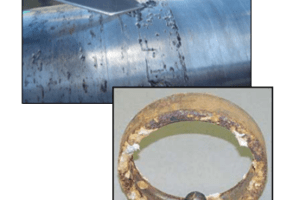
Corrosion and component damage: Water promotes rust and corrosion on metal surfaces, creating pits and rough areas. Corrosion products can also break away, introducing additional abrasive particles into the hydraulic fluid.
Microbial growth: Water contamination can create conditions that support bacteria, fungi, and other microorganisms, particularly at oil-water interfaces. Microbial activity may produce acids, odors, sludge, and deposits that contribute to system deterioration.
Reduced lubrication performance: Excessive water can interfere with the hydraulic fluid’s ability to maintain an effective lubricating film, increasing friction, component wear, and the risk of seizure.
Hydraulic fluid additive depletion: Water can react with or promote the separation of certain protective additives, including antiwear and antioxidant compounds. This may reduce fluid stability and its ability to protect hydraulic components.
Because water contamination can affect both hydraulic fluid chemistry and mechanical components, identifying and controlling moisture is an important part of hydraulic system maintenance.
Appropriate fluid analysis, reservoir maintenance, and application-specific water removal technologies can help reduce contamination-related operating risks.
What Causes Air Contamination in Hydraulic Fluid?
Air contamination in hydraulic systems can occur when air enters the hydraulic circuit or when dissolved gases are released from the fluid under changing operating conditions.
Improper hydraulic system design, maintenance issues, and pump inlet restrictions can increase the likelihood of aeration or cavitation.
Common contributing factors include:
Improperly positioned return lines: Return lines discharging above the reservoir’s fluid level can create turbulence and introduce air bubbles into the hydr
aulic oil.
Low reservoir fluid levels: Insufficient fluid can cause vortex formation near the pump inlet, allowing air to enter the system.
Suction line leaks: Loose fittings, damaged seals, or deteriorated hoses can allow air to be drawn into the hydraulic circuit.
Undersized suction lines: Restricted fluid flow can reduce pump inlet pressure and contribute to cavitation.
Excessive suction lift: Improper pump placement or excessive vertical distance between the reservoir and pump can create unfavorable inlet conditions.
Blocked pump inlets: Clogged suction strainers, restricted piping, or other obstructions can reduce inlet pressure and contribute to cavitation.
Improper pump operation: Incorrect operating speeds or inadequate priming can contribute to poor inlet conditions and hydraulic performance problems.
Entrained air can cause foaming, erratic system movement, increased noise, and reduced hydraulic performance.
Cavitation is a related but distinct condition involving the formation and collapse of vapor or gas cavities under certain pressure conditions. Both aeration and cavitation can contribute to component damage.
Maintaining proper reservoir fluid levels, inspecting suction lines, and ensuring appropriate pump inlet conditions can help reduce these risks.
Effective hydraulic contamination control requires attention to particulate matter, water, and air—not simply the contaminants visible in a fluid sample.
How Does Air Contamination Affect Hydraulic System Performance?
Air contamination in hydraulic fluid can contribute to premature oil degradation, varnish formation, cavitation damage, and reduced hydraulic system efficiency.
When air becomes entrained in hydraulic oil, it can interfere with fluid performance and create operating conditions that accelerate component wear.
Oil oxidation: Mostly oxygen reacts with oil resulting in premature degradation (oil aging)
Varnish formation – lacquer like deposits as shown in photo (oil aging)
Cavitation: Formation and collapse of gaseous oil cavities causes decrease in pump efficiency and damage to pumps
Micro-Diesel-Effect – Air bubble implosion generating high heat which “burns” the oil surrounding the air bubble
Change of viscosity
Hydraulic component clearances are critical and require strategic filtration designs to remove damaging particles. In hydraulic systems, 70 to 90% of wear and failure is contamination related. Only 10 to 30% can be traced back to misuse, defects or age. Contamination cannot be stopped, only slowed down!
System efficiency can drop by up to 20% before an operator even detects a problem, such as cylinder drift, jerky steering, erratic operation or slower performance. Overall, contamination results in shorter service intervals, higher operating costs and lost productivity.
Next Month: Effective methods to measure the contamination present in a hydraulic system