



The Invisible Enemy: The Truth About Hydraulic Fluid Contamination
Comments Off on The Invisible Enemy: The Truth About Hydraulic Fluid ContaminationHydraulic Fluid Contamination: The Invisible Threat Is Real
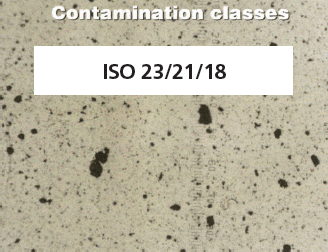
Your hydraulic fluid may look perfectly clean. But what if the greatest threat to your equipment is something you can’t see?
Hydraulic fluid contamination is a real and potentially costly problem. Microscopic particles, water, and other contaminants can compromise hydraulic system performance long before visible warning signs appear.
Maintenance professionals frequently encounter familiar assumptions:
- “My hydraulic oil looks clean, so it must be clean.”
- “Our oil supplier wouldn’t deliver contaminated fluid.”
- “We have a filter on the reservoir, so contamination isn’t a concern.”
- “Our reservoir is sealed. How could water possibly get inside?”
Unfortunately, visual inspection alone cannot determine hydraulic fluid cleanliness. Even new hydraulic oil may contain particles or moisture that exceed the cleanliness requirements of a particular system.
A hydraulic filter also cannot guarantee adequate contamination control if its element is missing, clogged, bypassing, or improperly selected for the application.
How Can You Identify and Control Hydraulic Fluid Contamination?
Effective hydraulic contamination control begins with identifying contaminants, measuring fluid cleanliness, and investigating potential contamination sources.
Schroeder Industries offers portable fluid sampling systems and particle counters to support fluid cleanliness assessment and contamination monitoring.
Once contaminants have been identified and measured, maintenance teams can develop a targeted contamination control strategy using appropriate hydraulic filtration and fluid conditioning solutions.
Depending on the application, this may include improved filtration, fluid conditioning, routine oil analysis, and maintenance practices designed to limit contamination entering or developing within the system.
The goal is straightforward: maintain hydraulic fluid cleanliness within the limits required by the equipment.
An effective contamination control program can help reduce component wear, extend fluid and equipment service life, improve operational reliability, and lower contamination-related maintenance costs.
Types of Hydraulic Fluid Contamination: What You Can’t See Can Hurt Your Equipment
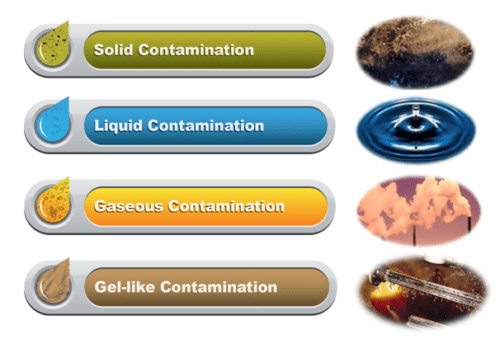
Hydraulic fluid contamination can take several forms, and each presents different risks to hydraulic system performance, equipment reliability, and fluid service life.
The most common types of hydraulic contamination include:
- Solid contamination: Dirt, dust, metal wear particles, rust, and other debris that can contribute to abrasive wear and component damage.
- Liquid contamination: Water and other unwanted liquids that can reduce lubrication effectiveness, promote corrosion, and accelerate fluid degradation.
- Gaseous contamination: Entrained or dissolved air that can contribute to aeration, reduced hydraulic efficiency, and operating problems under certain conditions.
- Gel-like contamination: Sludge, varnish precursors, and other degradation products that can interfere with filtration, fluid flow, and component operation.
Preventing contamination from entering hydraulic systems—and identifying existing contamination before it causes damage—is essential to effective hydraulic fluid maintenance.
How Does Excessive Heat Affect Hydraulic Fluid?
Although heat is not itself a contaminant, excessive operating temperatures can accelerate hydraulic fluid degradation.
High temperatures can promote oxidation, reduce fluid service life, and contribute to the formation of deposits that affect hydraulic system performance.
Reservoir design also plays an important role. When a hydraulic reservoir is undersized or provides insufficient cooling capacity, the fluid may not dissipate heat effectively before returning to the hydraulic circuit.
Maintaining appropriate operating temperatures, monitoring fluid condition, and controlling contamination can help protect hydraulic components from premature wear and fluid degradation.
Why Is Microscopic Hydraulic Contamination So Dangerous?
Some of the most damaging hydraulic fluid contaminants are too small to be seen without magnification.
To understand the scale, consider these comparisons:
- Human hair: Approximately 70–80 micrometers (µm) in diameter.
- Typical unaided human visibility threshold: Approximately 40 µm under favorable conditions.
- Potentially damaging hydraulic particles: Particles in the 5–15 µm range can contribute to wear and interference in precision hydraulic components.
One micrometer (1 µm) equals 0.001 millimeters, or approximately 0.000039 inches.
Because hydraulic pumps, valves, and other precision components often operate with extremely small clearances, microscopic particles can contribute to abrasive wear, sticking, leakage, and premature component failure.
The critical takeaway: Hydraulic oil can appear perfectly clean while containing particles capable of damaging sensitive hydraulic components.
What Is the ISO 4406 Hydraulic Fluid Cleanliness Code?
The ISO 4406 cleanliness code is a standardized method for expressing the level of solid particulate contamination in hydraulic fluid.
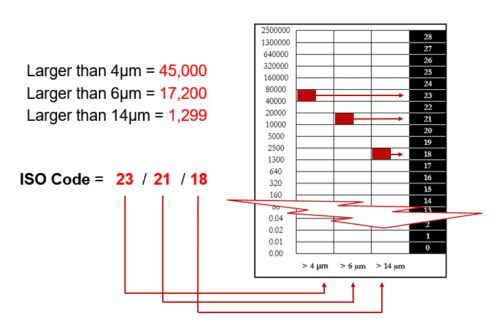
Under ISO 4406, particle counts are classified using three cumulative particle-size thresholds:
- ≥4 µm(c): Particles measuring 4 micrometers or larger.
- ≥6 µm(c): Particles measuring 6 micrometers or larger.
- ≥14 µm(c): Particles measuring 14 micrometers or larger.
The designation µm(c) refers to particle sizes determined using a calibrated particle-counting system.
Each particle-size category receives a numerical range code based on the cumulative number of particles per milliliter of hydraulic fluid.
These three values are combined into a cleanliness code, such as 18/16/13.
The code allows maintenance professionals to compare hydraulic fluid cleanliness measurements, monitor contamination trends, and evaluate whether a fluid meets the cleanliness requirements established for specific hydraulic components or systems.
An ISO cleanliness code does not measure water content, air contamination, or every form of fluid degradation. Additional fluid analysis may be necessary to evaluate overall hydraulic fluid condition.
The following ISO 4406 reference table illustrates how particle counts are assigned to cleanliness code ranges.
Common Sources of Hydraulic Fluid Contamination
Where does hydraulic fluid contamination come from? Contaminants can enter a hydraulic system through reservoirs, new hydraulic oil, maintenance activities, inadequate filtration, and environmental exposure. Additional contamination can develop internally as hydraulic components wear or the fluid degrades.
Understanding these contamination sources is essential for maintaining hydraulic fluid cleanliness, preventing premature component wear, and improving equipment reliability.
How Does Particulate Contamination Enter Hydraulic Systems?
The hydraulic reservoir is a common entry point for particulate contamination, particularly when proper cleaning, sealing, and contamination control practices are not followed.
Several conditions can introduce unwanted particles into hydraulic fluid:
- Unclean reservoirs: Dirt, manufacturing debris, and other contaminants may remain inside tanks before they are filled with hydraulic oil.
- Maintenance activities: Opening hydraulic systems for repairs, fluid changes, or component replacements can introduce airborne dust and debris.
- Inadequate reservoir breathers: Missing, damaged, or improperly selected air breathers can allow environmental contaminants to enter as reservoir fluid levels change.
- New hydraulic fluid: Oil delivered in drums, totes, or bulk shipments may contain more particulate contamination than the cleanliness requirements of sensitive hydraulic components allow.
- Internal component wear: Pumps, valves, cylinders, and other moving components can generate metal particles and wear debris during operation.
- Piping and cylinder exposure: Rust, pipe scale, and contamination carried by exposed cylinder rods can introduce additional particles into the hydraulic circuit.
Because contamination can originate both inside and outside the hydraulic system, effective hydraulic contamination control requires more than installing a single filter.
How Does Contamination Cause Premature Hydraulic Component Wear?
Particulate contamination circulating through hydraulic fluid can damage component surfaces through abrasion, erosion, and surface fatigue.
As particles pass through pumps, valves, cylinders, and other precision components, they can contribute to mechanical wear. That wear generates additional particles, which may circulate through the system and cause further damage.
This process is often described as the chain reaction of wear.
As component surfaces deteriorate and internal clearances increase, hydraulic systems may experience greater internal leakage, reduced volumetric efficiency, and declining operating performance.
Without effective filtration and contamination control, this cycle can accelerate component degradation and increase the risk of unplanned maintenance or equipment failure.
What Causes Water Contamination in Hydraulic Fluid?
Water contamination can enter hydraulic systems through several sources, including:
- Ambient humidity: Moisture from surrounding air can enter reservoirs through breathers, openings, or improperly sealed connections.
- Cooling system leaks: Damaged heat exchangers or cooling components may allow water-based coolant to enter hydraulic fluid.
- Worn or damaged seals: Failed seals can permit moisture or process water to enter exposed hydraulic components.
- Operating environment: Equipment exposed to rain, washdowns, condensation, or high-humidity conditions may experience increased water contamination.
- Fluid degradation and chemical reactions: Certain degradation processes can produce or introduce small amounts of water, depending on the fluid chemistry and operating conditions.
Water may exist in hydraulic fluid as dissolved, emulsified, or free water.
As water content increases beyond the fluid’s ability to keep it dissolved, the oil may develop a cloudy or milky appearance. Larger amounts of free water can also separate and accumulate in reservoirs.
However, hydraulic oil can contain harmful amounts of water even when it appears clear.
Water contamination can contribute to corrosion, reduced lubrication performance, additive degradation, and premature hydraulic component wear.
Routine fluid analysis, appropriate reservoir protection, and application-specific water removal methods help maintenance teams identify and manage moisture contamination before it contributes to more serious system problems.
How Does Dissolved Water Damage Hydraulic Fluid?
Dissolved water contamination in hydraulic fluid can accelerate oil degradation, reduce component service life, and compromise fluid performance—even when moisture is not visible to the naked eye.
Unlike free or emulsified water, dissolved water remains within the hydraulic fluid and may not cause a cloudy or milky appearance.
Excessive moisture can contribute to several problems:
- Accelerated hydraulic oil oxidation: Water contamination can promote oxidation and fluid degradation, potentially contributing to increased acidity, oil thickening, varnish formation, sludge, and other harmful deposits.
- Reduced component fatigue life: Water contamination can contribute to corrosion and surface damage, creating conditions that accelerate fatigue cracking and premature failure in highly stressed metal components.
- Degradation of ester-based fluids and additives: Water can react with susceptible ester-based hydraulic fluids through a chemical process known as hydrolysis. This reaction can produce acidic compounds, promote deposit formation, and reduce fluid stability. Certain hydraulic fluid additives may also degrade or become less effective when exposed to moisture.
Because dissolved water may be present without visible warning signs, routine hydraulic fluid analysis and moisture monitoring are important parts of an effective contamination control program.
Identifying excessive moisture early allows maintenance teams to evaluate corrective measures before fluid degradation and component damage become more severe.
How Does Free Water Contamination Damage Hydraulic Systems?
Free water contamination in hydraulic fluid can accelerate corrosion, reduce lubrication performance, promote microbial growth, and contribute to premature hydraulic component failure.
Unlike dissolved water, free water exists as separate droplets or accumulated water within the hydraulic fluid. Depending on the fluid’s condition, it may appear as cloudiness, an emulsion, or a separate water layer.
Excessive free water contamination can cause several serious problems:
- Corrosion and component damage: Water promotes rust and corrosion on metal surfaces, creating pits and rough areas. Corrosion products can also break away, introducing additional abrasive particles into the hydraulic fluid.
- Microbial growth: Water contamination can create conditions that support bacteria, fungi, and other microorganisms, particularly at oil-water interfaces. Microbial activity may produce acids, odors, sludge, and deposits that contribute to system deterioration.
- Reduced lubrication performance: Excessive water can interfere with the hydraulic fluid’s ability to maintain an effective lubricating film, increasing friction, component wear, and the risk of seizure.
- Hydraulic fluid additive depletion: Water can react with or promote the separation of certain protective additives, including antiwear and antioxidant compounds. This may reduce fluid stability and its ability to protect hydraulic components.
Because water contamination can affect both hydraulic fluid chemistry and mechanical components, identifying and controlling moisture is an important part of hydraulic system maintenance.
Appropriate fluid analysis, reservoir maintenance, and application-specific water removal technologies can help reduce contamination-related operating risks.
What Causes Air Contamination in Hydraulic Fluid?
Air contamination in hydraulic systems can occur when air enters the hydraulic circuit or when dissolved gases are released from the fluid under changing operating conditions.
Improper hydraulic system design, maintenance issues, and pump inlet restrictions can increase the likelihood of aeration or cavitation.
Common contributing factors include:
-
Improperly positioned return lines: Return lines discharging above the reservoir’s fluid level can create turbulence and introduce air bubbles into the hydr
- aulic oil.
- Low reservoir fluid levels: Insufficient fluid can cause vortex formation near the pump inlet, allowing air to enter the system.
- Suction line leaks: Loose fittings, damaged seals, or deteriorated hoses can allow air to be drawn into the hydraulic circuit.
- Undersized suction lines: Restricted fluid flow can reduce pump inlet pressure and contribute to cavitation.
- Excessive suction lift: Improper pump placement or excessive vertical distance between the reservoir and pump can create unfavorable inlet conditions.
- Blocked pump inlets: Clogged suction strainers, restricted piping, or other obstructions can reduce inlet pressure and contribute to cavitation.
- Improper pump operation: Incorrect operating speeds or inadequate priming can contribute to poor inlet conditions and hydraulic performance problems.
Entrained air can cause foaming, erratic system movement, increased noise, and reduced hydraulic performance.
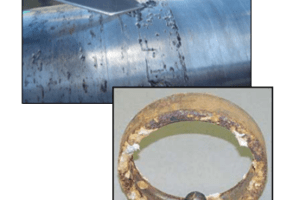
Cavitation is a related but distinct condition involving the formation and collapse of vapor or gas cavities under certain pressure conditions. Both aeration and cavitation can contribute to component damage.
Maintaining proper reservoir fluid levels, inspecting suction lines, and ensuring appropriate pump inlet conditions can help reduce these risks.
Effective hydraulic contamination control requires attention to particulate matter, water, and air—not simply the contaminants visible in a fluid sample.
How Does Air Contamination Affect Hydraulic System Performance?
Air contamination in hydraulic fluid can contribute to premature oil degradation, varnish formation, cavitation damage, and reduced hydraulic system efficiency.
When air becomes entrained in hydraulic oil, it can interfere with fluid performance and create operating conditions that accelerate component wear.
- Oil oxidation: Mostly oxygen reacts with oil resulting in premature degradation (oil aging)
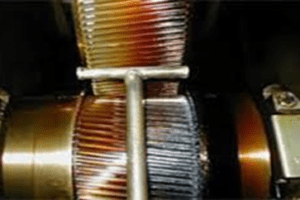
- Varnish formation – lacquer like deposits as shown in photo (oil aging)
- Cavitation: Formation and collapse of gaseous oil cavities causes decrease in pump efficiency and damage to pumps
- Micro-Diesel-Effect – Air bubble implosion generating high heat which “burns” the oil surrounding the air bubble
- Change of viscosity
Hydraulic component clearances are critical and require strategic filtration designs to remove damaging particles. In hydraulic systems, 70 to 90% of wear and failure is contamination related. Only 10 to 30% can be traced back to misuse, defects or age. Contamination cannot be stopped, only slowed down!
System efficiency can drop by up to 20% before an operator even detects a problem, such as cylinder drift, jerky steering, erratic operation or slower performance. Overall, contamination results in shorter service intervals, higher operating costs and lost productivity.