Skip to Content
Exit
 

Tag Archive: fluid contamination

  1. Roll-Off Cleanliness: The Proven Way to Prevent Equipment Failure

    Comments Off on Roll-Off Cleanliness: The Proven Way to Prevent Equipment Failure

    When equipment fails prematurely, contamination is often to blame.


    For OEMs, premature failures may mean paying out for a costly warranty claim—and, in some cases, exposure to legal liability. Not only do these failures cost the OEM, but they massively inconvenience the end user, and can undermine the manufacturer’s brand reputation.


    To reduce the chances of premature failures, every OEM should uphold a high standard of roll-off cleanliness. Fluid filtration is a key aspect of roll-off cleanliness.

    How Fluid Contamination Becomes Built-In Contamination


    ‘Built-in’ contamination refers to contamination that infiltrates a new machine during the assembly and testing process, prior to final delivery to the end user.

    Built-in contamination is commonly caused by contaminated components. Metallic fragments lingering after the machining process, or even ambient dust from poor storage and handling practices, can prematurely sideline a machine.


    Dirty hydraulic fluid and diesel fuel used to test and fill a new machine can also deliver damaging contamination into the system!


    Modern hydraulic and diesel fuel systems have increasingly stringent cleanliness requirements for fluid.

    For a modern hydraulic system, the typical standard of cleanliness is an ISO reading of 16/14/11.

    Modern Tier IV diesel systems experience higher pressure and contain components with greater sensitivity, so fuel entering the injectors should be less than ISO 12/9/6. That’s 16x more restrictive than the modern hydraulic standard!


    You should never assume that your stored fuel or hydraulic fluid is clean, even if it is ‘new!’


    ‘New’ hydraulic fluid has been found to contain contamination levels as high as 32 times the recommended ISO cleanliness levels for modern systems.

    Diesel fuel that has been ‘safely’ stored could be accumulating high levels of water contamination in the background, triggering microbial growth and generating solid contamination within the tank.


    If a manufacturer fills the hydraulic and fuel tanks of a machine with contaminated fluid, they are setting the equipment, the end user, and themselves up for failure.


    The moment the machine leaves the assembly line with dirty fluid, contaminants begin dealing damage throughout the system.


    End users may experience:

    • Premature Equipment Failure
    • Impacts to Productivity
    • Worker Safety Hazards
    OEM consequences may include:

    • Costly Warranty Claims
    • Legal Liability
    • Damaged Brand Reputation

    To prevent this fluid-borne contamination, any and all operating fluids should be examined and filtered prior to ever touching a machine. As an extra precaution, the equipment’s systems should be flushed and filtered before final delivery as well.


    Filtration Solutions for Roll-Off Cleanliness

    Schroeder Industries understands the importance of setting end users up for success through roll-off cleanliness. We offer a variety of filtration solutions and diagnostic tools that ensure your equipment is putting its best foot forward from a cleanliness standpoint when it leaves the assembly line.


    Portable Fluid Sampling Systems

    Diagnostic tools like the TFC are used for establishing ISO counts for fluids in real-time. With particulate shape and size recognition software, the TFC can even provide clues as to where contaminants may be originating from.

    Hand Held Hydraulic Filter Units

    Lightweight, hand-held units like the HFS-15 provide the same powerful filtration as a filter cart system with unprecedented mobility. Units with onboard particle counters are available.


    Filter Cart Systems

    Offline filtrations systems such as Schroeder’s array of filter carts (including the MFS, FS, and AMFS) allow for flexibility and mobility. They can act as kidney loop systems for flushing systems, or provide filtration as fluid is transfered into the system.

    Ranging from streamlined-but-reliable basic cart systems to advanced systems with onboard particle counting and recording capabilities, these filter carts ensure the cleanliness of fluid within the equipment and can be customized for your specific needs.

    Bulk Diesel Filters

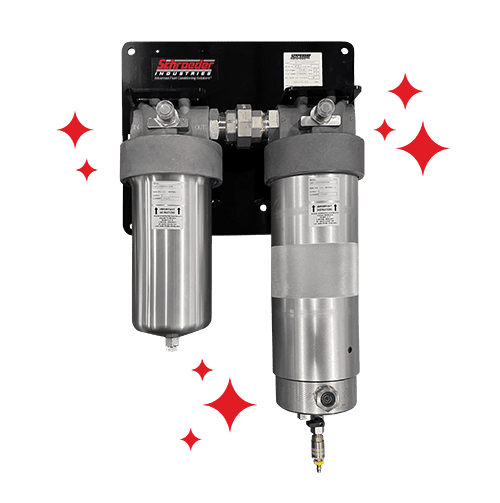
    Schroeder’s Fuel Filtration division specializes in coalescing and particulate filtration for diesel fuel.

    Products like the BDF, GHCF, and more provide superior filtration at every stage of the fuel supply chain, including during transfer, point of fueling, and kidney loop circulating filtration for bulk storage tanks.
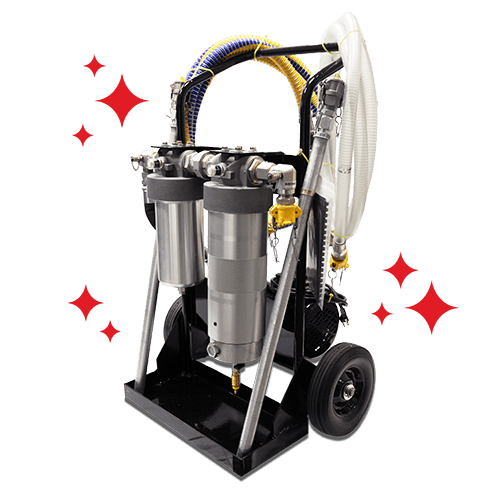
    Mobile Diesel Filtration Units

    Fuel filtration carts like the BDFC combine our world-class fuel filters with integrated pumps, hoses, and a mobile cart chassis.

    These turn-key, complete systems offer increased flexibility and enable easy transitions from application to application around a manufacturing plant or storage facility.

    Talk to the Contamination Control Experts


    If you want to reinforce your roll-off cleanliness standards, our fluid care experts are ready to help!


    Tell us about your operational needs, and we can help find the right solutions for you:

    Request for Quote

    • Which products are you interested in?
    • Max. file size: 256 MB.
  2. Protect Your Equipment with Outstanding Fluid Contamination Analysis

    Comments Off on Protect Your Equipment with Outstanding Fluid Contamination Analysis

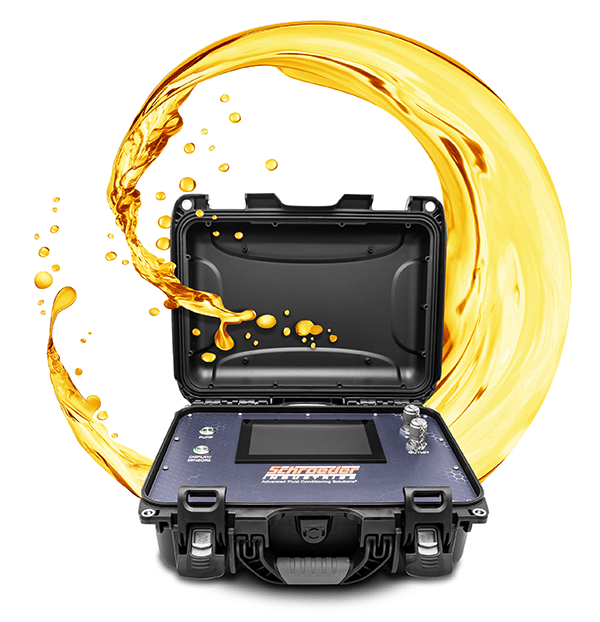
    Image of the total fluid condition unit, for identifying fluid contamination


    Mitigating fluid contamination is a chief concern for hydraulic systems. Solid, liquid, and other forms of fluid contamination account for up to 90% of all hydraulic system failures. Water, ingested particulate contamination, and metal particles from internal component wear are just a few types of contamination. Contamination is influenced by ambient conditions and other variables, and can have serious impacts on hydraulic equipment performance.

    Contamination cannot be completely stopped, but proper fluid filtration can prolong the lifespan of your hydraulic components—and a successful treatment strategy begins with accurate diagnostics.

    Portable Fluid Condition Monitoring

    To make fluid assessments more convenient, Schroeder Industries developed several portable fluid condition monitoring systems. These compact units are designed to deliver real-time insights into the health of a variety of hydraulic fluid types. On-site analysis with a portable condition monitoring unit saves time and money compared to shipping samples to oil testing labs, or using complicated analysis kits. Their portability makes them usable in the field, in remote locations, along a manufacturing process production line—anywhere a hydraulic system can be found.


    Image of the total fluid condition unit, for identifying fluid contamination
    Click the image to see the TFC page

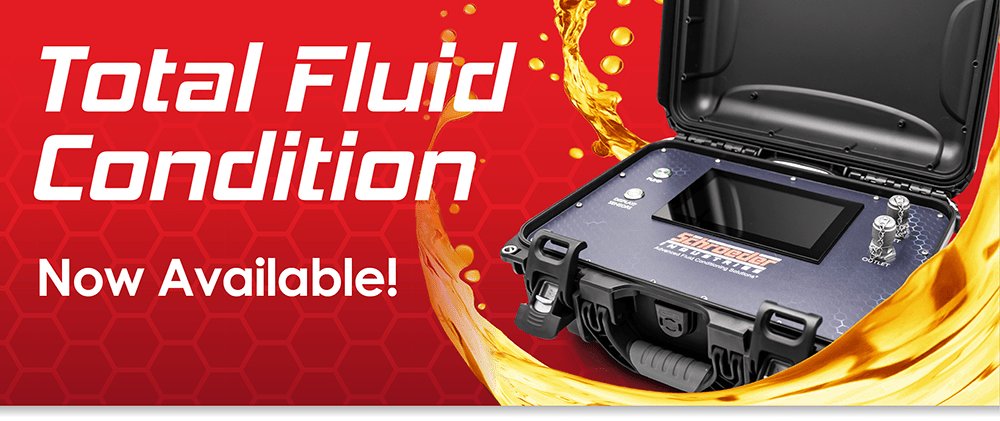
    Introducing Total Fluid Condition (TFC)

    The new TFC unit represents the latest in fluid condition monitoring technology. This revolutionary portable service unit is designed to measure and differentiate particulate contamination, as well as relative water content and temperature.

    Improving Contamination Data Accuracy

    Correctly identifying the type and source of hydraulic fluid contamination is critical for developing a treatment strategy. The TFC unit improves upon the accuracy of fluid contamination data in synthetic and mineral oil based hydraulic fluids, offering users a more complete analysis of their fluid health than was previously possible. This improved precision stems from the new direct digital imaging sensors incorporated into the TFC units.

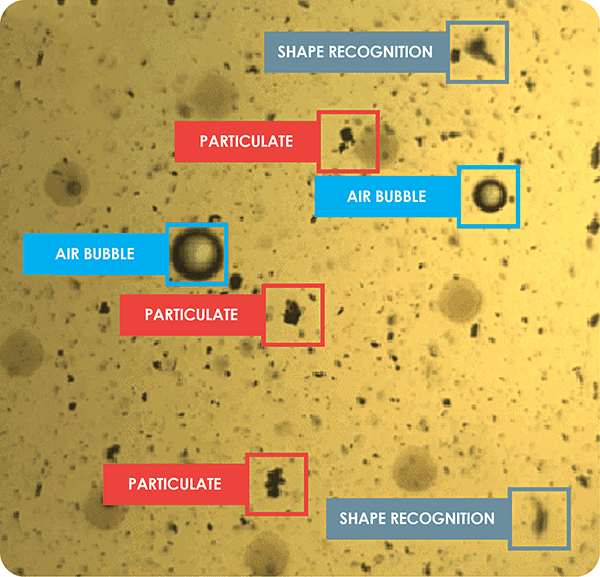
    Image showing fluid contamination identified as particles, specifically shaped particles, and air bubbles

    Other portable fluid contamination monitoring units have utilized light-based sensors, which struggle to differentiate between contamination types, but direct digital imaging sensors can distinguish air bubbles and water molecules from solid particles. This results in a more accurate ISO count, and better understanding of the fluid’s health.

    The TFC can also sort particles into fatigue, cutting, sliding wear, and fiber categories to estimate cause of contamination. The direct imaging particle counting software coded into the unit uses size and shape-recognition technology, based on advanced algorithms, as a dirt classifier to distinguish contaminates.


    TFC Applications

    Like Schroeder’s other portable fluid diagnostics systems, TFC is a powerful, versatile tool for any fluid cleanliness testing scenario:

    • Perfect for in-plant/industrial applications, during the assembly process or at the end of the production line.
    • The compact design and onboard battery also make the TFC ideal for mobile applications, such as testing for service trucks or in remote locations.

    Other Benefits of Fluid Condition Monitoring

    The oil waste reduction aided by the TFC unit’s fluid diagnostic capabilities doesn’t just help protect your equipment. It also reduces costs and environmental impacts related to oil waste.

    All hydraulic fluid must be changed eventually, but routinely testing fluid cleanliness and addressing contamination prolongs its lifespan. This results in less frequent oil disposal, saving on the expense of new oil.

    Additionally, the reduction in hydraulic oil waste and consumption helps lower an operation’s carbon footprint and environmental impact. The TFC unit is part of Schroeder Industries’ Energy Sustainability Initiative supporting carbon reduction goals across various industries, thanks to the benefits it imparts by helping extend the life of oil and reduce waste.

    Want to learn more about what Total Fluid Condition can do for your business? Contact us!

    sisales@schroederindustries.com