Why Is CNG Filtration Important for Compressed Natural Gas Systems?
Why Is CNG Filtration Important?
Compressed natural gas (CNG) is a lower-emission alternative to diesel used in a growing range of transportation and industrial applications. Like liquid fuel systems, however, CNG systems are vulnerable to contamination that can affect fuel quality, equipment reliability, and component life.
However, just like liquid fuel systems, compressed gas systems are vulnerable to contamination. Protecting CNG-powered engine systems requires specialized filtration solutions.
Compressed natural gas can contain several types of contamination that become increasingly problematic under high pressure:
Water Vapor: Raw natural gas contains high amounts of water vapor. In high-pressure CNG fuel applications, that water vapor becomes highly concentrated. This contamination can cause gas hydrate blockages, acidic corrosion, and general damage to injectors, seals, regulators, and other highly sensitive components.
Aerosolized Oils: Compressor lubricating oil can also infiltrate compressed natural gas. These oils can degrade and clog components in the CNG fuel injection system. Chemical interactions between oils and sealing material can result in dangerous gas leaks.
Solid Particulates: Minuscule particles of rust and debris picked up in the compressor cause physical wear to components, blockages, and other issues. As system pressure increases, tolerance for solid particulates sharply decreases.
Contamination control in gas applications is just as critical!
CNG Filtration Solutions
Gas filtration operates under similar principles to filtration of diesel fuel, hydraulic and lubricating oils, and other liquids. However, compressed gas applications come with unique challenges.
Effective CNG filtration must account for:
Smaller Molecules: Gas molecules are much smaller than liquid molecules. Tiny gas molecules mean that even very small flaws in the filter’s seals or porosity in the filter material can allow gas to escape. In the case of flammable gases like CNG, leaks are especially dangerous!
Ultra-Fine Particulates: It’s not just the gas molecules that are smaller: Contamination particulates in gases are much smaller too! Particles within compressed gases are often <1 micron in size—much smaller than the average solid particulates in a diesel or hydraulic system. This requires a careful balance of ultra-fine filtration that is minimally disruptive to system pressure.
Constant Pressurization: Unlike diesel fuel and hydraulic fluid, gases are pressurized at all stages, from bulk storage to final dispensing. For example, a CNG filling station often stores compressed natural gas between 500-4,500psi.This constant pressure calls for especially robust filter construction.
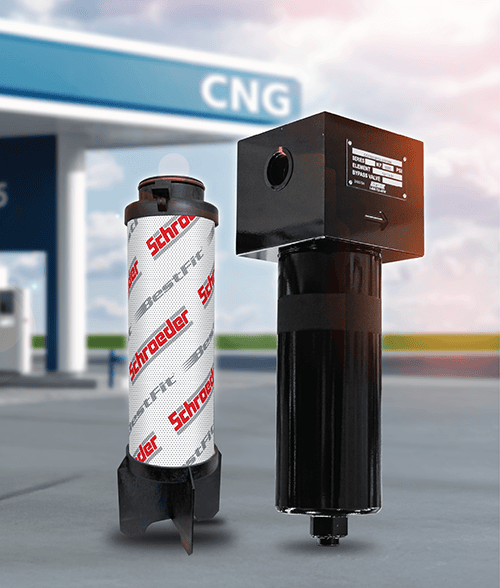
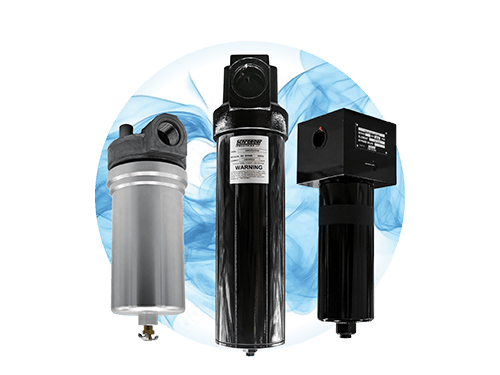
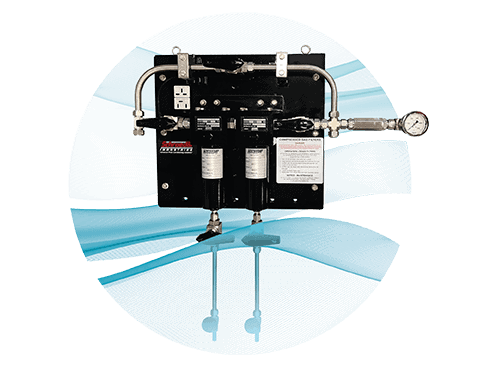
Meet the Schroeder Industries CGF (Compressed Gas Filter) Family
Schroeder’s premier technology for compressed air and CNG filtration
CGF filter series provides cost-effective, robust filtration solutions for a broad range of applications.
Unlike other compressed gas filters, the CGF series utilizes pleated microglass media construction for more reliable performance and greater capacity.
Ideally, CNG filtration should be located as close to the components you are protecting as possible. Filters are often installed upstream of the pressure regulators and downstream of the compressor.
Element change intervals vary depending on the contamination load and quality of the gas.
Schroeder Industries strongly recommends installing filtration with differential pressure indicators that signal when a CNG filtration element has reached capacity. Once the indicator is activated, replace the filter element.
Particulate filters remove solid contamination such as dust, rust, and other debris. In a CNG application, particulate filters are typically staged further upstream in the pipeline.
On the other hand, coalescing filters remove liquid-type contamination such as water vapor and oil aerosols. These filters are usually positioned at the point of dispensing.