

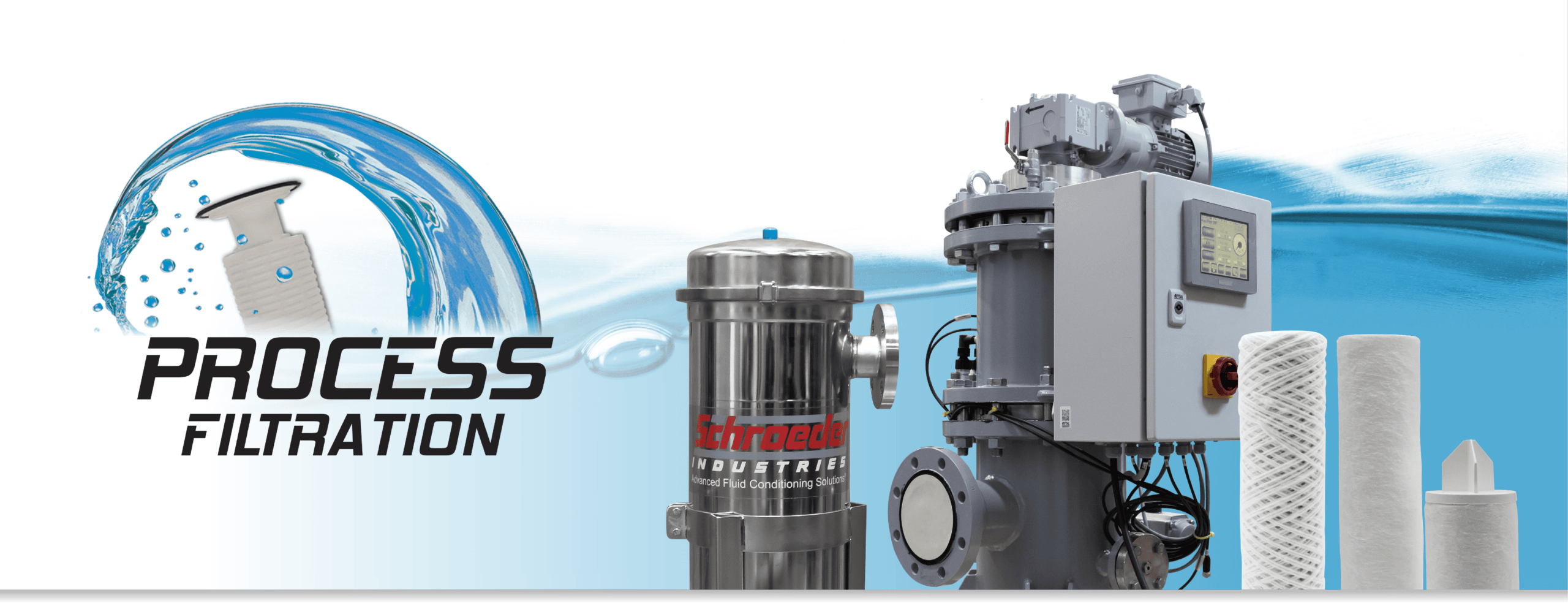
Process Filtration Header Image

View Process Filtration Catalog
View All Process Filtration Products


The Wide World of Process Fluid Filtration


The best known fluid in the world of Process Filtration is water.


Water is a critical operational fluid in a huge range of industries, from municipal water treatment to hydro-forming and high-pressure water cutting. Like hydraulic fluid and diesel fuel, water in process applications is vulnerable to contamination.


Application successes for Schroeder Industries Process Filtration include treatment of the following:
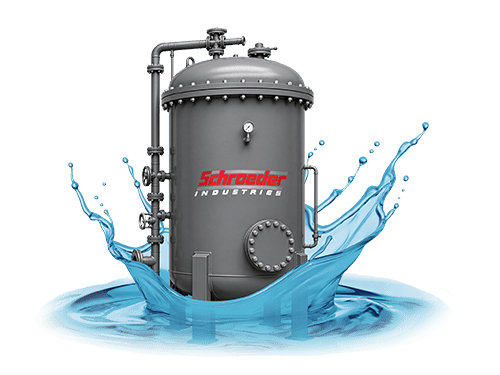

  • Industrial Process Water
  • Cooling Water
  • River / Lake Water
  • Waste Water
  • Municipal Water
  • Ballast Water / Salt Water
  • …and more!
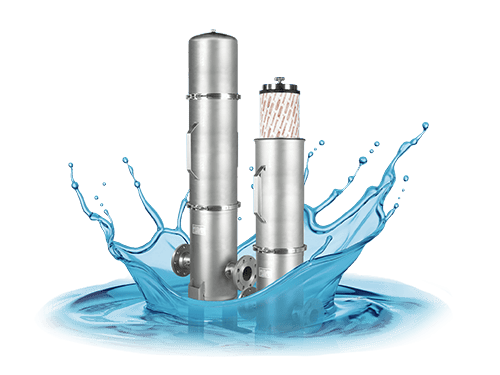
Schroeder Industries Pressure Filter for Process Applications

Schroeder’s Process Filtration capabilities go beyond just water!

Our solutions are also suited for a huge range of low-viscosity fluids and gases such as:

  • Ethanol, Methanol, Isopropyl Alcohol (IPA)
  • Low-Viscosity Hydraulic Fluids & Light Lubricating Oils
  • Cutting Fluids & Coolants
  • Propylene Glycol, Ethylene Glycol, & Glycol-Water Mixtures
  • Liquid Food Products (Clarified Juices, Syrups, Edible Oils)
  • Kerosene & Diesel Fuel
  • Hydrogen Gas
  • …and more!
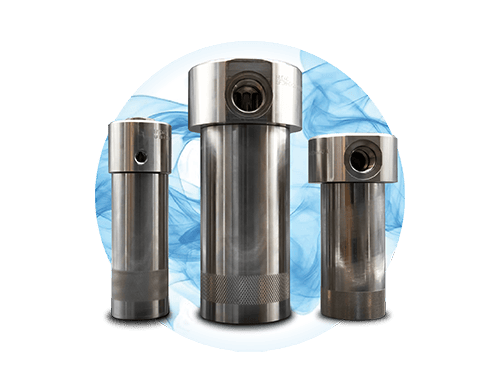
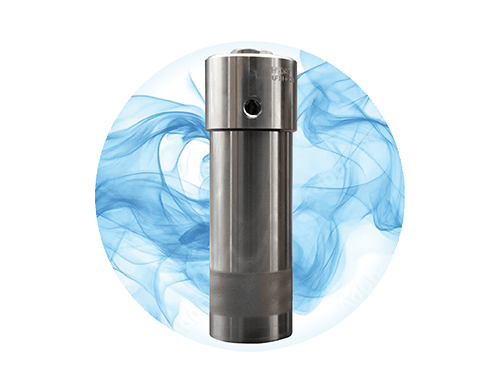
GF Series Gas Filter

Schroeder Industries is a global provider of high-performance, high-efficiency process filtration solutions. Our experts will collaborate with your team to determine a treatment plan for your process fluids and guide you towards the optimal products and solutions for your filtration needs.


Process Filtration Solutions from Schroeder Industries

Schroeder Industries is backed by over 75 years of manufacturing experience. Our filter systems and diagnostic solutions are engineered to excel, with comprehensive options for virtually any application:

Process Filtration Product Lineup
  • Automatic Backflushing Filtration
  • Bag Housings
  • Cartridge Housings & Elements
  • Mechanical Strainers
  • Inline Filters
  • Pressure Filters
  • Process Filtration Elements
  • Compressed Gas & Hydrogen Filtration
  • And more!


Featured Filter Systems & Diagnostic Solutions


Products from our Filter Systems & Diagnostics division are engineered for excellence in removing and detecting contamination. Here are just a handful of Schroeder’s industry-leading offline filter systems and diagnostic/contamination monitoring solutions:
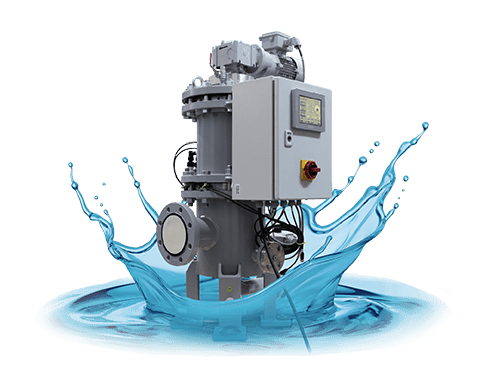

AutoFilt® RF14

The RF14 provides exceptional fine filtration in process filtration applications, with an automatic backwashing function that minimizes maintenance and provides uninterrupted filtration.

Basket Technology:Plain screen baskets
Δ-mesh baskets
Nominal Size:DN50-DN400
DN50-DN700
Qmax:1,200 m³/hr
4,460 m³/hr
pmax:6 bar (at standard operating temperature 0°C to 60°C)
Filtration Ratings:20 – 80 μm


Pressure Filters

Silica sand filtration excels in the removal of solids from highly contaminated water sources including wastewater, cooling water, and other industrial and municipal intake streams.


Activated carbon excels in markets like food & beverage and municipal water treatment due to its ability to improve bad tastes and smells, as well as eliminate organic compounds, pesticides, and other volatile organic chemicals (VOCs).


Greensand media is especially effective in removing iron and manganese from water, which prevents staining and damaging mineral buildup. It also targets hydrogen sulfide, a foul-smelling compound known to tarnish and corrode pipes and plumbing components.


Ion exchange filtration primarily provides water softening and conductivity reduction. Softening water reduces limescale and other mineral buildup, and reduces corrosive qualities in the water.

Lowering conductivity in process water is especially important for applications requiring ultra-pure water, such as electronics manufacturing and medical applications.


Process Inline Filter PLF1

Offers high flow rates and extended filter life in a compact footprint. Protects pumps, valves, and other components in machining centers, lathes, and more.

Filtration Rating:1-90 μm
Operating Temperature:32°F – 194°F (0°C – 90°C)
Housing Material:Stainless Steel – E1 and E2
Flow Rate:881 gpm
(4003 L/min)
Pressure Rating:145 or 230 psi
(10 or 16 bar)
Connections Inlet/Outlet:6″ Flange
(DN 150)
Connection Discharge Line:G1″ In-Line Version
G1/2″ Outlet Version Downward
Filter Area:Contact Factory
Weight:132 lbs
(60 kg)
Volume:13 gal
(50 L)

GF Series (Gas Filtration)

Compact, stainless steel inline gas filters engineered for the unique needs of hydrogen filtration.


  • Removes aerosolized liquids and solid particulates from pressurized hydrogen gas
  • Available as coalescence and particulate filters
  • No contamination of the clean side during filter element change
  • Extremely robust stainless steel filter element technology
  • Maintenance-friendly design; line dismantling not required


Fluid Analysis Program

Gain insights into and monitor your fluid condition across your entire fleet with Schroeder Industries’ bottle sampling and laboratory testing program!

Learn More

Schroeder Rental Program

Not ready to purchase on of our filtration systems? Schroeder Industries offers several of our high-performance offline fluid conditioning systems as rentals!

Learn More

Filtration Management Service

If you’re low on time, manpower, and resources, try our turnkey filtration management service to ensure clean fluid with minimal hassle!

Learn More

Case Studies: Process Filtration


Don’t just take Schroeder’s word on the quality of our products. Here are just a few success stories highlighting how solutions from our Process Filtration group saved our customers money, downtime, hassle and more!
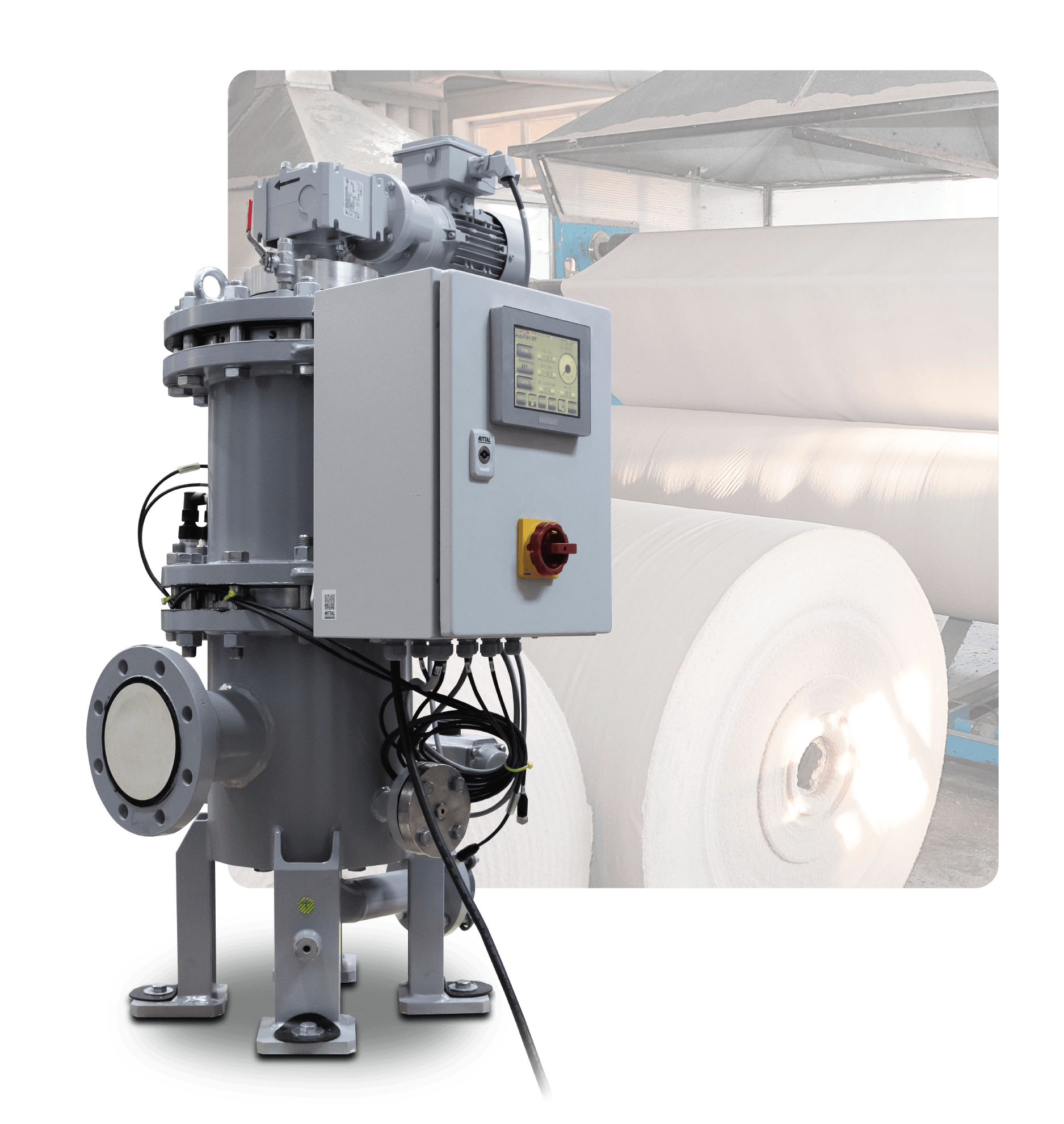


Constant basket strainer clogs were increasing downtime and threatening operator safety at a pulp and paper manufacturer.

The automatic backflushing capability of the RF14 minimizes hands-on maintenance.

Based on the customer’s setup, Schroeder Industries installed two RF14s to provide effective, unobtrusive filtration with redundancy.

Here’s how this customer benefited from this Schroeder Solution!



Longer Basket Strainer Service Intervals


Reduction in Machine Downtime


Improved Personnel Safety
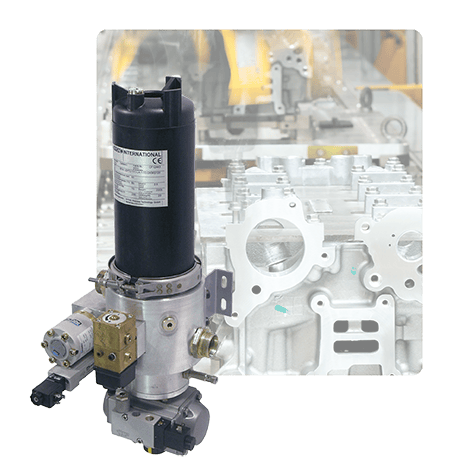


Excessive element and fluid replacements plagued a major automotive manufacturer. In the automotive industry, even a small amount of downtime inflicts a high cost.

The contamination driving these replacements originated in wear and tear in the equipment responsible for machining metal components.

After a close analysis, Schroeder Industries deployed an RF4 as secondary filtration protection for the screw pumps providing process fluid to the machine tool lines.

Here’s how this customer benefited from this Schroeder Solution!



Filter Element & Machine Component Expenses Reduced


Up to $50,000/min Savings in Reduced Downtime


Automotive Plant Productivity Increased
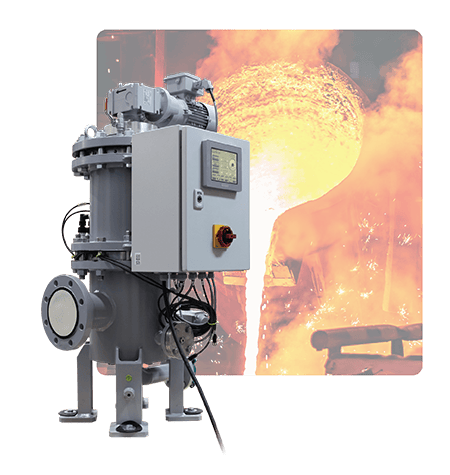


Cottonwood season is a well-known driver of solid contamination in open cooling loops. For this steel mill, cottonwood seeds and debris led to constant disruptions as filters, valve pilots, and nozzles rapidly clogged.

The open cooling towers at the mill were a prime vector for these frustrating contaminants.

The RF14 excels at fine filtration and the capture of fibrous, organic solids like cottonwood fluff. By screening out these contaminants before they could reach more sensitive components, service interruptions were virtually eliminated.

Here’s how this customer benefited from this Schroeder Solution!



Continuous Filtration Maintains Cooling Water Quality


Zero Cottonwood-Related Service Interruptions Since Installation


Improved Mill Efficiency and Productivity


You could be Schroeder’s next success story!


Tell us about your application and the challenges you face, and our experts can help find the filtration solution that fits your needs.


Request a Quote


Tell us about your process filtration application! Our specialists will evaluate the application and recommend a solution based on performance, reliability, maintenance and total operating cost.


If possible, please include the following information:

  • Fluid type and Safety Data Sheet
  • Minimum, normal and maximum flow
  • Operating and design pressure
  • Operating and design temperature
  • TSS or solids concentration
  • Particle-size distribution, if available
  • Description and density of the solids
  • Current and required cleanliness
  • Connection size and preferred materials
  • Available electrical power and controls
  • Installation location and space limitations
  • Applicable codes and project schedule

Request for Quote

  • Which products are you interested in?
  • Max. file size: 256 MB.

Process Filtration: Frequently Asked Questions


Our filtration solutions can be applied to process water, cooling-tower water, machine-tool coolant, water-glycol mixtures, emulsions, wash water, produced water and other industrial process fluids. Fluid compatibility must be reviewed before final equipment selection.


Mechanical filtration can remove suspended solids such as sand, silt, scale, rust, metal fines, pipe debris, biological debris and other particulate contamination. Specialized technologies may also address free oil, emulsified oil, organic contaminants and dissolved constituents.


Conventional mechanical filters do not remove dissolved salts, minerals or ions. Reducing total dissolved solids generally requires reverse osmosis, nanofiltration, ion exchange, deionization or another membrane or chemical-treatment process.

Schroeder Industries does offer pressure filtration with ion exchange filtration media.


Selection is based on the fluid, flow rate, pressure, temperature, solids concentration, particle-size distribution, required cleanliness and operating preferences.

Available options may include automatic backwashing filters, cartridge filters, bag filters, basket strainers, magnetic filtration, centrifugal separators, media filtration and membrane pretreatment systems.


The appropriate micron rating depends on the equipment or process being protected. Selecting a filter that is unnecessarily fine can increase pressure loss, maintenance and operating cost. Particle testing and an understanding of the downstream cleanliness requirement help establish the correct rating.


A nominal rating indicates that a filter removes a general percentage of particles at the stated size. An absolute rating identifies a more precisely defined removal efficiency. When performance is critical, the micron rating should be considered together with the filter’s efficiency or Beta ratio.


Performance guarantees depend on having representative application data and clearly defined inlet and outlet conditions. Requirements may be expressed as a micron rating, particle-removal efficiency, TSS concentration, turbidity or ISO cleanliness code.


Many systems can accommodate reasonable operating variations, but the minimum, normal and maximum flow, pressure and solids loading should be identified. Severe solids spikes may require additional capacity, staged filtration, a separator or upstream pretreatment.


Yes, but the filter must be selected so that it removes unwanted solids without adversely affecting the useful oil phase, emulsifiers, corrosion inhibitors or other additives. A representative fluid sample and Safety Data Sheet are recommended when working with coolant or emulsion systems.


Mechanical filters generally target particles larger than the filter’s effective pore size. However, very fine filtration, adsorption media or certain chemical treatments may remove desirable components. Coolant chemistry and the required micron rating should be reviewed before selection.


Automatic filters are beneficial when continuous operation, reduced labor and minimal disposable-element usage are priorities. Their suitability depends on the solids concentration, particle characteristics, available backwash pressure and the ability to discharge or process the backwash waste.


Backwash consumption depends on the filter design, size, operating differential pressure and frequency of cleaning. Schroeder can estimate backwash volume and frequency after reviewing the application conditions.


Yes. Schroeder suction-scanning automatic filter technology is designed to handle challenging contaminants, including sticky, fibrous and deformable solids. During the automatic cleaning cycle, internal scanning nozzles create concentrated suction across the screen surface, removing accumulated material while filtration continues with minimal interruption.

Because contaminant characteristics vary, the fluid, solids concentration and particle-size distribution should be reviewed. Laboratory or pilot testing may be recommended for highly adhesive, stringy or compressible materials.


Depending on the application, equipment may be available in carbon steel, stainless steel, coated steel or other materials. Seals, coatings and internal components are selected according to the fluid chemistry, temperature and operating environment.


Code stamps, material certifications and domestic-content requirements may be available depending on the product and project. These requirements should be identified during the quotation stage because they can affect design, documentation, price and lead time.


Maintenance frequency depends on the contamination level, filter type and operating schedule. Automatic filters typically require periodic inspection and wear-part replacement, while cartridge and bag systems require element changes based on differential pressure or a scheduled maintenance interval.


Yes. Laboratory analysis or pilot testing may be recommended when the solids are unusual, the particle-size distribution is unknown or a specific outlet quality must be demonstrated.