
Fuel Filtration

Fuel Filtration Catalog
Fuel Filtration Products


Diesel Fuel Filtration


Advanced Diesel Engines Demand Reliable Fuel Filtration Systems


As diesel engine technology advances, clean, dry fuel becomes increasingly important to equipment performance and long-term reliability. Solid particles, water, and microbial contamination, including bacterial and fungal growth, can damage fuel systems and lead to costly repairs, unplanned downtime, and lost productivity.

Effective diesel fuel filtration systems help remove particulate contamination and water, protect critical engine components, and keep diesel-powered operations running efficiently.


As diesel fuel systems become more advanced and precise, effective contamination control becomes essential. Reliable diesel fuel filtration systems help protect sensitive components from damaging particles and water, supporting consistent engine performance and long-term reliability.


Diesel Filtration Solutions from Schroeder Industries


Schroeder Industries draws on more than 75 years of manufacturing experience to develop reliable diesel fuel filtration systems that address contamination challenges across a wide range of industrial applications, including:


Schroeder Products
  • Bulk Diesel Storage Filtration
  • Mobile Equipment Pre-filtration
  • Onboard Diesel Filtration
  • Diesel Filtration Carts
  • Alternative Fuel & Compressed Gas Filtration
  • Fuel Contamination Monitoring


Beware of the Diesel Bug!
How to Prevent Microbial Contamination in Diesel Fuel

Did you know that bacteria and fungi can grow inside diesel fuel storage tanks?
Commonly known as the “diesel bug,” microbial contamination develops when bacteria and fungi thrive in the presence of water, particularly where diesel fuel and free water meet.

These microorganisms feed on nutrients in the fuel and form sludge and biofilms that can clog fuel filters, restrict fuel flow, accelerate corrosion, and compromise fuel quality.
Severe microbial contamination can lead to costly maintenance, equipment downtime, and extensive tank cleaning.

The best defense starts with controlling water contamination. Effective diesel fuel filtration and water separation help remove contaminants and reduce the conditions that encourage microbial growth. Regular fuel testing, water drainage, and tank maintenance provide additional protection.

Keep water out. Keep contaminants under control. Protect your diesel fuel system.


Diesel Filtration and Sustainability


In the quest for lower emissions and sustainability, diesel filtration plays a crucial role.


Diesel fuel continues to power critical industrial operations worldwide, even as industries embrace cleaner technologies and more sustainable energy solutions.

While diesel-powered equipment presents environmental challenges, businesses can take meaningful steps to improve operating efficiency and reduce unnecessary waste. Advanced diesel fuel filtration systems help maintain fuel cleanliness, protect critical engine components, and support reliable equipment performance.

By combining effective fuel contamination control with preventive maintenance and efficient operating practices, businesses can better manage fuel consumption, minimize avoidable maintenance waste, and support their broader sustainability goals.


Modern diesel engines rely on advanced fuel injection technology to improve efficiency and meet increasingly stringent emissions standards. These precision-engineered systems demand cleaner fuel and effective contamination control to maintain optimal performance.

Solid particles and water in diesel fuel can damage sensitive components, including fuel injectors and pumps. As contamination affects fuel delivery and engine performance, equipment may consume more fuel, operate less efficiently, and produce higher emissions.

Reliable diesel fuel filtration systems help remove harmful contaminants before they reach critical engine components, supporting efficient combustion, consistent performance, and long-term equipment reliability.

Fuel Efficiency

As the world aligns with more sustainable solutions, filtration and contamination control are the key to cleaner-burning diesel and fuel efficiency!


Featured Diesel Fuel Filtration Solutions


Combined with our range of premium filter elements, our fuel filtration products are engineered for excellence in removing contamination. Here are just a handful of Schroeder’s industry-leading diesel fuel filters:
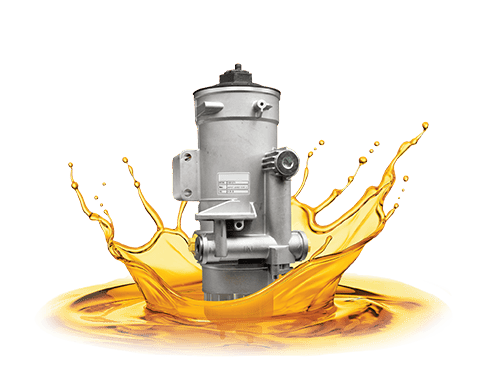


HDP Series Filter

HDP Series – Onboard Diesel Filtration


A wide range of compact filters designed for the most challenging engine applications across a wide range of industries. High-efficiency, available in several sizes and with fully automated water drain and integral electric pump options.


GHCF Filter

GHCF – GeoSeal® High-Flow Coalescing Filter


Schroeder’s GHCF features a compact, robust design with exceptional flow rate for its overall size. Exceptional coalescing performance removes damaging water contamination in both bulk storage and onboard applications.
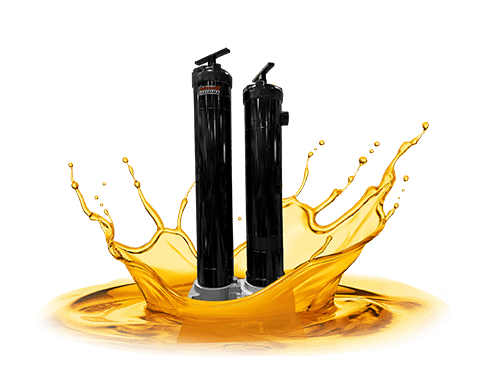

BDF Filter Image

BDF – Bulk Diesel Filter


A powerful bulk filtration solution for high flows and heavy contamination! Performs at 99.5% single-pass efficiency, helps protect vital engine components from water contamination. Additional filter housing add-ons are available to increase dirt holding capacity and efficiency.
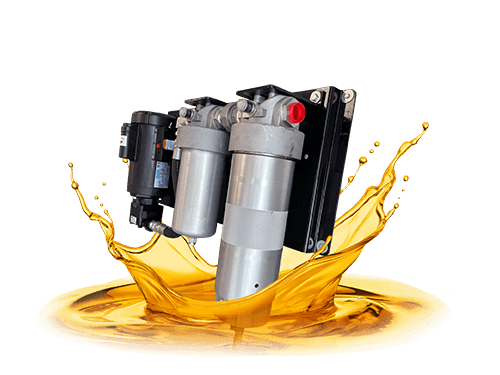

BDFP Filter Image

BDFP – Bulk Diesel Filter Panel


This dispensing and transfer filtration solution combines Schroeder’s particulate GHPF filter and coalescing GHCF filter for exceptional defense against particulate and water contamination. With its own integrated pump unit, adding a BDFP to a new or existing diesel storage system is simple!


Spotlight on Compressed Gas & CNG


Schroeder Industries’ Fuel Filtration division goes beyond diesel!

With products optimized for compressed air and compressed gas, filtration of air-driven applications and CNG has never been easier:
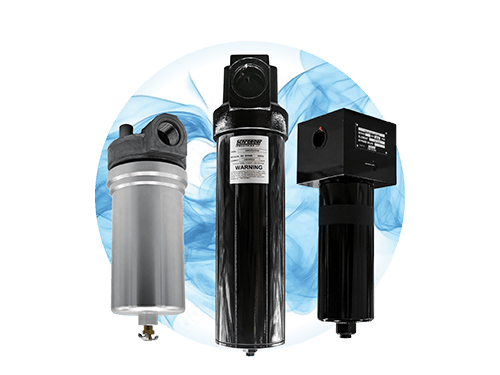
CGF Series Filter Image

CGF Series – Compressed Gas Filters


Versatile, cost-effective, and powered by BestFit® CGF elements for industry-leading gas filtration! Comprehensive solutions for compressed gas from generation and transportation, to storage and filling, and even onboard applications.


CGF50 Filter Image

CGF50 – Compressed Gas Filter Panel


Upgrade your compressed gas dispensing & transfer filtration! The CGF50 utilizes two stages of the Schroeder CGF50 Compressed Gas Filters to remove particles and aerosols of oil and water from CNG and other compressed gases.


Case Studies: Fuel Filtration


Don’t just take Schroeder’s word on the quality of our products. Here are just a few success stories highlighting how solutions from our Fuel Filtration group saved our customers money, downtime, hassle and more!


An MRO in the refuse industry struggled to source high-quality CNG filtration elements in a timely manner and sought a more easily maintained slow-fill CNG filtration system.

Schroeder Industries provided the CGFP50, an extremely effective, cost-saving solution!

For bulk compressed gas applications, the CGFP50 combines two high-pressure CGF50 housings for increased particle capture and coalescing, plus simplified maintenance.
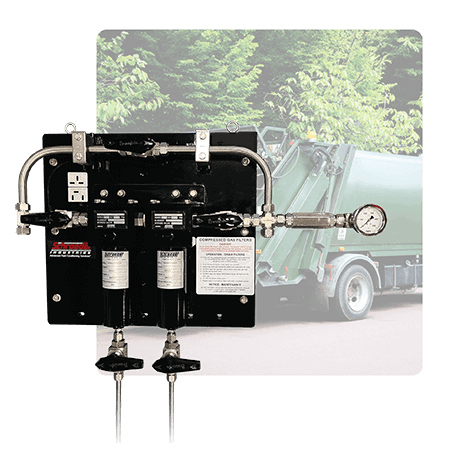
Here’s how Schroeder Industries’ CGF50 helped this customer:


$5k – $10k Estimated Savings on Installation Per Site


Estimated $10k Saved on Maintenance, Consumables Per Site


Potentially 6-figure Annual Savings Across All Fueling Sites


When a fleet operator in the Mississippi River region launched a new pushboat with a brand new engine, the pushboat experienced sudden engine failure just a single mile into its maiden voyage.

When analysis revealed that water contamination in the fuel was the primary cause of the failure, Schroeder Industries recommended a kidney loop setup featuring the BDFP to ensure fuel quality and protect from further unexpected failures.
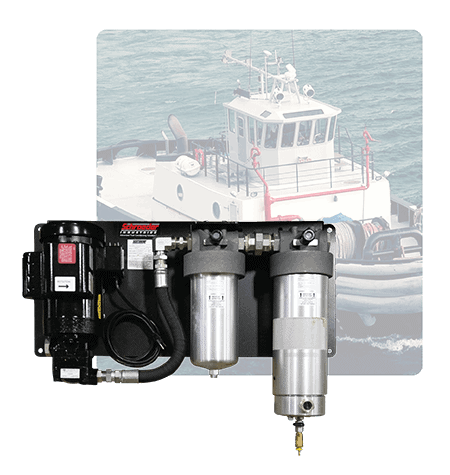
Here’s how Schroeder Industries’ BDFP helped this customer:


Reduced Downtime & Maintenance


Eliminated Contamination-Related Engine Failures


Prevented Major Engine Repairs (Saving Up To 100K+)


Due to poor fuel quality, a Class 1 Rail Carrier was experiencing frequent in-field failures of their MOW (Maintenance-of-Way) equipment, including their Fuel & Lube Trucks. 

This lack of fuel quality control was costing the customer thousands of dollars in parts and labor, downtime, and lost revenue overall. Schroeder’s experts retrofitted the customer’s MOW fleet with BDF2 filters (BDF with dual GHCF filters), providing immediate improvements.

Here’s how Schroeder Industries’ BDF2 helped this customer:


57% Increase in Particulate Filtration Efficiency


19% Reduction in Absolute Water Content (52ppm Below World Wide Fuel Charter Maximum Water Content)


300k USD in Lost Revenue Recovered Daily


An OEM developing material handling equipment was not getting the desired performance and ease of use out of their engine kit’s manufacturer-supplied diesel filters.

To address the customer’s challenges with their filter service life and installation difficulties, Schroeder Industries recommended the HDP240 onboard diesel filter.

Not only did the HDP240 outclass the original diesel filters but through private labeling of the HDP240 diesel elements, the OEM was able to capture increased aftermarket revenue.

Here’s how Schroeder Industries’ HDP240 & Private Labeling helped this customer:


Filter Life Exceeded Target Engine Hours


10% – 20% in Immediate Savings


Private Labeled Elements Net $500k USD in 5 Years


You could be Schroeder’s next success story!


Tell us about your application and the challenges you face, and our experts can help find the filtration solution that fits your needs.


Request a Quote


Request for Quote

  • Which products are you interested in?
  • Max. file size: 256 MB.

Diesel Filtration: Frequently Asked Questions


Fuel Storage and Handling


Unfortunately, there is no single expiration date for stored diesel fuel.  Only fuel sampling can provide clear indication of the quality of the stored diesel fuel.  Factors like the amount of biodiesel blended in the fuel or environmental conditions like humidity and temperature will affect the oxidative stability, which ultimately affects the storage life.  When in doubt, bottle sample! 


Symptoms of contaminated fuel include frequent filter changes, loss of engine performance, injector failures, and increased maintenance requirements. Ideally, contamination should be detected in fuel sources before the fuel is added to the equipment fuel tanks. 

Cloudy fuel samples, visible sludge, or large visible particles are very clear indicators of contamination. However, solid contamination is not always detectable with just a visual inspection, as damaging contamination may be beneath the limit of human vision. Using particle counters and saturation sensors, or laboratory analysis of fuel samples, are better ways to accurately assess fuel cleanliness. 


The Worldwide Fuel Charter recommends an ISO Cleanliness target of 18/16/13. The cleaner your bulk stored fuel, the easier it is for downstream onboard filtration to further clean the fuel to meet the much tighter standard of cleanliness for fuel injector systems.  

For more information on the importance of ISO cleanliness and ISO Code interpretation, check out the following:


Water contamination is a significant cause of stored fuel degradation. When free water is present in a fuel storage tank, microbial growth commonly known as diesel bug can form at the boundary between the water and fuel.  Using energy from hydrocarbons in the fuel, diesel bug can grow into sludgy mats of biofilm which rapidly foul filters and fuel systems, and cause sudden engine shutdown or failures.


Ensure that any potential points of entry for contaminants are sealed or utilize breathers to capture airborne particulates and humidity before it can enter the fuel tanks. 

When adding new fuel to the tanks, use transfer filtration to prevent the introduction of potentially contaminated fuel into storage.


Preventing water from entering storage tanks is the first step in eliminating water contamination. Ensure that any potential entry points for water, such as seams and seals, are watertight. Install desiccant breathers on tank vents to prevent humidity from entering the tank as ambient air circulates. 

Condensation inside the fuel tank is another major contributor to free water contamination. Maintaining fill levels to reduce empty headspace in the tank limits the ability of humid air to condense and drip into the fuel.  

Temperature swings can also cause increased condensation, or force dissolved water in the fuel to separate into more accessible free water. Painting outdoor storage tanks white can reflect heat from direct sunlight, and shade structures can also prevent intense heating and cooling cycles.


Organic growth in diesel tanks is driven primarily by the presence of water contamination. When there is a presence of free water, microbes which enter the tank in the fuel or the air will colonize the boundary between the water and the fuel. By consuming hydrocarbons in the fuel, the microbes can grow and multiply. This microbial infestation, often called diesel bug, may require extensive tank cleaning and costly corrosion if not prevented or caught early.


There are a wide range of common practices utilized in the industry when deciding the time in which fuel should be recirculated within a fuel storage tank.  In some cases, this will be specified or defined by end-users or engineering firms designing fuel filtration systems and fuel storage equipment. 

We have found through lab testing and field trials that by effectively rotating or “turning” a volume of fuel 2-3 times, can provide the minimum amount of time needed to effectively remove all free or emulsified water. 

To reach target particle counts, the number of rotations may need to increase to a range of 4 to 6 “turns” of the tank volume.  This will vary depending upon the efficiency of the filtration used and how effectively the tank volume is rotated.  The only way to know for certain is to monitor the particle counts and water content in real-time during the operation of the fuel filtration system


Changing filters only removes the contaminants from the fuel that passes through the filter element. If contamination exists throughout a storage tank, replacing filters alone may not solve the problem, as there can still be much more contamination settled throughout the fuel storage tank itself. Fuel polishing continuously recirculates the fuel through filtration and water-separation equipment to maintain a clean tank condition and to help maintain target fuel quality. 


The correct micron rating depends on the application. Bulk storage, fuel transfer, dispensing systems, and engine protection often have different cleanliness requirements. Customers should select filtration based on the cleanliness target of the most sensitive downstream component while maintaining adequate flow performance.


This greatly depends upon a number of factors. The only way to be certain of the condition of the fuel tank is to regularly monitor and submit your stored fuel for lab testing, or to utilize real-time condition monitoring to determine the exact condition of the fuel tank at any given moment. Once the fuel condition is reported to approach or exceed target cleanliness levels, action should be taken to mitigate the contamination found in the fuel. 


Equipment Performance and Onboard Filtration 


The Worldwide Fuel Charter recommends an ISO Cleanliness target of 18/16/13 for bulk stored diesel fuel. As the fuel is added to an onboard fuel tank and approaches the injector system, this cleanliness target becomes much stricter. Modern Tier IV engine standards require a cleanliness target of <12/9/6 to maintain the normal working life of fuel injectors and other internal components


Poor fuel quality or contamination-driven wear in the fuel system can contribute to loss of power or engine problems. Be sure to test the fuel quality to confirm or rule out contamination-related problems and regularly filter and test diesel as a preventative measure.


Dark exhaust is commonly caused by faulty engine components such as fuel injectors. Contamination can cause damage to these components, resulting in poor operation and black smoke.


Yes, poor quality fuel can damage engine components including injectors and pumps. Modern Tier IV diesel engine cleanliness standards are extremely strict, requiring an ISO Code of less than 12/9/6 to preserve injectors.  

The extremely high pressure in a diesel injector system makes the injectors particularly sensitive to contamination, and expensive to replace when damaged. Injector seat scoring, injector poppet erosion, and injector tip fractures can all occur if fuel is contaminated.


For modern onboard diesel systems, two-stage filtration is common. We recommend using between 10-30 micron filtration for the primary or water separation filter, with the secondary downstream filter between 2-5 microns to meet stringent injector requirements. 

Keep in mind that the nominal rating of a filter element does not necessarily mean it is the best performing option for your equipment! Choose elements that are verified at 98% efficiency or greater, and verify that your choice of onboard diesel filter meets high-pressure common-rail manufacturing specifications. 

Learn more about the difference between nominal filtration ratings and absolute ratings:


Fuel filter element changes are based on service hours. Many manufacturers recommend a service cycle of 500 hours between each filter change.


While a fuel water separator is not required, it is highly recommended to remove water and contaminates before they reach the engine’s primary filter to protect the fuel system components.


Replacing the existing fuel/water separator will not affect the engine warranty, provided the updated separator meets the system’s specifications for water removal, flow rate, and single pass efficiency.


Water in the fuel separator indicates that water contamination is present in your fuel. To prevent the onboard separator from being overwhelmed by water contamination, take preventative measures against water contamination in your bulk fuel storage and transfer procedures by using coalescing filtration.


If a diesel engine is experiencing sudden issues after refueling, contaminated fuel is a likely cause. Free water contamination can cause the engine to misfire. High contamination loads entering your fuel tank, or existing sediment in the tank stirred up during the fueling process, can cause rapid filter fouling and restrictions in the fuel system.


Alternative fuels can impact filtration differently than conventional diesel fuel. Biodiesel may loosen existing tank deposits and can increase the likelihood of water-related contamination issues. Renewable diesel generally behaves differently from biodiesel but still requires proper cleanliness control. Regular fuel testing and appropriate filtration practices help maintain fuel quality and maximize equipment reliability regardless of fuel type. 


Schroeder Industries’ fully synthetic media can handle renewable and biodiesel up to B100. For other element brands, consult with a brand representative or manufacturer


Cold Weather Operation


Diesel gelling occurs when dissolved paraffin within the fuel begins to crystallize in cold temperatures. If your fuel is gelling during periods of cold weather, consider switching to a winter diesel blend, which contains additives to inhibit the formation of wax crystals. Avoid mixing summer and winter fuel blends, as it can dilute the winter additives which prevent diesel gelling.


This greatly depends upon the climate in which you operate your equipment. 

The ASTM D975 standard provides some guidance regarding the use of winter fuel depending upon the specific location and climate in which you are located or are operating equipment. 

Special attention should be taken by those who are in colder climates who do not receive regular deliveries of fuel, as the fuel in your tanks may not be suitable for operation in those transitional seasons, resulting in unintended gelling.  Communication with your fuel supplier can ensure this transition goes smoothly and you can avoid unanticipated downtime events. 


Using a winter blend of diesel fuel is recommended to prevent filter plugging in cold temperatures. Some on-board diesel filters come with optional fuel pre-heating configurations, which can dissolve the wax solids in gelling diesel. 

Diesel gelling is not the only potential cause of filter plugging in cold temperatures. High water content can cause ice to form in the diesel fuel, which causes filter blockages in a similar way to diesel gelling.


In severe cases, de-gelling additives can be added to the filter and fuel tank to melt the paraffin wax forming in the fuel.

Taking preventative measures is recommended to avoid the worst diesel gelling outcomes. Operators can pre-treat the fuel tank with de-gelling additives if particularly cold temperatures are expected. 


Diesel Fuel Troubleshooting


Signs of diesel fuel contamination can include frequent filter changes, loss of engine power and performance, increased exhaust smoke, fuel injector issues, visible tank sludge, and visible water or sediment in the fuel. 

However, it’s important to note that even if fuel appears clean in a visual inspection, it may not necessarily meet your cleanliness requirements. Solid contaminants can be smaller than the human eye can detect without the use of sensors. Dissolved water may not be obvious in a fuel sample but may precipitate out of the fuel and become damaging free water in some circumstances. 

To measure potential contamination, seek out fuel quality testing, or implement particle and water sensors for real-time monitoring.


Symptoms of water contamination can be visual, performance-related, or both. 

Performance symptoms: Engines may experience rough idling, difficulty starting, stalling, or total failure. If these symptoms begin immediately after refueling, it is often a sign of water contamination in the newly added fuel. 

Visual symptoms: Fuel that is cloudy or hazy can indicate the presence of emulsified water and/or microbial growth. In particularly saturated fuel, the water will visibly separate and form a free layer of water. The presence of slimy, dark sludge in the filter element or storage tank indicates the possible presence of ‘diesel bug,’ or microbial biofilm growth. 

Storage tanks and engine components may also show visible signs of rusting.


High levels of solid contamination in diesel fuel such as excessive dirt or bacterial growth can shorten the life of filter elements and cause rapid fouling. Ensure that contamination control and fuel quality monitoring are in place at all stages of storing and filling. 

If you are operating in cold temperatures, short filter life may also be a sign of diesel gelling. Diesel gelling is caused by dissolved paraffin crystalizing into waxy solids that can quickly plug the fuel filter. Winter diesel blends contain additives that hinder the formation of wax crystals, making them more effective in cold conditions.