Skip to Content
Exit
 

Tag Archive: Diesel Fuel Polishing

  1. Data Center Filtration: The Proven Way to Protect Uptime

    Comments Off on Data Center Filtration: The Proven Way to Protect Uptime
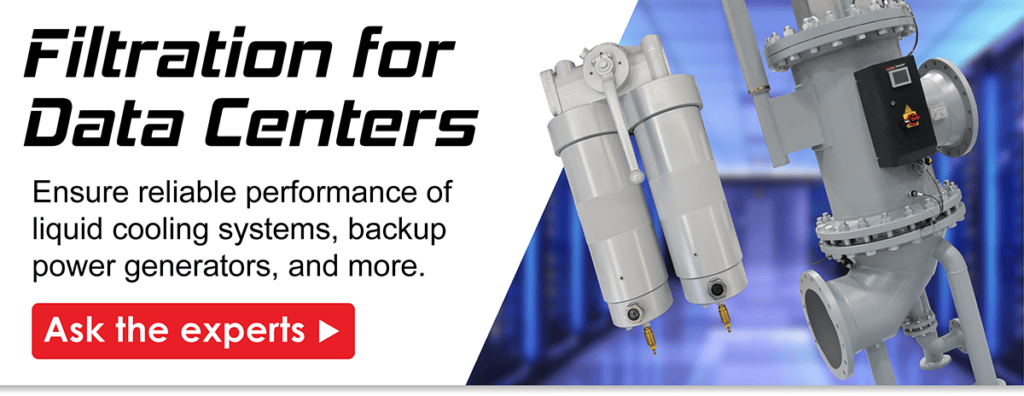
    Data Center Filtration

    Data centers impact our lives more than we realize.


    Currently, the buzz regarding data centers focuses on the artificial intelligence boom, but these operations are already quite integrated in our day-to-day.

    Data centers range from simple server rooms managed by individual enterprises to massive, standalone operations. At their core, the function of every data center is similar: Storing data and applications, and enabling people to access data and web-based services.


    Data center outages can result in significant financial losses, service disruptions, and reputational damage, making uptime and infrastructure reliability critical considerations for facility operators.


    Apps, websites, and other internet-based resources we rely on may become inaccessible. Because much of the economic and social fabric of society now relies on internet connectivity, these outages range from inconvenient to downright costly!

    Even a relatively small data center can be vulnerable to overheating, power outages, and other issues that trigger downtime.

    Data Center Filtration

    As data centers grow larger and more numerous, and the stakes for failure get higher, preventing outages becomes even more crucial.


    How Contamination Causes Critical Failures


    Contamination is a hidden threat that compromises equipment across virtually every industry, from hydraulic construction equipment, to diesel-powered ships, to hydro-power systems, and much more. When it infiltrates operating fluids (lubricating oils, liquid fuels, process fluids, etc), trouble is on the horizon for affected equipment.


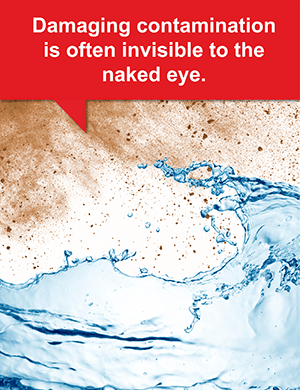
    Contamination can be solid particles, such as tiny metal fragments caused by wear, or dust particles ingested into reservoirs, process water streams, and storage tanks. These particles of solid contamination are often smaller than the eye can see, but even microscopic particles cause wear and tear that eventually lowers the efficiency of the equipment or causes it to fail.

    Contamination also commonly presents as water, such as rainwater or humidity that condenses inside of storage tanks. This can reduce lubricity and encourage microbial growth in diesel fuel, and ultimately contributes to equipment failures in a myriad of ways.
    Data Center Filtration

    Contamination affects virtually every industrial operation—data centers are no exception.


    In data centers, there are two key areas that require vigilant defense from contaminants:


    1. Contamination and Liquid Cooling Systems


    Thermal management is one of the biggest challenges facing data centers.


    The processing power packed into data centers generates an enormous amount of heat. Liquid cooling systems are the preferred choice for thermal management, especially in larger data centers.

    However, like any fluid-powered system, cooling loops are vulnerable to contamination.
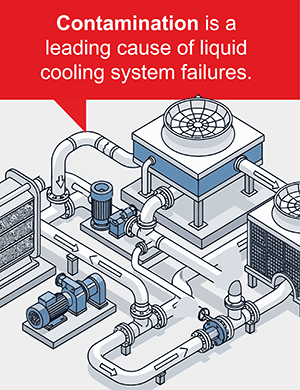

    • ‘Built-In Contamination’: A freshly constructed cooling system might not sound like a place where contamination would be abundant. However, solid particles left over machining processes, dust and grit that entered during construction, weld spatter, and more can be waiting in the cooling system before the first server even powers on.
    • Water Source Contamination: Cooling loops can draw from a variety of water sources, including ‘gray’ (non-potable) water and even natural surface water sources such as rivers and lakes. These sources may contain contamination ranging from large visible solids to microscopic particles, all of which can damage the cooling system. Even municipal tap water can contain minerals and sediment that contribute to component wear.
    • Inevitable Wear & Tear: As components within the cooling system are degraded over time, they can release solid particulate into the system which accelerates the wear process.
    Data Center Filtration


    To ensure proper performance, it’s important for servers and computing systems to stay as cool as possible.


    Overheating can damage servers and computing components, resulting in data losses, major service interruptions, and astronomical repair costs.


    2. Contamination and Backup Power Generators


    Mission-critical backup power is essential for continuous, 24/7 data center uptime.


    In the event of an emergency that affects a data center’s primary power source, backup generators are a critical safety net to ensure that the servers stay running. Diesel-powered generators are the most common choice for reliable backup power.

    However, diesel generators can be especially vulnerable to contamination. Because these generators sit idle for long periods, it’s easy for contamination-related problems to be overlooked until the generators fail when they’re needed most!
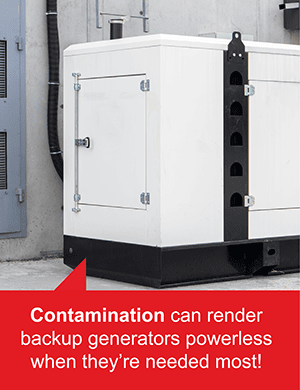

    • Stored Fuel Contamination: Fuel storage tanks can be exposed to environmental contamination in the form of rain, ambient humidity, dust, pollen, and more. If the stored fuel is not regularly tested and filtered, contaminants can build up to critical levels.
    • Diesel Bug: When water contamination is present in stored diesel, microbial growth known as ‘diesel bug’ will grow along the border of the diesel and free water, essentially feeding on the energy in the fuel. If left unchecked, thick microbial mats can proliferate throughout the fuel, and can quickly foul filters and damage engine components when the fuel is drawn from storage.
    • Engine Failure: Large quantities of contamination in stored fuel can overwhelm the engine, causing startup delays or even complete engine failure. This not only leads to costly downtime in a data center setting, but may require expensive repairs.
    Data Center Filtration


    Even a temporary loss of power can cause chaos and delays for any operation relying on a data center to store data, access critical applications, and more.


    If the primary power source fails and backup generators aren’t able to close the gap, power outages will disrupt services, result in SLA violations, and drive significant financial and reputational losses.


    Your Partner for System Reliability


    Don’t wait for contamination to impact your data centers: Implement solutions early!


    Schroeder Industries is the expert in all things filtration, including for process fluid and diesel fuel.

    Our product experts have designed solutions that effectively tackle contamination, protect equipment, and maintain productive uptime in virtually every industry that relies on fluid power.


    Whether you’re planning your data center or retrofitting an existing operation with filtration, our experts are here to help.
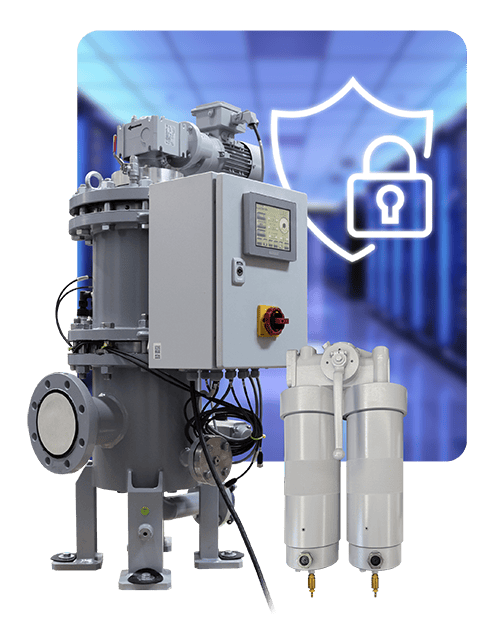
    Schroeder Industries

    Schroeder Industries offers comprehensive solutions for:


    Data Center Filtration Brochure
    • Primary Loop Protection
    • CDU & Secondary Loop Filtration
    • Water/Glycol Conditioning
    • Side-Stream Filtration
    • Commissioning & Flushing Solutions
    • Monitoring & Diagnostics
    • Bulk Diesel Filtration & Backup Gen-set Protection
    • And More!

    Ask the Experts!


    Request for Quote

    • Which products are you interested in?
    • Max. file size: 256 MB.
  2. Diesel Fuel Maintenance: The Danger You Don’t See

    Comments Off on Diesel Fuel Maintenance: The Danger You Don’t See
    From: Schroeder Industries’ Fuel Filtration Center of Excellence

    For those of us in the Northern hemisphere, Fall has arrived!

    Why Seasonal Changes Make Diesel Fuel Maintenance Essential

    When the seasons change, diesel fuel maintenance becomes increasingly important for equipment reliability. Whether temperatures are rising or falling, seasonal diesel fuel blends may change to accommodate different operating conditions.

    How do seasonal temperature changes affect diesel fuel? Colder temperatures can affect diesel fuel’s flow characteristics, while water and particulate contamination present additional challenges for fuel storage, transfer, and equipment operation.

    Seasonal transitions provide an opportunity for preventive diesel fuel maintenance, including fuel testing, tank inspections, filtration, fuel polishing, and upgrades to existing fuel systems where necessary.

    For facilities reviewing maintenance priorities and available budgets, investing in appropriate diesel filtration and water separation equipment can help address contamination concerns before they contribute to equipment problems.

    Protect Diesel Fuel Quality with Particulate Filtration and Water Separation

    Effective diesel fuel filtration addresses contaminants that can compromise fuel cleanliness and equipment reliability.

    Particulate filtration removes solid contaminants, while fuel-water coalescing technology is designed to separate water from diesel fuel under suitable operating conditions. These processes can complement one another in fuel polishing, fuel transfer, and bulk fuel clean-out applications.

    Schroeder Industries offers several fuel conditioning solutions, including:

    Schroeder’s Fuel Filtration Product Lines include replacement filtration elements for compatible equipment, supporting ongoing maintenance and servicing.

    Mobile Diesel Fuel Filtration for Storage and Transfer

    BDFC Bulk Diesel Filtration Cart

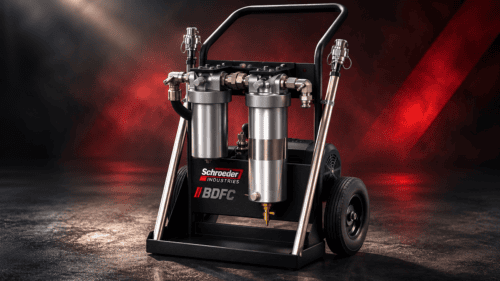
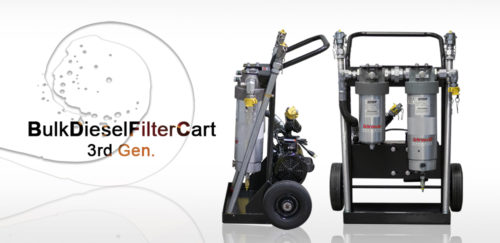
    The BDFC Bulk Diesel Filtration Cart provides a portable solution for diesel fuel maintenance, combining high-efficiency particulate filtration and coalescing water separation in one compact system.

    Designed for both single-pass fuel transfer and kidney-loop filtration, the BDFC helps remove particulate contamination and water from diesel fuel in compatible bulk storage, transfer, and dispensing applications.

    This combination allows maintenance teams to address fuel cleanliness and water contamination through a single mobile filtration platform.

    BDFC Gen 3.

    The BDFC is ideal for fuel maintenance operations.

    It is portable and very easy to use and operate.

    Offers flow rate options of  14 gpm (53 l/min) or 25 gpm (95 l/min).

    The BDC Bulk Diesel Cart offers higher flow rate options with considerably more dirt holding capacity and throughput for larger operational needs for fuel polishing.

    BDC Bulk Diesel Cart

    BDC Bulk Diesel Cart: High-Capacity Diesel Fuel Filtration

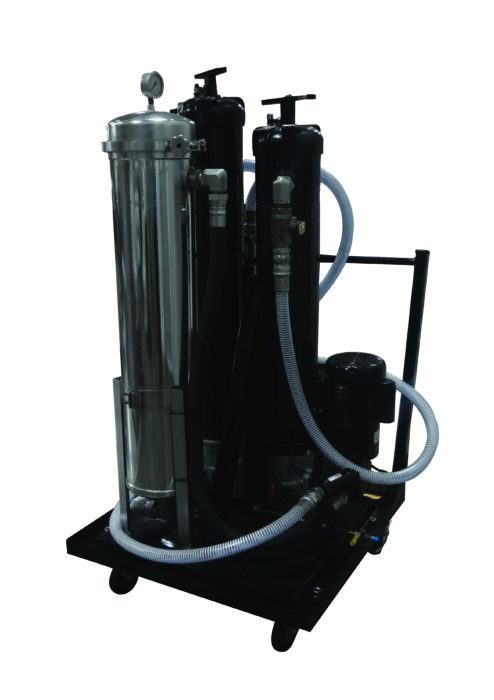
    For larger diesel fuel storage and transfer applications, Schroeder Industries offers the BDC Bulk Diesel Cart, a mobile diesel filtration system designed to help remove particulate contamination and water from stored fuel.

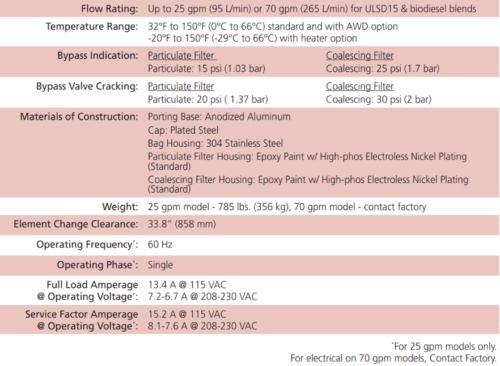
    The BDC is available in two flow configurations:

    • 25 gpm (95 L/min) for compatible diesel fuel maintenance applications.
    • 70 gpm (265 L/min) for higher-capacity fuel filtration and transfer requirements.

    These configurations support both single-pass diesel fuel transfer and kidney-loop filtration, making the BDC suitable for maintaining fuel cleanliness in larger storage tanks.

    How Does Three-Stage Diesel Fuel Filtration Work?

    The BDC combines three filtration stages to address different types of fuel contamination:

    1. Bag pre-filtration: Captures larger contaminants, including rust particles and accumulated debris associated with microbial contamination.
    2. High-efficiency particulate filtration: Uses Schroeder’s synthetic filtration media to remove finer solid contaminants from diesel fuel.
    3. Coalescing water separation: Uses specialized media technology to separate free and emulsified water from compatible diesel fuels.

    This combination is particularly useful in bulk fuel maintenance applications where higher contaminant loads or increased fuel-processing capacity require a multi-stage approach.

    By combining particulate filtration and water separation, the BDC helps maintenance teams manage diesel fuel cleanliness and reduce contamination-related risks to fuel system components.

    Electrical Configurations for Diesel Filtration Equipment

    Electrical compatibility is an important consideration when selecting diesel fuel filtration equipment for different facilities and international applications.

    Schroeder’s BDC configurations include motor options designed for specific electrical requirements. Available configurations vary by flow rating, voltage, and phase.

    For applications involving different regional electrical standards, customers should verify motor compatibility and available configurations with Schroeder Industries before ordering.

    Find the Right Diesel Fuel Filtration Solution

    Selecting the appropriate diesel filtration system depends on factors such as fuel volume, contamination levels, required flow rate, and available electrical power.

    For information about diesel fuel cleanliness requirements, filtration performance, or application-specific equipment selection, contact Schroeder Industries to discuss your fuel maintenance needs.