Skip to Content
Exit
 

Tag Archive: Diesel Fuel Filtration

  1. Roll-Off Cleanliness: The Proven Way to Prevent Equipment Failure

    Comments Off on Roll-Off Cleanliness: The Proven Way to Prevent Equipment Failure
    When equipment fails prematurely, contamination is often to blame.


    For OEMs, premature failures may mean paying out for a costly warranty claim—and, in some cases, exposure to legal liability. Not only do these failures cost the OEM, but they massively inconvenience the end user, and can undermine the manufacturer’s brand reputation.


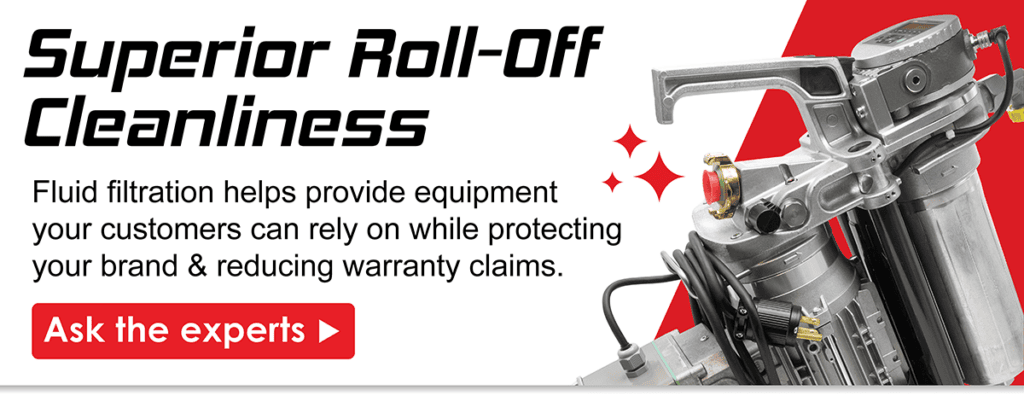
    To reduce the chances of premature failures, every OEM should uphold a high standard of roll-off cleanliness. Fluid filtration is a key aspect of roll-off cleanliness.

    How Fluid Contamination Becomes Built-In Contamination


    ‘Built-in’ contamination refers to contamination that infiltrates a new machine during the assembly and testing process, prior to final delivery to the end user.

    Built-in contamination is commonly caused by contaminated components. Metallic fragments lingering after the machining process, or even ambient dust from poor storage and handling practices, can prematurely sideline a machine.


    Dirty hydraulic fluid and diesel fuel used to test and fill a new machine can also deliver damaging contamination into the system!


    Modern hydraulic and diesel fuel systems have increasingly stringent cleanliness requirements for fluid.

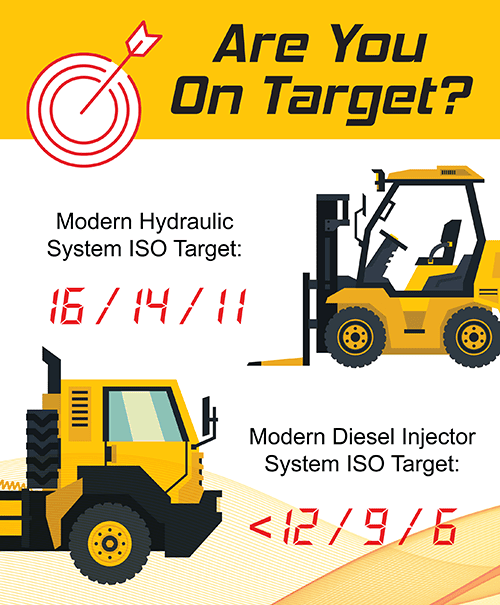
    For a modern hydraulic system, the typical standard of cleanliness is an ISO reading of 16/14/11.

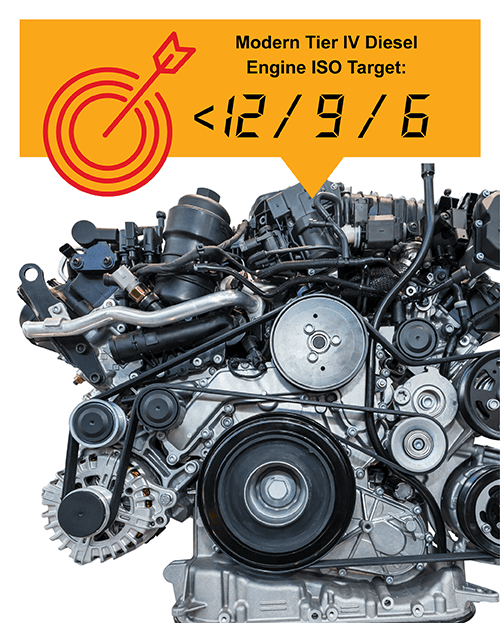
    Modern Tier IV diesel systems experience higher pressure and contain components with greater sensitivity, so fuel entering the injectors should be less than ISO 12/9/6. That’s 16x more restrictive than the modern hydraulic standard!

    You should never assume that your stored fuel or hydraulic fluid is clean, even if it is ‘new!’


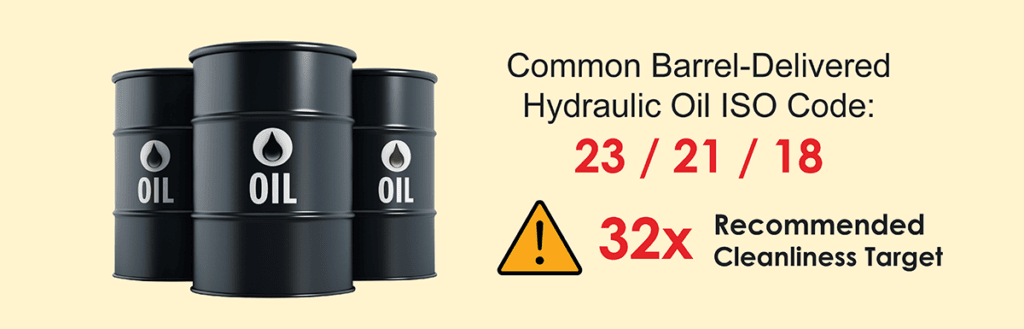
    ‘New’ hydraulic fluid has been found to contain contamination levels as high as 32 times the recommended ISO cleanliness levels for modern systems.

    Diesel fuel that has been ‘safely’ stored could be accumulating high levels of water contamination in the background, triggering microbial growth and generating solid contamination within the tank.


    If a manufacturer fills the hydraulic and fuel tanks of a machine with contaminated fluid, they are setting the equipment, the end user, and themselves up for failure.


    The moment the machine leaves the assembly line with dirty fluid, contaminants begin dealing damage throughout the system.


    End users may experience:

    • Premature Equipment Failure
    • Impacts to Productivity
    • Worker Safety Hazards
    OEM consequences may include:

    • Costly Warranty Claims
    • Legal Liability
    • Damaged Brand Reputation

    To prevent this fluid-borne contamination, any and all operating fluids should be examined and filtered prior to ever touching a machine. As an extra precaution, the equipment’s systems should be flushed and filtered before final delivery as well.


    Filtration Solutions for Roll-Off Cleanliness

    Schroeder Industries understands the importance of setting end users up for success through roll-off cleanliness. We offer a variety of filtration solutions and diagnostic tools that ensure your equipment is putting its best foot forward from a cleanliness standpoint when it leaves the assembly line.


    Portable Fluid Sampling Systems

    Diagnostic tools like the TFC are used for establishing ISO counts for fluids in real-time. With particulate shape and size recognition software, the TFC can even provide clues as to where contaminants may be originating from.

    Hand Held Hydraulic Filter Units

    Lightweight, hand-held units like the HFS-15 provide the same powerful filtration as a filter cart system with unprecedented mobility. Units with onboard particle counters are available.


    Filter Cart Systems

    Offline filtrations systems such as Schroeder’s array of filter carts (including the MFS, FS, and AMFS) allow for flexibility and mobility. They can act as kidney loop systems for flushing systems, or provide filtration as fluid is transfered into the system.

    Ranging from streamlined-but-reliable basic cart systems to advanced systems with onboard particle counting and recording capabilities, these filter carts ensure the cleanliness of fluid within the equipment and can be customized for your specific needs.

    Bulk Diesel Filters

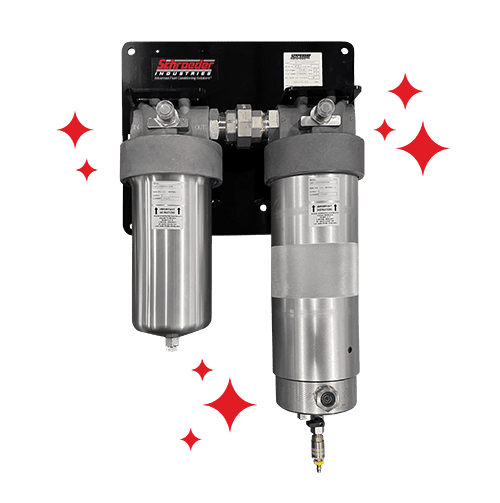
    Schroeder’s Fuel Filtration division specializes in coalescing and particulate filtration for diesel fuel.

    Products like the BDF, GHCF, and more provide superior filtration at every stage of the fuel supply chain, including during transfer, point of fueling, and kidney loop circulating filtration for bulk storage tanks.
    Mobile Diesel Filtration Units

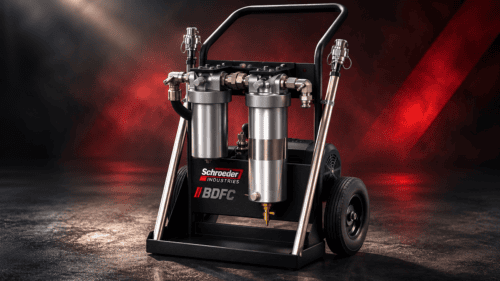
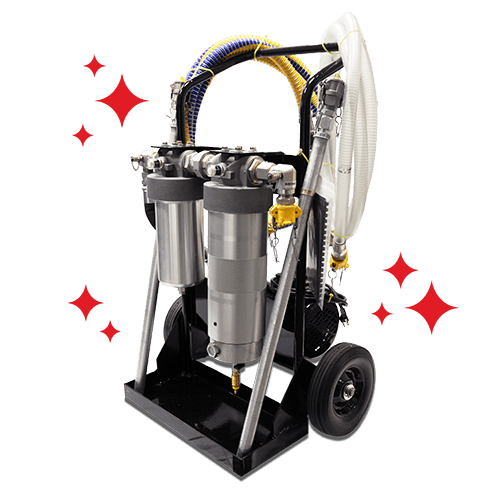
    Fuel filtration carts like the BDFC combine our world-class fuel filters with integrated pumps, hoses, and a mobile cart chassis.

    These turn-key, complete systems offer increased flexibility and enable easy transitions from application to application around a manufacturing plant or storage facility.

    Talk to the Contamination Control Experts


    If you want to reinforce your roll-off cleanliness standards, our fluid care experts are ready to help!


    Tell us about your operational needs, and we can help find the right solutions for you:

    Request for Quote

    • Which products are you interested in?
    • Max. file size: 256 MB.
  2. What the Worldwide Fuel Charter Means for Your Bulk Fuel

    Comments Off on What the Worldwide Fuel Charter Means for Your Bulk Fuel


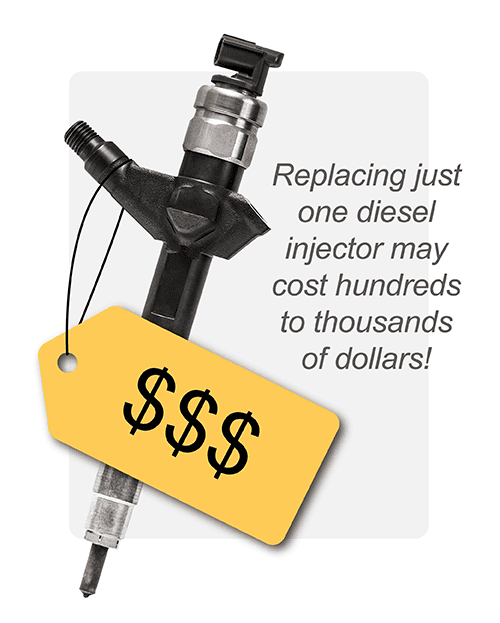
    Just one diesel injector can cost hundreds to thousands of dollars to replace. Multiply that by the number of injectors in a 6 or 8-cylinder engine, and the repair costs can take a considerable bite out of a company’s profits!

    A well-designed fuel pipeline includes filtration at the transfer, dispensing/filling, and onboard stages. But a successful contamination control plan must begin at the bulk storage stage.

    That’s where recommendations from the Worldwide Fuel Charter come into play.


    What is the Worldwide Fuel Charter?


    The Worldwide Fuel Charter (WWFC) was developed by an international committee representing automotive and fuel manufacturers aiming to create a global standard for fuel quality. The first edition of the charter was published in 1998, and at the time of this post, the charter is in its sixth edition (published in 2019).


    Among various analyses and recommendations made in the charter, its recommendations regarding bulk stored fuel are especially important.


    ISO Targets refer to a desired maximum level of contamination in operating fluid, whether the fluid is oil or diesel fuel.


    Why Does the WWFC Storage ISO Target Matter?


    To explain this, we must first review the most critical part of a diesel-driven machine: The injector system.

    Diesel injectors are highly sensitive to solid contamination due to their precise engineering and the extreme pressure they experience while operating.

    To ensure these expensive, sensitive components are able to reach their standard operating lifespan, they are assigned a very stringent ISO Target of <12/9/6. This target represents 16x greater sensitivity than a typical modern hydraulic system!


    While a system of dispensing and onboard filters help diesel fuel reach that stringent target, if the stored fuel is especially contaminated, those filters can become overburdened.


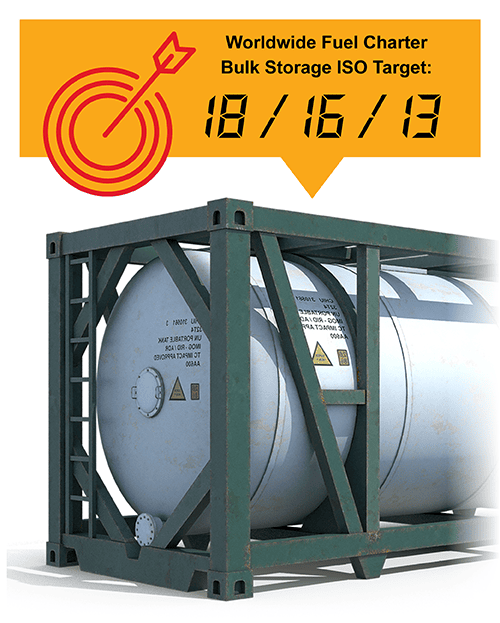
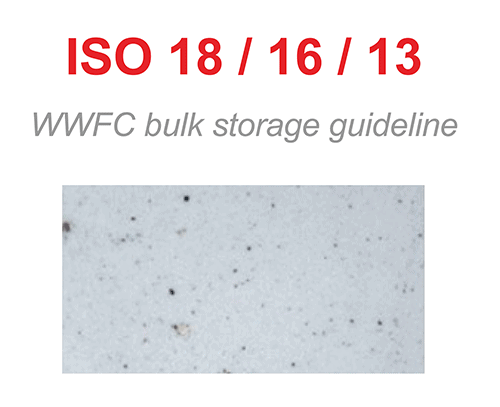
    This is why the WWFC suggests a minimum cleanliness target of ISO 18/16/13. By starting with cleaner fuel, the dispensing and onboard filters are not overwhelmed with contamination, allowing them to operate more efficiently and effectively.


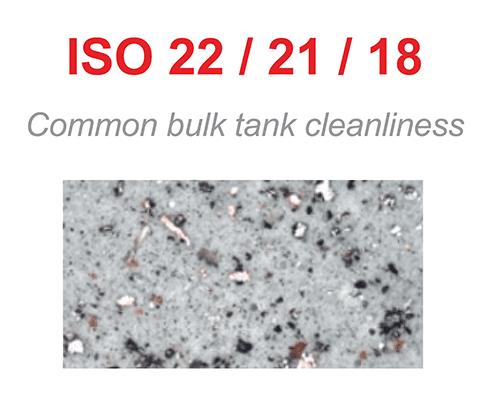
    Below are microscopic comparisons of a common condition of bulk diesel tanks versus the WWFC target of ISO 18/16/13.


    If you need to reach <12/9/6 to protect your injectors, which bulk fuel condition would you rather start with?


    The Costs of Contaminated Fuel


    Without taking additional steps to ensure the quality of your bulk diesel, your expenses can skyrocket:

    • Downtime for increased maintenance and filter replacements/machine repairs will disrupt productivity
    • Overburdened onboard and dispensing filters will require the purchase of more replacement elements
    • If the dispensing and onboard filters can’t keep up with the contamination, extremely expensive engine and component damage can occur.

    The bottom line: Starting with cleaner bulk fuel can cut costs!


    Contamination Vectors to Watch Out For


    Understanding how bulk stored fuel becomes contaminated can help you implement the right solutions! Here are some of the primary ways that contamination occurs in storage tanks:


    • New fuel does not always meet the WWFC standard! There are many opportunities in the supply chain for contamination to occur, so be sure to filter any newly purchased fuel before adding to storage.
    • Storage tanks may already be contaminated. Ensure that empty storage tanks are properly cleaned before adding new fuel.
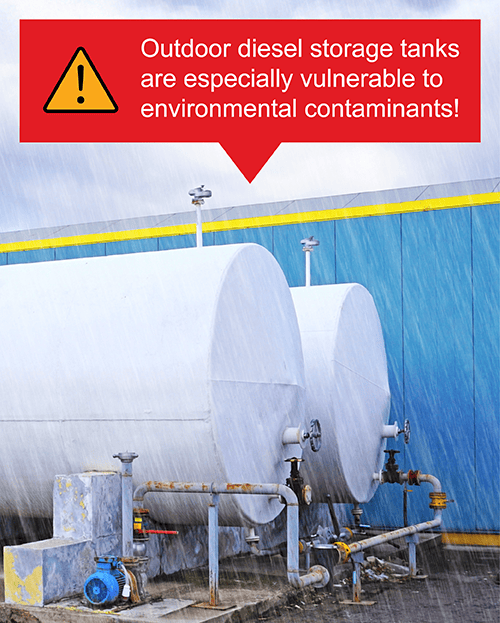
    • Storage tanks are vulnerable to environmental contaminants. Storage tanks, especially when kept outside, are vulnerable to rain and humidity, pollen and dust, and other environmental factors.
    • Microbial growth can worsen contamination. ‘Diesel bug’ is a phenomenon where, through a combination of water contamination and bacteria in the tank, thick microbial sludge grows and thrives in the tank.

    Bulk Diesel Solutions from Schroeder Industries


    Schroeder Industries engineers, manufactures, and delivers a full suite of fuel filtration and polishing solutions!


    Here are just two of our favorites:


    BDFP – Bulk Diesel Filtration Panel

    14 or 25 gpm (53 or 95 L/min)

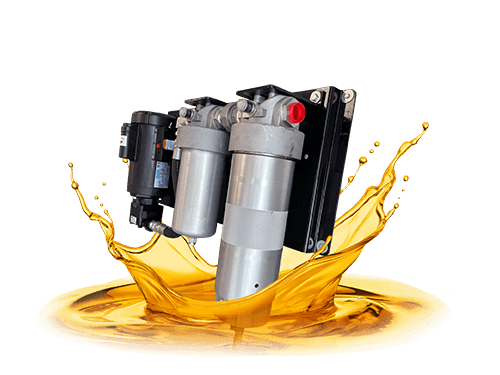
    Combines particulate GHPF filter and coalescing GHCF filter with integrated pump. Powerful performance & straightforward installation in new or existing filtration systems!

    View in Catalog

    Request a Quote

    BDFC – Bulk Diesel Cart

    14, 16, or 25 gpm (53, 60, or 95 L/min)

    Nimble bulk fuel filtration cart helps protect vital engine components from fuel contamination-related damage and failures. Combines fuel-water separation technology and particulate filtration

    View in Catalog

    Request a Quote

    Want cleaner diesel? Ask the experts!


    Our fuel filtration experts can help with pricing, product recommendations, an assessment of your existing fuel filtration system, and much more.


    Whether you’re a contamination monitoring veteran or are just venturing into the world of contamination control for diesel, we can help!

    Request for Quote

    • Which products are you interested in?
    • Max. file size: 256 MB.
  3. Diesel Fuel Maintenance: The Danger You Don’t See

    Comments Off on Diesel Fuel Maintenance: The Danger You Don’t See
    From: Schroeder Industries’ Fuel Filtration Center of Excellence

    For those of us in the Northern hemisphere, Fall has arrived!

    Why Seasonal Changes Make Diesel Fuel Maintenance Essential

    When the seasons change, diesel fuel maintenance becomes increasingly important for equipment reliability. Whether temperatures are rising or falling, seasonal diesel fuel blends may change to accommodate different operating conditions.

    How do seasonal temperature changes affect diesel fuel? Colder temperatures can affect diesel fuel’s flow characteristics, while water and particulate contamination present additional challenges for fuel storage, transfer, and equipment operation.

    Seasonal transitions provide an opportunity for preventive diesel fuel maintenance, including fuel testing, tank inspections, filtration, fuel polishing, and upgrades to existing fuel systems where necessary.

    For facilities reviewing maintenance priorities and available budgets, investing in appropriate diesel filtration and water separation equipment can help address contamination concerns before they contribute to equipment problems.

    Protect Diesel Fuel Quality with Particulate Filtration and Water Separation

    Effective diesel fuel filtration addresses contaminants that can compromise fuel cleanliness and equipment reliability.

    Particulate filtration removes solid contaminants, while fuel-water coalescing technology is designed to separate water from diesel fuel under suitable operating conditions. These processes can complement one another in fuel polishing, fuel transfer, and bulk fuel clean-out applications.

    Schroeder Industries offers several fuel conditioning solutions, including:

    Schroeder’s Fuel Filtration Product Lines include replacement filtration elements for compatible equipment, supporting ongoing maintenance and servicing.

    Mobile Diesel Fuel Filtration for Storage and Transfer

    BDFC Bulk Diesel Filtration Cart

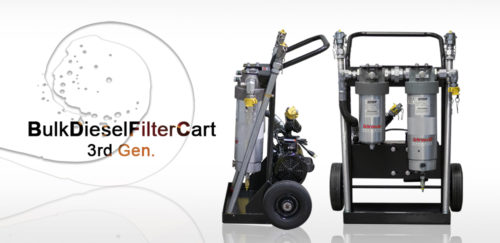
    The BDFC Bulk Diesel Filtration Cart provides a portable solution for diesel fuel maintenance, combining high-efficiency particulate filtration and coalescing water separation in one compact system.

    Designed for both single-pass fuel transfer and kidney-loop filtration, the BDFC helps remove particulate contamination and water from diesel fuel in compatible bulk storage, transfer, and dispensing applications.

    This combination allows maintenance teams to address fuel cleanliness and water contamination through a single mobile filtration platform.

    BDFC Gen 3.

    The BDFC is ideal for fuel maintenance operations.

    It is portable and very easy to use and operate.

    Offers flow rate options of  14 gpm (53 l/min) or 25 gpm (95 l/min).

    The BDC Bulk Diesel Cart offers higher flow rate options with considerably more dirt holding capacity and throughput for larger operational needs for fuel polishing.

    BDC Bulk Diesel Cart

    BDC Bulk Diesel Cart: High-Capacity Diesel Fuel Filtration

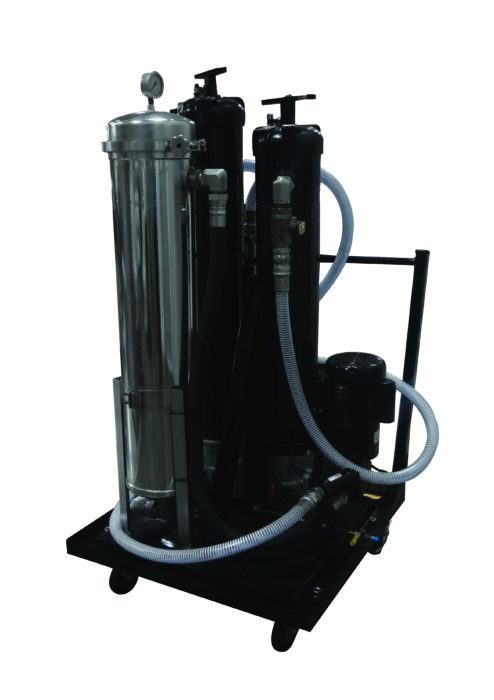
    For larger diesel fuel storage and transfer applications, Schroeder Industries offers the BDC Bulk Diesel Cart, a mobile diesel filtration system designed to help remove particulate contamination and water from stored fuel.

    The BDC is available in two flow configurations:

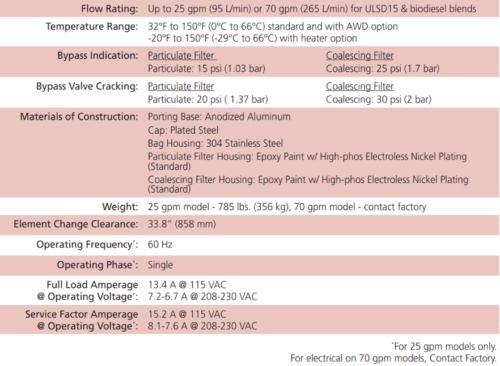
    • 25 gpm (95 L/min) for compatible diesel fuel maintenance applications.
    • 70 gpm (265 L/min) for higher-capacity fuel filtration and transfer requirements.

    These configurations support both single-pass diesel fuel transfer and kidney-loop filtration, making the BDC suitable for maintaining fuel cleanliness in larger storage tanks.

    How Does Three-Stage Diesel Fuel Filtration Work?

    The BDC combines three filtration stages to address different types of fuel contamination:

    1. Bag pre-filtration: Captures larger contaminants, including rust particles and accumulated debris associated with microbial contamination.
    2. High-efficiency particulate filtration: Uses Schroeder’s synthetic filtration media to remove finer solid contaminants from diesel fuel.
    3. Coalescing water separation: Uses specialized media technology to separate free and emulsified water from compatible diesel fuels.

    This combination is particularly useful in bulk fuel maintenance applications where higher contaminant loads or increased fuel-processing capacity require a multi-stage approach.

    By combining particulate filtration and water separation, the BDC helps maintenance teams manage diesel fuel cleanliness and reduce contamination-related risks to fuel system components.

    Electrical Configurations for Diesel Filtration Equipment

    Electrical compatibility is an important consideration when selecting diesel fuel filtration equipment for different facilities and international applications.

    Schroeder’s BDC configurations include motor options designed for specific electrical requirements. Available configurations vary by flow rating, voltage, and phase.

    For applications involving different regional electrical standards, customers should verify motor compatibility and available configurations with Schroeder Industries before ordering.

    Find the Right Diesel Fuel Filtration Solution

    Selecting the appropriate diesel filtration system depends on factors such as fuel volume, contamination levels, required flow rate, and available electrical power.

    For information about diesel fuel cleanliness requirements, filtration performance, or application-specific equipment selection, contact Schroeder Industries to discuss your fuel maintenance needs.